

TCC on the road: can they stop a car and mobilize the driver on the spot
02.10.2026 13:02
Mendel: Zelensky’s strategy of asking for war money “no longer works”
02.10.2026 14:03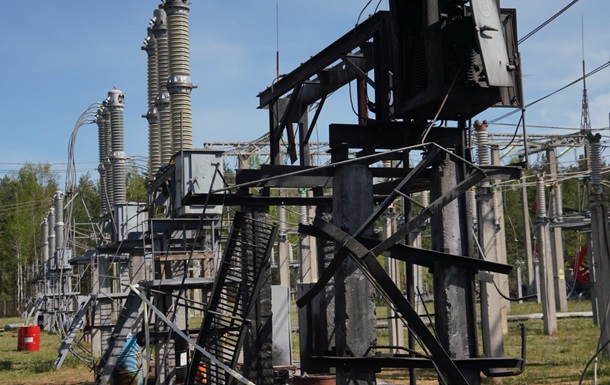
On September 30, Russia for the first time used a jet-powered drone equipped with a special warhead designed to sever high-voltage power line towers and steel cables.
This was reported by Ukrainian presidential adviser Serhiy “Flash” Beskrestnov.
The new weapon was deployed during the largest combined strike on Ukraine’s power grid in several months. According to the Ukrainian Air Force, Russia launched 188 drones overnight, of which 86 were jet-powered, along with Zircon, Onyx, and Iskander missiles. A total of 155 drones and five missiles were shot down or suppressed. The strike triggered emergency power outages in Kyiv, Kyiv, Chernihiv, and Zhytomyr regions.
A new warhead for the power grid
“Today, for the first time, the enemy used a special cumulative-cutting warhead on a jet-type unmanned aerial vehicle,” presidential adviser Serhiy “Flash” Beskrestnov wrote on Telegram.
According to him, the warhead is equipped with a main charge weighing 40 kilograms and four additional strike modules. Beskrestnov also noted that, in his assessment, the enemy plans to target major high-voltage power lines.
Prime Minister Serhiy Koretsky stated that such a large-scale combined strike was the first since the end of last heating season.
Too fast to intercept
Russia first used the Geran-5 drone in combat conditions in August. It is estimated to reach speeds of around 600 kilometers per hour, has a stated range of up to 1,000 kilometers, and is equipped with anti-jamming protection. As the Associated Press reports, Ukrainian air defense crews have only seconds to intercept it, and “that is almost never enough.”
In September, Air Force spokesman Yuriy Ihnat told the Financial Times that Ukraine intercepts only about 60% of Geran-5 attacks, compared to 95% for other drones. He said fighter jets are forced to carry out “extremely intensive” sorties against them.
“They move so fast that we cannot properly lock onto them,” Volodymyr Serdyuk, a commander of an air defense unit, told the AP.
According to Moldovan outlet Cotidianul, citing the Institute for the Study of War, Russia launched 2,730 jet drones between early September and September 26, and Ukraine intercepted approximately 55% of them. On September 28, a jet drone struck the building of the National Academy of Sciences in central Kyiv.
The race for interceptors
Ukrainian officials report that prototype interceptors have already successfully hit jet drones. However, manufacturers warn that mass production and pilot training could take up to six months. Oleksiy Babenko, CEO of Vyriy Drones, specified that scaling up production would require three to four months. Small turbojet engines remain one of the bottlenecks: most suppliers are European manufacturers whose capacity falls significantly short of Ukraine’s needs.
“Right now we are in a race against time,” Babenko said.



 English
  Русский