Medvedev accused Zelensky of “purging rivals” and predicted a “bloody Maidan”
15.01.2026 12:02
Budget deficit: Ukraine’s new defense minister described the real state of affairs in the Armed Forces
15.01.2026 13:20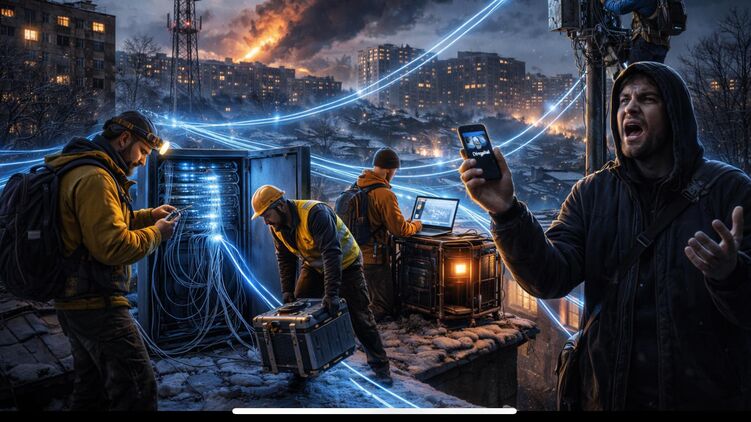
MP Oleksandr Fedienko from the Servant of the People faction painted an apocalyptic picture of what could happen to Ukraine’s energy sector if Russian strikes continue.
He posted the statement on his Facebook page.
According to him, Ukraine’s energy system has already entered an “active phase of cascading effects,” and in the longer term the functioning of entire cities could come to a halt.
“In the image is a city that is still standing, but is already breaking down in a chain reaction. The Russians are destroying our energy sector after exhausting our air defense. On the left are de-energized power lines, sparks and аварии; the energy system is gradually disappearing. Next come silent communications towers; people look at their phones that no longer get a signal. The light in shop windows dims, stores stop, cash registers don’t work, queues freeze in the darkness. Fuel stations live only on emergency lighting. A hospital glows with a few windows; backup power holds, but not for long. On the right the city is almost black. The buildings are there, but the system no longer works. One failure triggers the next. That is what cascading effects look like, when the lack of electricity slowly but inevitably stops an entire city,” Fedienko wrote, quoting Mark Elsberg’s book Blackout.
As an illustration, the lawmaker attached an AI-generated image.
He said the next phase would be a shift by “operators to a plan to reduce the coverage area and maintain only key segments of the network.”
“Next comes stopping these cascading effects and getting out. This is also a difficult story that can lead to the destruction of energy infrastructure,” Fedienko wrote.
He also criticized partners who, he said, deceived Ukraine regarding air defense.
“That’s why I have said and continue to say that people should be told the truth. Hope is, of course, a good thing—but then a person clings to that hope,” Fedienko concluded.




 English
  Русский