
Zelensky: Ukraine supports trilateral talks with the US and Russia
22.10.2026 18:04
Putin claims genetic unity of Russians and Ukrainians
23.10.2026 05:32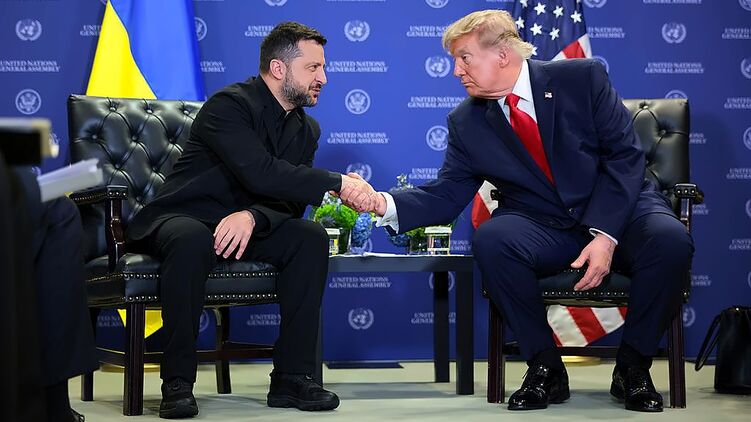
The White House is working on a peace plan for Ukraine that combines territorial concessions, security guarantees, and sweeping economic arrangements with Russia — up to and including the restoration of Washington’s relations with Moscow.
This was reported on October 22 by the British magazine The Economist, citing Ukrainian officials familiar with the contents of the American proposals.
According to the publication’s sources, the plan under discussion envisions the creation of a demilitarized zone in Donbas as one of the key elements of ending the war. In return, Russia could expect the lifting of Western sanctions, the normalization of political relations with the United States, and the opportunity to conclude major commercial agreements with American companies. A separate provision calls for the restoration of Russian gas supplies to Europe, including the resumption of the Nord Stream pipeline.
Under the proposed agreement, Ukraine is being offered an investment package for economic recovery and the prospect of European Union membership — in exchange for renouncing NATO accession.
The Economist emphasizes, however, that these are not agreed-upon terms but rather proposals that the Trump administration is attempting to use as the basis for a new agreement.
Of particular concern to Ukrainian negotiators is the American side’s eagerness to move toward commercial arrangements with Moscow as quickly as possible, without waiting for the war to end. According to the publication’s sources, American envoys view the restoration of economic cooperation with Russia as a standalone opportunity that need not be postponed until a final peace agreement is reached.
“From their point of view: why wait and waste time? Time is money,” one Ukrainian official explained.
The Ukrainian side fears that under such an approach, Russia would gain significant economic advantages before a ceasefire and before fulfilling its obligations under a peace settlement. The Economist attributes Trump’s demonstrably more favorable attitude toward Putin than toward Zelensky in part to the commercial interests of American negotiators.
The magazine separately analyzes the behavior of the Ukrainian president, who has recently been increasingly vocal in his public criticism of Trump for taking an insufficiently firm stance toward Russia. In the publication’s assessment, Zelensky’s public confrontation with the American president is only deepening tensions between Kyiv and Washington. The Economist suggests that this strategy may be linked to Kyiv’s calculation that the political situation in the United States could change after the midterm congressional elections on November 3.
“Zelensky’s appearance, lashing out at Trump for ‘weak’ decisions, seems to be based on the assumption that a crushing electoral defeat will weaken his position. That assumption may be wrong,” The Economist notes.
In the magazine’s view, even if Democrats gain control of Congress and launch sweeping investigations into the administration’s activities, this will not necessarily compel Trump to change his policy on Ukraine. On the contrary, the American president may respond to increased domestic political pressure with even more aggressive and unpredictable actions.
“The more aggressively a Democrat-controlled Congress investigates Trump, the more aggressively he will behave. That will not be good for Ukraine,” a congressman warned in a conversation with The Economist.
Thus, Kyiv faces two simultaneous risks: the possibility of sweeping economic agreements between the United States and Russia being concluded before the war ends, and a further deterioration in relations with Trump should the public confrontation with the American president continue.



 English
 Русский