

Moscow is demanding that all countries recognize Donbas as Russian as part of a peace agreement
05.02.2026 09:20
In Lviv, a woman fired at a minibus carrying police and TCC officers
05.02.2026 10:37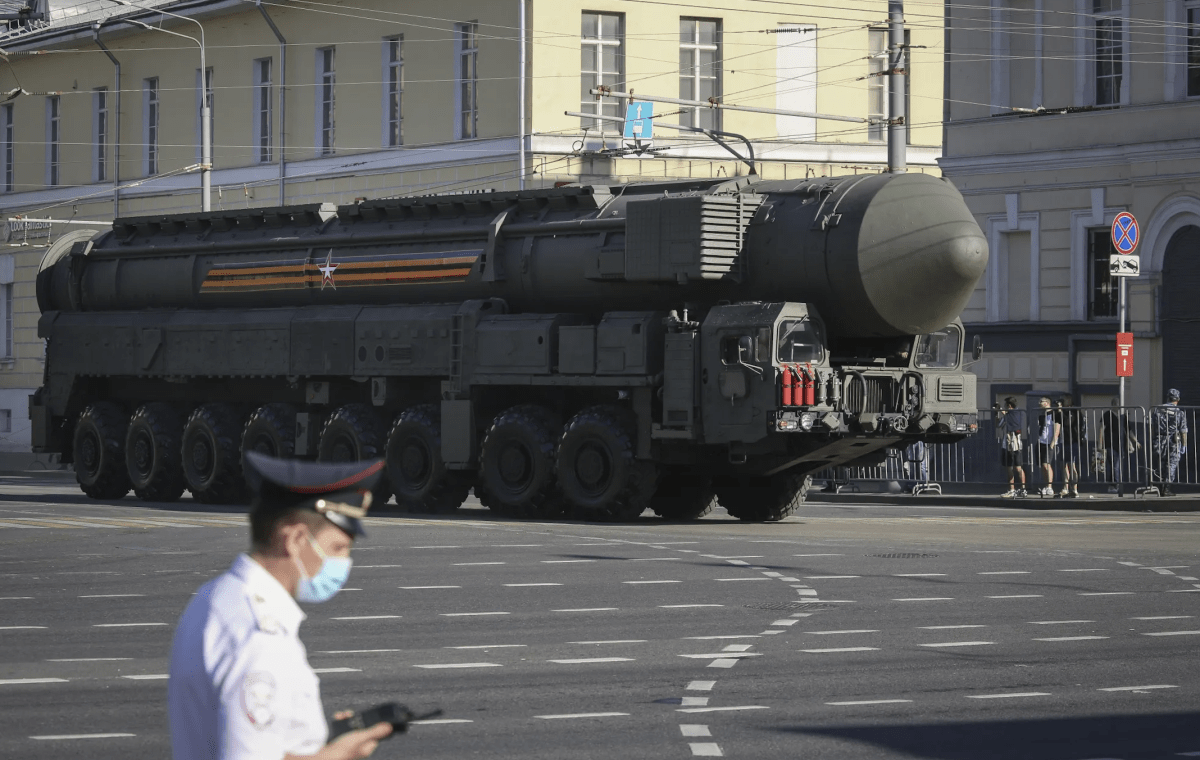
The United States and Russia are entering an era of uncertainty and a risk of a new arms race for the first time since the 1980s, following the expiration of the Strategic Arms Reduction Treaty (New START).
“The immediate danger is that, in the absence of legal limits and verification measures, both countries will return to worst-case planning and begin loading hundreds of additional warheads onto their deployed forces out of fear that the other side is doing the same. The United States and Russia have significant upload capacity that would allow them to sharply increase the number of deployed nuclear warheads in a short period of time,” said Mackenzie Knight-Boyle, a senior research associate with the Nuclear Information Project at the Federation of American Scientists.
The New START treaty is expiring amid a deterioration in relations between Russia and Europe to their worst level in decades due to the war in Ukraine, as well as uncertainty among U.S. allies about Washington’s long-term commitments within the NATO military alliance.
China is expanding its strategic forces, and other countries are considering whether they need nuclear weapons for their own defense, as major powers increasingly compete for dominance in their regions.
A White House spokesperson said U.S. President Donald Trump will decide on the future course of nuclear arms control and will clarify it “on his own timeline.”
According to a source, some Republican members of Congress urged Trump not to consider Russian President Vladimir Putin’s proposal to extend the obligations for one year without written confirmation, because it could restrict U.S. capabilities but not Russia’s. Others, however, favored accepting the proposal.
Previously, the U.S. president said he wanted to bring China into a new offensive arms agreement. On February 3, Chinese Foreign Ministry spokesperson Lin Jian said that “China’s nuclear capability is by no means on the same level as that of the United States; it is unfair and unreasonable to ask China to join nuclear disarmament talks at this stage.” Beijing called on Washington to accept Moscow’s proposal.




 English
  Русский
