“2026 and beyond”: The British Foreign Secretary gave a grim forecast about the duration of the war in Ukraine
23.09.2024 08:24
A Ukrainian soldier announced that he is going AWOL and demanded demobilization for those who have been serving in the Armed Forces for a long time
23.09.2024 08:51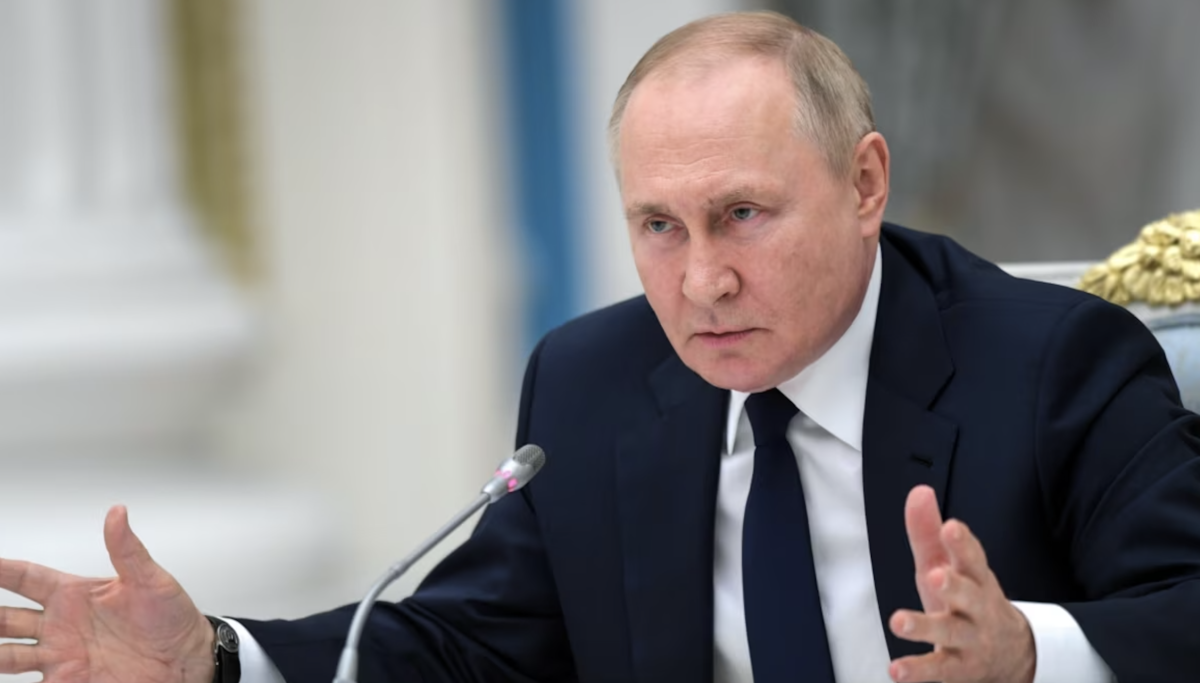
Uncertainty is growing in Western countries because “no one knows” how the Kremlin will respond to a possible authorization for Ukraine to strike targets deep within Russian territory.
This is reported by The Washington Post.
The publication points out that the nuclear option appears unlikely to Western allies, and Moscow considers it the most extreme measure. Therefore, the Kremlin will look for other ways to enforce its “red lines.”
Analysts and officials close to senior Russian diplomats say that Putin would choose a “more subtle and limited response” if the West allows Kyiv to use longer-range missiles to strike Russia.
“Since the West has a global military infrastructure… there are plenty of vulnerable points,” an unnamed Russian scientist told the newspaper.
The newspaper writes that this time, Moscow’s response is likely, as “for Putin, this represents a qualitative shift that takes the situation to a new level, which could lead to further expansion,” believes expert Tatyana Stanovaya from the French political consultancy R-Politik.
However, “nuclear measures” or a direct strike on NATO territory will be considered by the Kremlin only if “Putin feels a threat to the existence of Russia in its current form, when he believes there is no other way out,” according to Stanovaya.
The article notes that instead of using nuclear weapons, Moscow might respond with sabotage operations against military and other infrastructure in the West, where Russia’s involvement would be difficult to prove.
The Kremlin may also turn to allied proxy groups that are already fighting against Western interests, such as the Houthis in Yemen, suggests Lawrence Freedman, a professor of war studies at King’s College London.
At the same time, Russian political analyst Sergey Markov suggested that possible retaliatory measures could include closing the British embassy in Moscow and striking airbases in Poland and Romania, where F-16 aircraft transferred to Ukraine are stationed.
“Since Russia is convinced that strikes on Moscow will inevitably occur at some point, we should strike first,” he said.
Markov also does not rule out such escalation on the eve of the U.S. elections, which could bolster Trump’s rhetoric accusing the White House of provoking nuclear war.
At the same time, the publication believes that Russian officials have already “somewhat calmed down due to the apparent hesitation of the U.S.” regarding the authorization of long-range strikes. According to analysts and officials, Russia expects that if Kyiv is granted such authorization, it will be “very limited.”
Nevertheless, Putin is still under pressure to respond in some way and stop the constant crossing of his “red lines,” the article concludes.
Earlier, experts suggested that Putin might respond with nuclear tests to Western weapons strikes deep into Russia.
It has also been reported that the White House took Putin’s words seriously about NATO’s direct involvement in the war if Ukraine is allowed to conduct long-range strikes on Russia.


 English
  Русский