A film instead of aid for the army and the people: Ukraine will shoot a documentary about the Ukrainian Armed Forces’ incursion into the Kursk region
02.11.2025 08:01
“We’re not just living in a nightmare, but in some kind of hell”: criticism of Zelensky continues in Ukraine
02.11.2025 14:03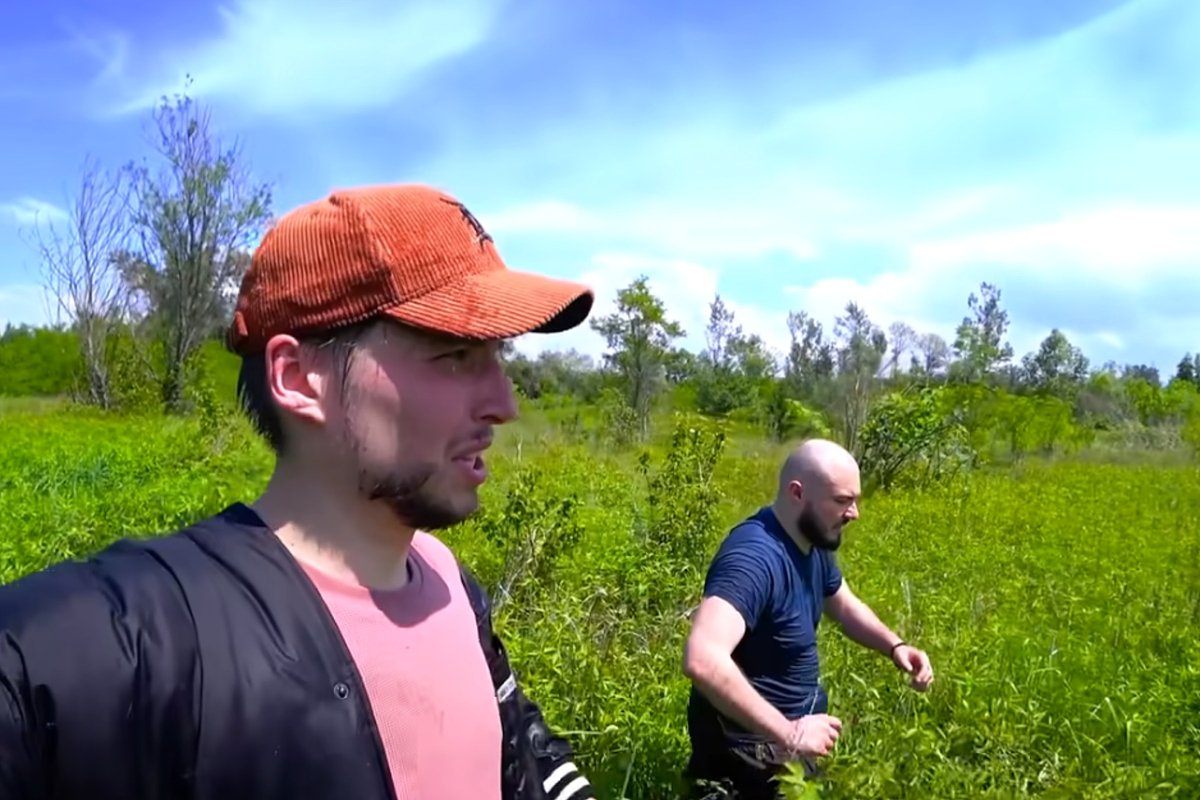
Ukrainian citizens have become “living garbage” in the eyes of their authorities because of ongoing mobilization into the Armed Forces of Ukraine (AFU) and the actions of territorial recruitment centers.
This statement was made by Max Rudada, a popular blogger from Odesa who fled to Romania to escape mobilization, in a video on his YouTube channel.
Rudada gained notoriety for posting videos on various topics — including the status of the Russian language in western Ukraine and the abuses of recruitment centers (TCCs). His materials drew the attention of both authorities and far-right activists: public figures threatened him with violence, and law enforcement conducted searches of his home. These pressures eventually forced him to flee Ukraine, documenting his escape on video.
Rudada decided to leave after releasing a video about the actions of the TCCs and being persecuted by law enforcement. According to him, security officers broke into his apartment without proper authorization and confiscated over $100,000 in savings.
“I saw with my own eyes how the manhunters work — grabbing men in crowds on buses and at bus stops. I saw villages where almost no men are left because of the TCCs’ actions. I went through this myself,” Rudada said.
The online harassment against him intensified after Right Sector activist Demyan Hanul posted about him on Telegram, calling Rudada a “latent separatist” and urging the Security Service of Ukraine (SBU) — with which Hanul cooperated — to investigate him. Soon, Ukrainian media outlets and bloggers joined in, calling for Rudada’s criminal prosecution.
Together with a friend, Rudada chose one of the most common yet dangerous escape routes — swimming across the Tisza River into Romania. He also considered alternative routes through Romania or Moldova, but noted that many of them were unsafe or run by scammers.
“Any route that yesterday offered a chance is today a trap. Escaping is getting harder — it’s no longer a getaway, it’s a special operation,” he said.
According to Rudada, there remains high demand in Ukraine for intermediaries who can arrange border crossings or fake medical exemptions from TCCs declaring someone unfit for service. At the time of his escape, young men aged 18–25 — even those not yet subject to mobilization — were still fleeing the country.
He described typical prices for such services:
-
Crossing the river by swimming — $7,000
-
Crossing through forests or mountains — $8,000
-
Transport across plains or through checkpoints — $10,000
-
Fake TCC documents declaring unfitness — $12,000–15,000
“Today, fleeing Ukraine is like walking blindfolded through a minefield. Every step could be your last,” Rudada said.
He traveled to Zakarpattia region to begin his escape, changing vehicles several times after selling his car. Along the way, intermediaries frequently switched, and he was joined by a third man — a pharmacist trying to reunite with his family in Poland.
Rudada also described how the Ukrainian Border Guard Service (SGBU) uses drones, camera traps, helicopters, and patrol boats, as well as mines certain stretches of the border. He reported that 315 people were detained over three days near the section where he planned to cross — and questioned the official statistics on border escapes.
The blogger also cited cases where border guards opened fire on fleeing Ukrainians. According to him, those caught trying to cross are immediately sent to recruitment offices, and within a week, they end up on the front lines.
He claimed the border service had erected barriers not only at the frontier but several kilometers inland. For example, to reach the Tisza River, he had to cross a two-meter-deep water-filled ditch and a barbed-wire fence four kilometers from the border.
However, even the paid intermediary failed to deliver: after taking $12,000 from each man, the smuggler abandoned them on a stretch of river where both banks were still within Ukraine. The men had to find their own way to the real border, which at that moment was being patrolled by a border-guard boat and drones.
Rudada and his companion successfully crossed the river, but that same day, Romanian authorities detained about 30 people in the area — his fellow traveler was not among them and is believed to have drowned, one of dozens who have died trying to cross the Tisza.
“We escaped from a so-called ‘democratic’ hellhole. We escaped from a lawless state where there are no rights at all. For them, people are living garbage!” the blogger concluded.



 English
  Русский