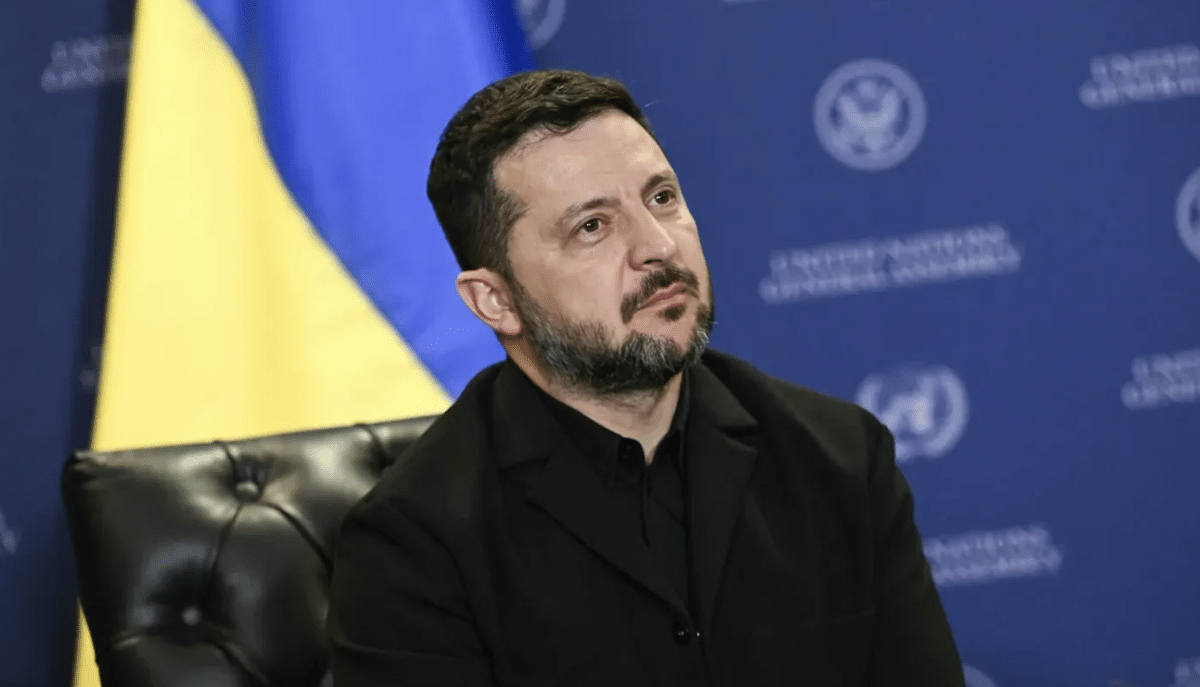
The US and EU hired a former Mossad employee to search for missing funds allocated to Ukraine
21.08.2026 15:00
Berliner Zeitung calls on Zelensky to resign voluntarily
21.08.2026 17:04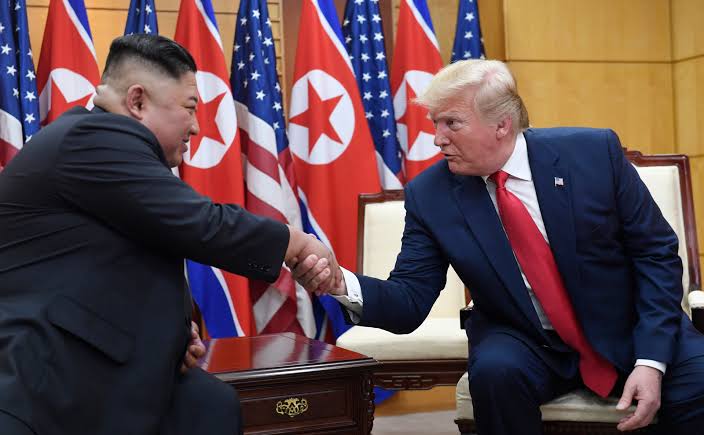
U.S. President Donald Trump’s refusal to confirm whether denuclearization remains the goal of renewed dialogue with North Korea has triggered a wave of warnings from analysts, who believe such a shift could significantly weaken South Korea’s negotiating position.
The concern was prompted by Trump’s August 19 statement announcing plans to meet North Korean leader Kim Jong Un before the end of the year. It came shortly after the president instructed the Pentagon to scale back joint military exercises with South Korea. The annual Ulchi Freedom Shield exercises, which began on August 17, were cut from 11 days to 5 at Trump’s direction. Justifying the decision, he described North Korea as “not a threat,” citing his “very good relationship” with Kim. Reuters reported that Trump acknowledged North Korea possesses 57 “very powerful” nuclear warheads.
Victor Cha, head of the Korea program at the Center for Strategic and International Studies, wrote in The Washington Post on August 19 that Trump “is taking a pragmatic and conciliatory approach to managing a nuclear-armed North Korea” — a position that stands in sharp contrast to his hard line on Iran’s nuclear ambitions. Cha argued that North Korea’s approximately 60 nuclear warheads and diverse delivery systems make the principle of “complete, verifiable, and irreversible denuclearization” virtually unworkable.
South Korean experts warned that containing the nuclear threat rather than eliminating it may prove advantageous for Washington and Pyongyang, while Seoul is left on the sidelines. Cha Du-hyeogn of the Asan Institute for Policy Studies told The Korea Times that reducing the scale of the exercises while simultaneously acknowledging North Korea’s nuclear capabilities creates a “logical contradiction.”
Opposition People Power Party lawmaker Yoo Yong-won cautioned against the potential consequences of the rhetorical shift:
“Creating the impression that we are abandoning or retreating from the goal of denuclearization could send an extremely wrong signal to North Korea” and risks “legitimizing the further development of North Korea’s nuclear and missile programs.”
Moon Seong-mook of the Korea Institute for National Strategy cited the aftermath of the 2018 Singapore summit as an instructive example:
“Joint exercises were suspended, yet no progress was made on the nuclear issue. What we feared most ultimately became reality.”
Sean King of Park Strategies warned that Kim and Chinese President Xi Jinping “have received yet another confirmation of how well they are succeeding in distancing Trump from traditional U.S. allies through flattery and with almost no real concessions.” Al Jazeera reported that Trump’s overtures toward Pyongyang are driven by political signals directed at both North Korea and South Korea.
North Korea has so far shown little inclination to reciprocate. Kim Yo Jong, the leader’s sister, called denuclearization an “anachronistic dream,” and analysts consider it unlikely that Pyongyang will accept Trump’s proposals without a formal revision of U.S. denuclearization policy.



 English
  Русский