
Zelensky: “If the US supports Russia, we will not hold out”
19.10.2026 15:30
Britain, France and Germany to rehearse troop deployment to Ukraine in Poland
19.10.2026 17:06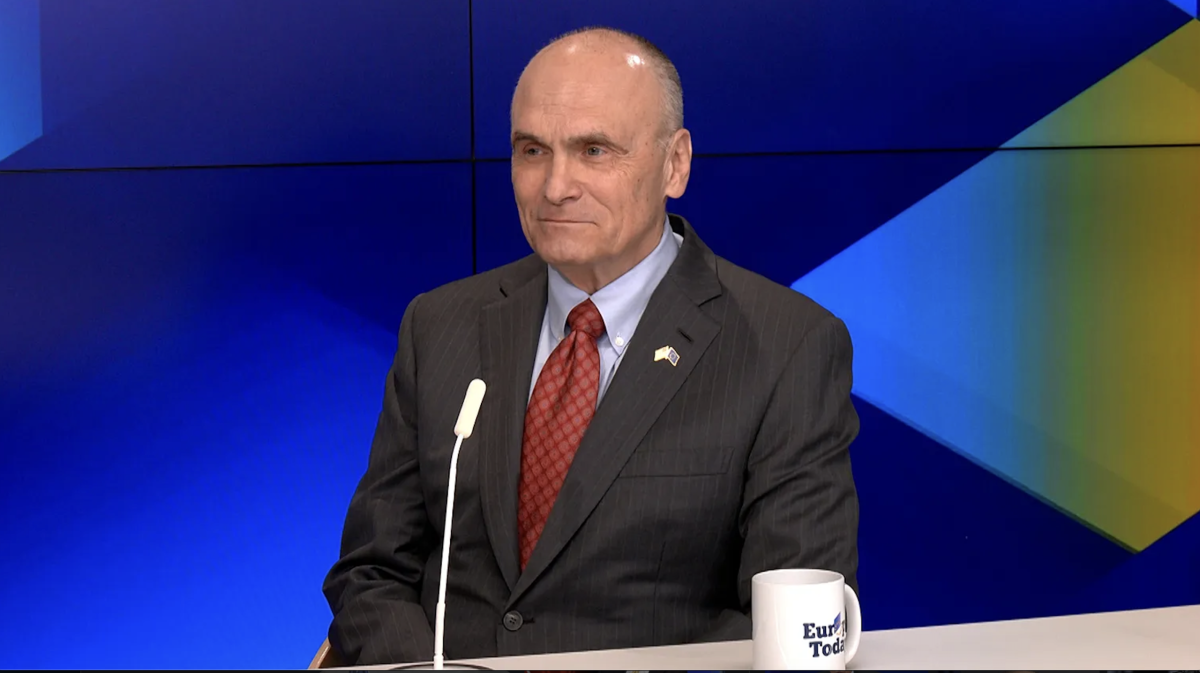
U.S. Ambassador to the European Union Andrew Puzder has warned that European companies could face “devastating” retaliatory measures if Brussels proceeds with plans to restrict access by companies from non-EU countries to satellite spectrum.
The interview containing the warning was published on October 18 in the Financial Times.
The dispute concerns the 2 GHz band, which allows smartphones to connect directly to satellites. Under a European Commission proposal, one third of the band would be set aside for government needs and security tasks related to IRIS2 — the EU’s planned secure satellite constellation. Half of the remaining commercial portion would be reserved for European operators, while American companies would have to compete for a smaller share. The new allocation will take effect after the existing Viasat and EchoStar licenses expire in 2027. Current licenses may be extended by no more than two years.
Among the American companies that would be affected by these restrictions is SpaceX with its Starlink network. The band is important for the Starlink service’s direct-to-cell direction. SpaceX has strongly opposed the European Commission’s plan and warned that it could degrade communications in Ukraine, where Starlink plays a key role in civilian and military communications.
Asked whether European companies should fear retaliatory measures, Puzder replied that they “should understand: this is possible, and the consequences for those companies would be extremely severe,” citing the size of the American market.
“If the goal is to make the U.S. less competitive, I don’t consider that a legitimate goal for this kind of legislation,” Puzder said.
According to him, Europe has the right to protect sensitive government information, but should not use laws to place local companies in a more advantageous position relative to American competitors. Puzder also questioned the multibillion-dollar fines that American technology companies have received under the Digital Markets Act (DMA), and called for Brussels and Washington to jointly confront China in the fields of artificial intelligence and quantum computing.
The European Commission, for its part, insists that the plan “encourages market entry and diversification of EU providers while remaining open to operators from countries outside the EU.” The proposal still needs to be agreed upon with the European Parliament and EU member state governments.
Such threats from Washington are not new. Earlier this year, Federal Communications Commission Chairman Brendan Carr said the U.S. would “mirror the regulatory approach that Europe wants to apply.” In the Financial Times interview, Puzder also stressed: “You cannot increase the competitiveness of European companies by undermining the competitiveness of American ones.”




 English
 Русский