Ukraine fell short of around €26.3 billion due to failure to meet obligations to partners
12.10.2026 11:08
Zelensky refuses to observe Trump’s energy ceasefire in the proposed format
12.10.2026 12:02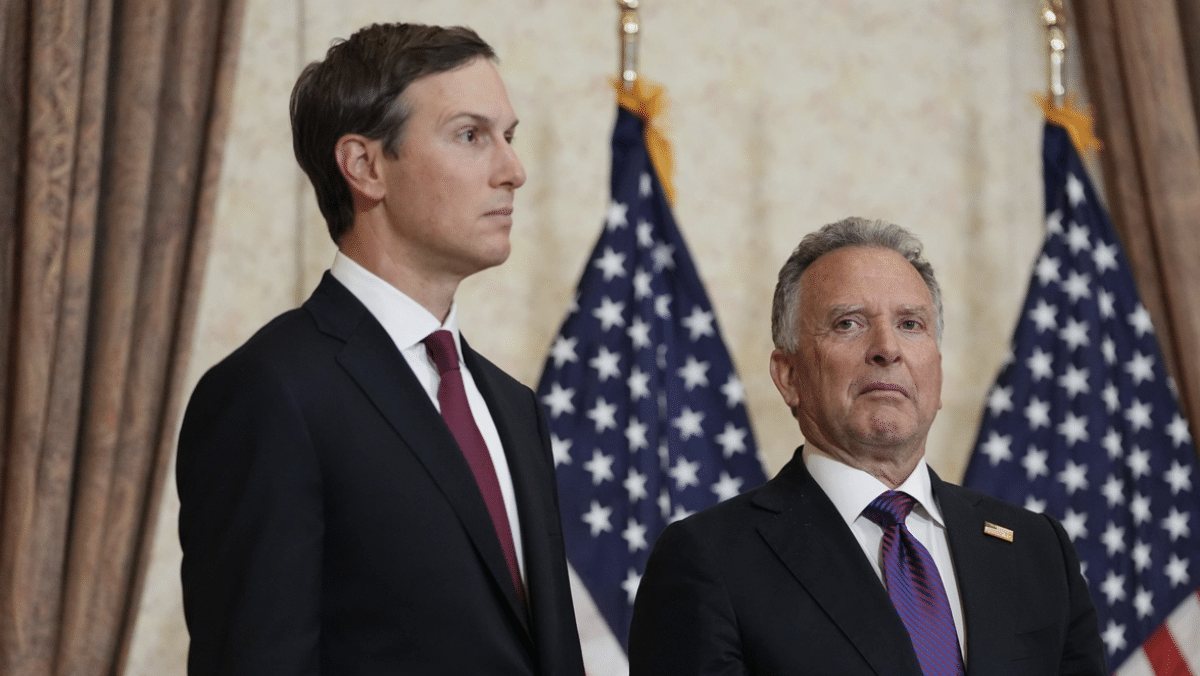
The administration of President Donald Trump offered Russia three economic incentives to get Moscow to agree to a limited ceasefire — covering either Ukraine’s energy infrastructure or hostilities at sea.
This was reported by The New York Times, citing officials familiar with the course of the negotiations.
Washington’s three proposals
According to The Times, American envoys Steve Witkoff and Jared Kushner presented these proposals in late September during talks held on the sidelines of the UN General Assembly.
The first proposal envisaged unblocking billions of dollars in frozen Russian sovereign assets. Officials said the money was conceived as an “advance incentive for partial ceasefires, not a reward for compliance.” This revived a proposal from last year to unblock up to approximately €89.1 billion.
The second proposal returned to a plan to sell part of Lukoil to a group of Middle Eastern investors, some of whom have business ties with American negotiators. As The Times previously found, this group is led by American Todd Boehly, who donated approximately €1.8 million in support of projects linked to Trump. In addition, the American Development Finance Corporation (DFC) would receive approximately 15% of shares without putting in cash.
The third proposal would allow Belarus to resume exporting potash.
According to the newspaper, Moscow apparently gave nothing in return.
Kyiv demanded guarantees
Ukrainian officials, according to The Times, were surprised at how far Washington was willing to go. Kyiv did not reject any of the proposals outright, but demanded guarantees: for every dollar of unfrozen Russian assets, Ukraine should receive the same amount, or the U.S. should guarantee increased military aid in the event Russia violates the ceasefire.
Ukrainian Foreign Minister Andrii Sybiha warned that the Kremlin perceives concessions as an attempt at appeasement rather than a reason to negotiate, Kyiv Post reports.
The negotiations reached a deadlock. While the Ukrainian delegation was in Miami for a meeting with Kushner and Witkoff, Trump on October 9, following a phone call with Vladimir Putin, announced a deal on diesel fuel. The Treasury Department issued a license permitting the sale and import of this fuel until April 7, 2027.
The diesel fuel deal
According to Axios, the deal emerged after Ukraine refused to stop striking Russian oil refineries. On Saturday, Trump accused Ukraine of creating “a world problem” with its attacks on refineries and said it should “find itself a new president.” The Kremlin said that negotiations on ending the war would not resume immediately.
Ukraine had stated it would stop hitting Russian refineries only if Russia also stopped attacking Ukraine’s energy grid. As of Sunday, October 11, no ceasefire in the energy sector or at sea had been announced.
“If you start ‘chasing after’ Russia, it will simply wait until it is offered even greater concessions,” former U.S. Ambassador to Poland Daniel Fried told The Times, as reported by Nasha Niva.


 English
  Русский