Ukraine’s antitrust committee fines Kyivstar around €341,000 over “No. 1 mobile internet speed” slogan
31.07.2026 06:31
Single mother with two-year-old son leaves Kramatorsk after drone strikes their building
31.07.2026 07:30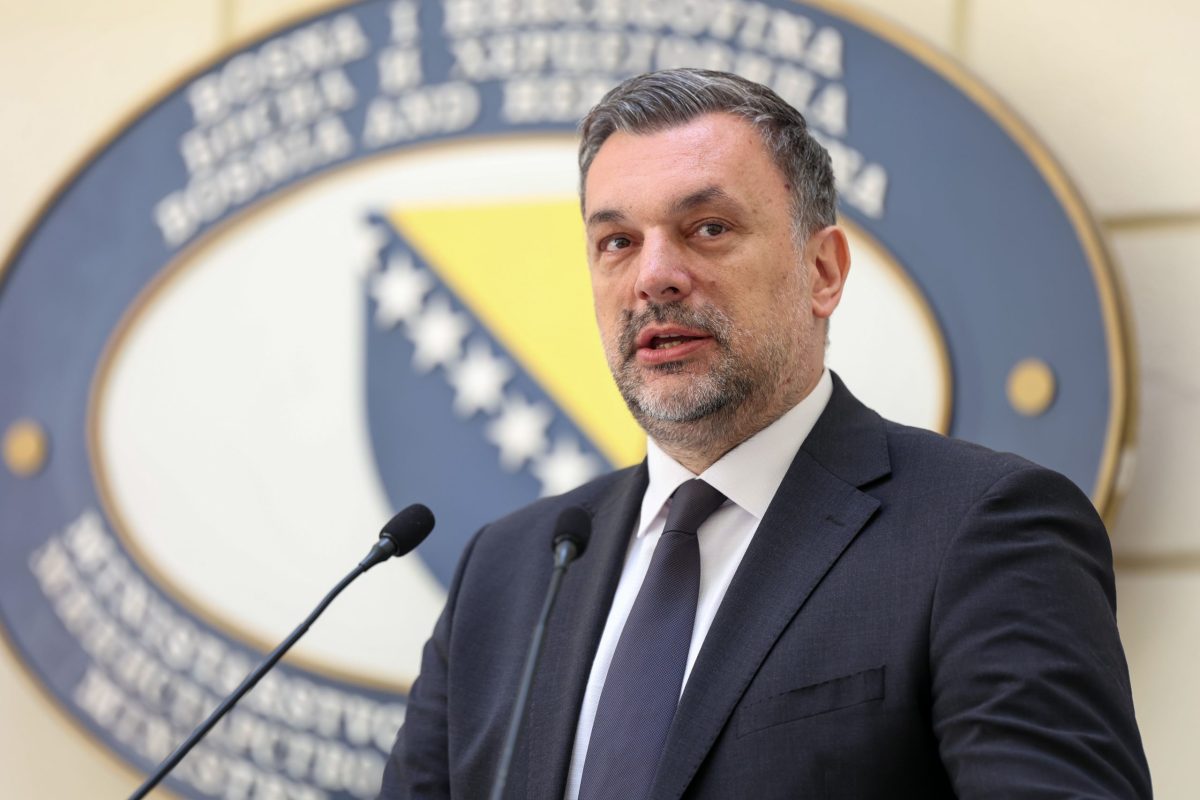
Bosnia and Herzegovina’s Foreign Minister Elmedin Konaković has questioned the claim that Ukraine is advancing in EU integration reforms faster than the Western Balkans countries.
He made the remarks in an interview with the Slovak outlet Aktuality.
Konaković spoke in response to a journalist’s question about the EU’s position that Ukraine’s progress toward membership in the bloc is more substantial than that of the Western Balkan countries. The minister noted that Kyiv “doesn’t even control all its territory.”
“Therefore, I do not think this is the merit-based approach that the European Union speaks of. Of course, we know why. Ukraine is facing brutal Russian aggression,” Konaković said.
As an analogy, the minister cited the situation in the parliament of Bosnia and Herzegovina, where representatives of Republika Srpska hold veto power and are able to block the government’s steps toward EU integration.
“Imagine that representatives of Donbas in the Ukrainian parliament had a veto right similar to the one held by representatives of Republika Srpska in Bosnia and Herzegovina. And that they were fully under the control of Vladimir Putin and were blocking everything that could bring the country closer to the European Union,” the minister said.
On this basis, Konaković found the signals from Brussels about Ukraine’s faster progress toward membership to be wrong.
“I do not think it is right to send a signal that Ukraine will advance faster because it is at war and does not control all its territory, while we have to wait because the European Union insists on a merit-based approach, even though Putin, through his people, is blocking decision-making in parliament,” he explained.
In the same context, the official mentioned Moldova, which, according to him, is “on the brink of conflict with Russia,” something that could create potential problems for its EU integration. The Bosnian minister concluded that the European Union must “demonstrate real leadership” on the question of Western Balkan countries joining the bloc, particularly Bosnia and Herzegovina.
In February, Siniša Karan, a longtime ally of pro-Russian former president Milorad Dodik, won the repeat presidential election in Republika Srpska — one of the entities within Bosnia and Herzegovina. Bosnia and Herzegovina received EU candidate status in December 2022 and in 2024 began formal membership negotiations.

 English
  Русский