

The Rada passes law on combating fraudulent call centers: up to 12 years in prison
16.09.2026 12:01
Germany prepares hospitals for war: Bloomberg on inspections and wartime plans
16.09.2026 15:01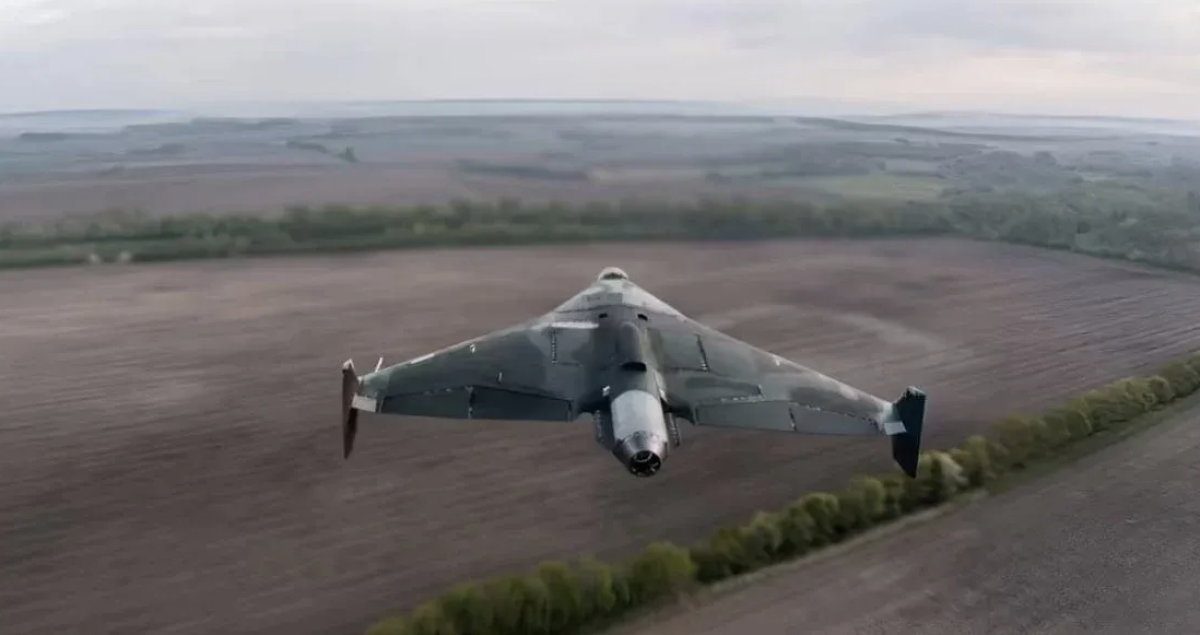
On September 15, Volodymyr Zelensky announced the successful test of a new interceptor drone designed to counter Russian-made “Geran” jet-powered strike drones.
According to the president, the system still requires further development.
Zelensky was briefed on the test by Armed Forces Commander-in-Chief Mykhailo Drapatyi. The interceptor hit the Russian drone, but work on the system is continuing.
“The Shahed was successfully hit, but some aspects of controlling the interceptor still need to be refined. Work continues — a little more time is needed,” Zelensky wrote on X.
A threat outpacing Ukraine’s air defense system
Jet-powered drones are capable of reaching speeds of up to 500 kilometers per hour — more than twice as fast as early versions of the Shaheds with propeller engines. According to Ukrainian military data reviewed by Reuters, over three months this summer Russia increased its use of jet-powered drones approximately sixfold: from around 450 launched in June to roughly 2,850 in August.
Ukraine’s existing interceptor drones, costing less than around €2,000 each, have helped bring the interception rate for slower Shaheds to approximately 90%, but they simply cannot cope with the faster modifications. Deputy commander of the 3rd Army Corps Maksym Zhorin was blunt:
“With jet-powered drones, we have once again completely lost the initiative — that is a fact.”
A test of the new generation of interceptors conducted in early July did not go according to plan: many of them proved difficult to control at high speeds, and some crashed in neighboring fields — two sources familiar with the course of the exercises told Reuters.
A record mass strike tests air defense systems
The interceptor test came after one of the largest mass drone strikes of the entire war. On the night of Sunday, September 13, Russia launched 863 drones within 24 hours, Ukraine’s General Staff reported. The flight paths were deliberately routed under heavy cloud cover, which significantly reduced the effectiveness of visual and thermal detection by Ukrainian mobile air defense units. According to Ukraine’s Air Force, 409 of them were shot down or suppressed by electronic warfare directly during the overnight attack.
The strikes landed dangerously close to NATO territory. Polish Defense Minister Władysław Kosiniak-Kamysz reported that radars detected a drone falling approximately one kilometer from the Polish border; in response, Poland scrambled F-16 fighters, helicopters, and a Saab airborne early warning aircraft. That same night, NATO fighters shot down an unidentified drone that had entered Lithuanian airspace from Belarus.
Race for solutions
Deputy commander of Ukraine’s Air Force Yurii Cherevashenko told Reuters he is confident that Ukraine will soon begin mass-producing cheap weapons effective against jet-powered drones — including a new generation of low-cost guided missiles already undergoing testing. Defense Minister Yevhen Khmara said in late August that four potential interceptor systems had undergone field testing.
Ukrainian military intelligence estimates that Russia is already producing around 3,000 jet-powered drones per month, and many of them are equipped with advanced 16-channel antennas resistant to GPS jamming. For now, the main burden falls on military aircraft fast enough to keep up with such drones — pilots are increasingly resorting to cannons as stocks of air-to-air missiles are depleted. It is a dangerous tactic: it carries the risk of collision with drone debris.



 English
  Русский