Ukraine prepares for “worst-case scenario” for internet infrastructure
28.09.2026 12:03
Budanov: North Korea is using the war in Ukraine to build a drone arsenal
28.09.2026 13:02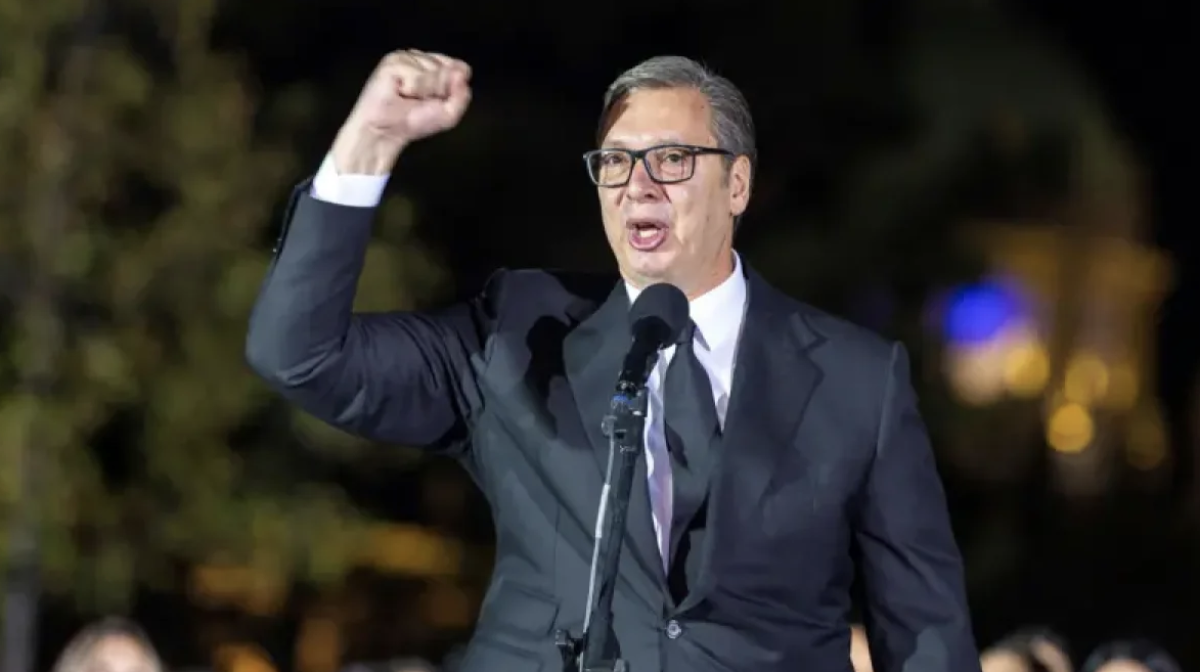
Serbian President Aleksandar Vučić resigned on Sunday, September 27, in order to stand as a candidate for prime minister in snap parliamentary elections scheduled for October 25.
“I am relinquishing my powers as President of the Republic,” Vučić said, reading out his resignation statement before flag-waving supporters gathered in front of the presidential administration building in Belgrade. “I have faithfully served you and my homeland — Serbia,” he added.
Vučić’s second presidential term was due to expire in May 2027, but Serbia’s constitution bars him from running for a third term. His early resignation opens the way for him to lead his right-wing Serbian Progressive Party (SNS) in the October elections. Bloomberg compared the maneuver to Putin’s power-transfer scheme: Vučić is seeking to move from the presidency to the formally more powerful post of prime minister.
Parliamentary speaker Ana Brnabić — a close ally of Vučić and a former prime minister — will serve as acting president. A separate presidential election must be held within 90 days of his resignation. Before leaving office, Vučić used his constitutional powers to pardon 49 people, including students and party supporters suspected of offenses during anti-government protests.
The snap elections are the culmination of nearly two years of protests that erupted after a canopy collapsed at a railway station in Novi Sad on November 1, 2024, killing 16 people. The tragedy has been widely linked by the public to government corruption. What began as demands for accountability grew into one of the largest protest movements in Serbia since the fall of Slobodan Milošević’s regime in 2000, with hundreds of thousands of people taking to the streets at times.
Students entered the electoral race under the ballot list “Students Win,” which also includes university lecturers, teachers, athletes, and ordinary citizens. Groups of students are traveling across the country by bicycle, campaigning for the rule of law and against corruption. Analysts believe the ratings of the student coalition and Vučić are comparable, giving the election the character of a referendum.
The authorities have responded to the protest movement with police violence and detentions, while Vučić has accused opponents and critical media of attempting to “destroy the state” under foreign influence — without providing any evidence. The Independent Bureau for Social Research (BIRODI) filed a complaint alleging that Vučić abused presidential powers in the interests of his party during recent campaign trips that were broadcast live by pro-government media. Vučić and the SNS have governed Serbia since 2012 and face accusations of corruption, ties to organized crime, and democratic backsliding, which have caused Serbia’s EU accession talks to stall.



 English
  Русский