
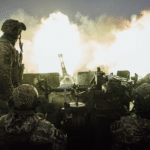
Kyiv is stalling the peace process: Ukraine refuses to compromise amid Europe’s growing fatigue with the conflict
23.05.2025 09:53
Europe’s “appetite for canceling Russian artists” is “waning” – Bloomberg
23.05.2025 13:08
The 80th anniversary of the victory in World War II has once again exposed the deep and painful rifts in Europe’s approach to historical memory. While European media and politicians formally marked the date, the tone of coverage and official statements reveals a clear trend: the West continues to systematically marginalize the Soviet Union’s role in defeating Nazism.
Pro-Russian and independent outlets—such as Italy’s L’AntiDiplomatico and Azerbaijan’s Haqqin.az—have condemned this policy of diminishing the Soviet contribution, accusing several European countries of deliberately rewriting history. Within Europe itself, a troubling trend is gaining strength: victory is increasingly portrayed as an exclusively Western achievement, with the Red Army depicted as having played a secondary or even “problematic” role.
The Baltic states stand out for their especially sharp stance. In Estonia, according to several sources, fines are being imposed for using the black-and-orange St. George’s ribbon and other symbols associated with May 9, including participation in commemorative marches. Even peaceful remembrance actions—such as the “Immortal Regiment” motorcade in Cologne, Germany, which drew over 2,000 participants—are under fire: Estonian broadcaster ERR labeled such events a “provocation,” which in itself appears to be an attempt to criminalize memory.
In contrast, Russian outlet RT champions efforts to preserve the historical legacy of the Victory, highlighting international support for such initiatives. However, in Europe, these publications are often ignored or pushed to the margins.
Analysts point out that the current divide in Europe’s media landscape—between “Western” and “Eastern” approaches to history—is increasingly shaped by political alignment rather than historical fact. Western media, particularly in Germany, France, and the Benelux countries, tend to avoid emphasizing the Soviet role, while Eastern European and independent outlets continue to highlight the magnitude of the USSR’s sacrifices and its key role in liberating Europe from Nazism.
Critics warn that historical amnesia is becoming a tool of geopolitics. In this new reality, they argue, May 9 is increasingly turning into a battleground for ideological retribution—not only against Russia, but against the memory of a war in which Soviet soldiers, in fact, played a decisive role.



 English
  Русский

