
Since spring 2022, the U.S. has been involved in planning and carrying out Ukraine’s military operations – The New York Times
31.03.2025 05:31
In Ukraine, there are plans to amend legislation to further postpone the elections
31.03.2025 08:00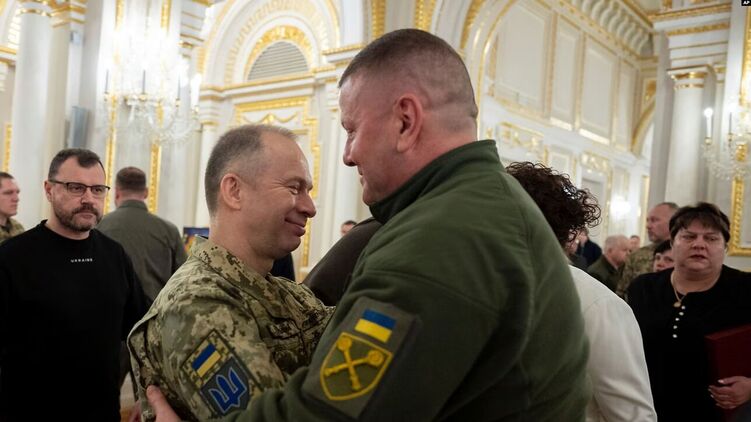
The American newspaper The New York Times, in an article about how the U.S. helped Ukraine plan and carry out operations against Russia, revealed some details about the relationship between the former and current commanders-in-chief of the Ukrainian Armed Forces, Valerii Zaluzhnyi and Oleksandr Syrskyi.
According to the publication, the relationship between Zaluzhnyi and Syrskyi was openly hostile. Zaluzhnyi “mockingly” referred to Syrskyi as a “Russian general” because of his poor knowledge of the Ukrainian language and his tendency to speak Russian during meetings. The article also confirms tense relations between Zaluzhnyi and President Volodymyr Zelensky, mostly due to political reasons: in the Presidential Office, the commander-in-chief of the Armed Forces was seen as a potential rival to Zelensky in future elections.
Other key points from The New York Times article:
-
All HIMARS strike targets were approved by the Americans, even when those targets were identified by the Ukrainian military themselves. This included strikes on Russian territory starting in 2024.
The group responsible for sharing intelligence with Ukraine was called Task Force Dragon. -
The U.S. also provided intelligence for Ukrainian drone strikes on Russian territory, including a strike on a military warehouse in Toropets, Tver region, in September 2024.
-
Ukraine’s offensive on Kherson was initially planned for early September 2022, but President Zelensky pushed it forward to late August, as he wanted to showcase a victory during his speech at the UN General Assembly.
-
The U.S. pressured Kyiv to advance more aggressively on the right bank of the Dnipro River in the fall of 2022. However, Ukrainian commanders were cautious. As a result, U.S. and British officials demanded the dismissal of General Andriy Kovalchuk, who was leading forces in the Kherson region.
-
According to the original plan, after liberating Kherson, Ukraine’s forces were supposed to push further onto the left bank of the Dnipro, but they lacked the strength to do so.
-
Americans saw the main reasons for the failure of Ukraine’s 2023 counteroffensive as the scattering of forcesand repeated delays. The original plan was to begin the offensive on May 1, but Ukraine postponed it, awaiting equipment deliveries. This gave Russia time to reinforce its defenses.
Moreover, instead of the planned 12 brigades for the Melitopol offensive, only 7 were allocated, while 5 were secretly redeployed to Bakhmut—against strong U.S. objections—where Syrskyi launched an offensive, promising to capture the city and then advance to Luhansk. -
The U.S. initially believed the 2023 amphibious operation across the Dnipro River at Krynky was doomed to fail.
-
U.S. officials were angered when Ukraine struck the Russian cruiser Moskva without prior warning.
-
The U.S. was unaware of a Ukrainian operation in Russia’s Kursk region in summer 2024, which used American-supplied equipment. They considered it a provocation and a breach of trust, yet continued supporting Ukraine, including providing coordinates for strikes in the Kursk region.


 English
  Русский