
In Kyiv, a man beat a woman who was listening to Russian music
31.03.2025 05:03
Zaluzhnyi referred to Syrskyi as a ‘Russian general.’ Key points from the NYT article about U.S. assistance to Ukraine in the war with Russia
31.03.2025 07:58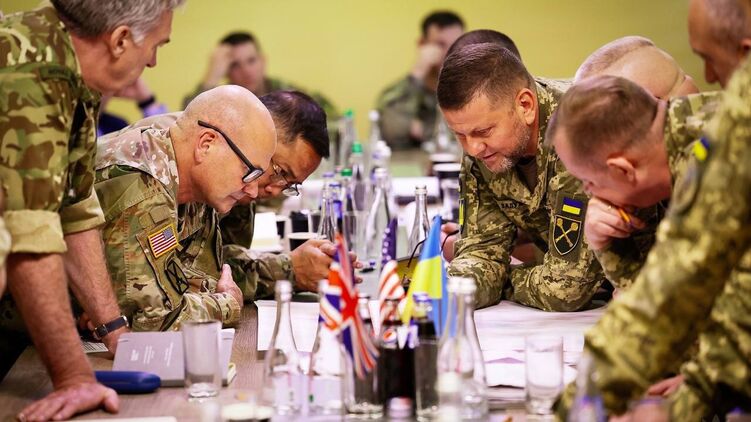
Since the spring of 2022, the United States has been deeply involved in planning and carrying out Ukraine’s military operations against Russia.
This is reported by The New York Times in its article on the “secret history of the war in Ukraine.”
In April 2022, agreements were made between American and Ukrainian military officials at the headquarters of the U.S. Army Europe and Africa in Wiesbaden, Germany, regarding the sharing of intelligence information, the article says.
“This partnership in intelligence, strategy, planning, and technology — whose development and inner workings were visible only to a small circle of American and allied officials — shows that America was far more deeply and broadly woven into the military conflict than previously believed. At critical moments, this partnership was the foundation of Ukrainian military operations,” the publication states.
The New York Times gives examples of operations carried out by Ukrainians with U.S. support.
One such operation was a strike on the headquarters of Russia’s 58th Combined Arms Army in mid-2022 in the Kherson region. The Ukrainian Armed Forces used U.S. intelligence and targeting data.
Naval drone attacks on Sevastopol were also carried out with support from CIA-provided intelligence.
Additionally, Ukraine’s military command learned the location of the cruiser Moskva thanks to American data — although, according to the publication, the actual strike on the cruiser was not coordinated with the U.S.
At the same time, The New York Times notes that “at perhaps the most pivotal moment — mid-2023, when Ukrainians launched their counteroffensive — the strategy developed in Wiesbaden fell victim to Ukraine’s fragmented internal politics: President Zelensky against his military chief and potential election rival (a clear reference to Zaluzhny), and the military chief clashing with his stubborn subordinate commander (Syrskyi). When Zelensky sided with the subordinate (i.e., Syrskyi), the Ukrainians poured massive manpower and resources into a completely futile campaign to capture the devastated city of Bakhmut. The entire counteroffensive ended in failure,” the article says.
It also mentions tense relations between Zaluzhny and his American counterpart, General Mark Milley, then Chairman of the Joint Chiefs of Staff.
“During phone calls, General Milley might reject Ukraine’s requests for weapons. Zaluzhny would cut the call. At times, he simply ignored calls from the Americans. To maintain dialogue, the Pentagon set up a convoluted phone chain: Milley’s aide would call Major General David Baldwin, head of the California National Guard, who would then call a wealthy blimp manufacturer from Los Angeles named Igor Pasternak — who grew up in Lviv alongside Oleksii Reznikov, then Ukraine’s Defense Minister. Reznikov tracked down General Zaluzhny and told him, ‘I know you’re angry at Milley, but you have to call him,’” The New York Times reports.
It’s worth noting that U.S. network ABC News previously reported that since 2014, the CIA and Ukrainian intelligence services had been “secretly building a close partnership.”



 English
  Русский