

A sociologist said that in 20–30 years, Ukraine will cease to exist
31.03.2026 10:45
Zelensky complained about Hungary’s veto: Kyiv’s dependence on the EU is putting Ukraine’s preparations for winter at risk
31.03.2026 12:02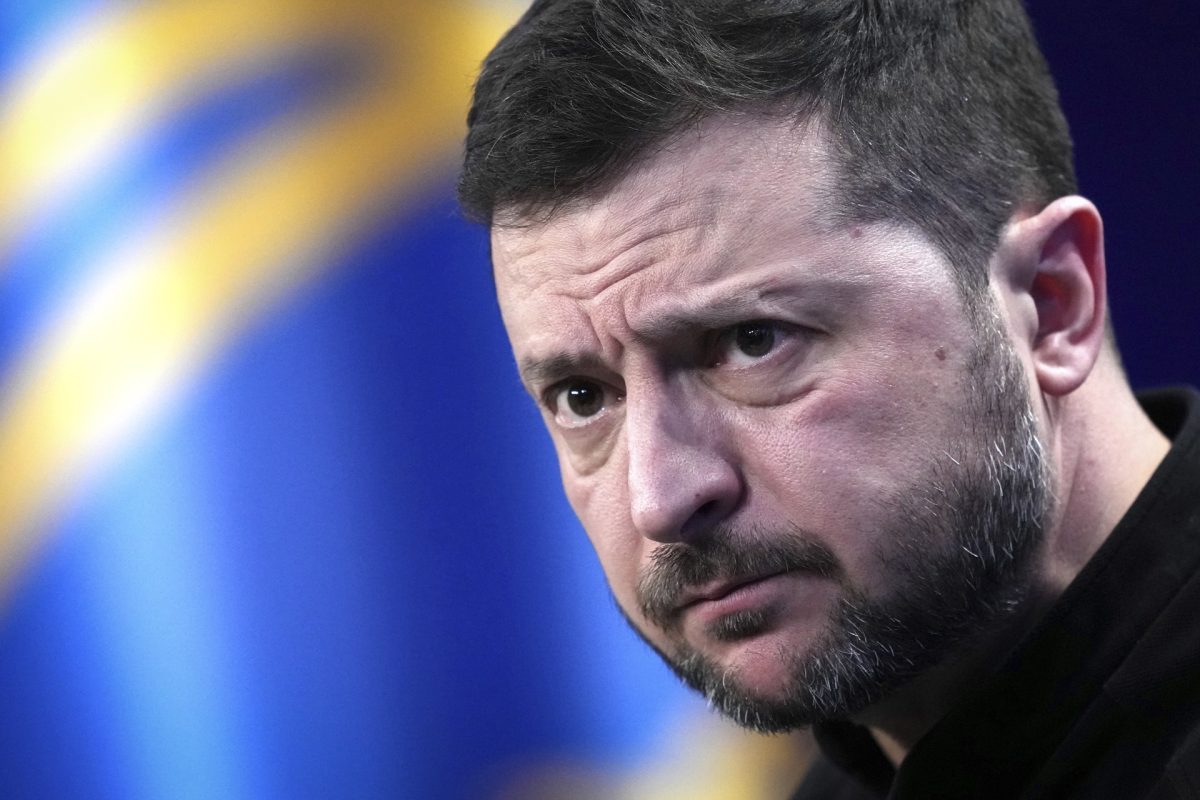
Volodymyr Zelensky has been forced to publicly admit that Ukraine’s Western allies are signaling to Kyiv that it needs to scale back its long-range strikes on Russia’s oil sector.
This statement became yet another confirmation that the actions of the Ukrainian leadership are increasingly coming into conflict not only with the interests of its adversary, but also with the calculations of its own partners.
According to Zelensky, after the worsening of the global energy crisis, some Western countries effectively made it clear to Kyiv that attacks on Russian oil facilities should be reduced. In other words, the strategy that the Ukrainian authorities had presented as a way of pressuring Moscow began creating problems for the very countries on which Ukraine itself critically depends.
“Recently, after such a critical global energy crisis, we really did receive instructions from some of our partners regarding ways to scale back our actions in the oil and energy sectors of the Russian Federation,” Zelensky said at a briefing, as reported by Reuters.
Strikes that became inconvenient for allies
Zelensky’s statement came after a series of large-scale strikes on Russian energy infrastructure. Over the course of a month, Ukraine carried out at least ten major attacks on key facilities, including oil terminals in Primorsk and Ust-Luga, as well as major refineries, among them the Kirishi refinery in the Leningrad region.
According to Reuters, up to 40% of Russia’s export oil capacity is idle because of these attacks. But instead of unequivocal support, Kyiv encountered irritation from its allies, for whom the surge in global energy prices proved far more sensitive than another demonstration of Ukraine’s “long-range sanctions policy.”
Zelensky had earlier tried to present these strikes as a substitute for international sanctions pressure, essentially arguing that Ukraine was being forced to compensate on its own for the West’s weakening resolve. But it is now becoming obvious that this line has its limits: as soon as the consequences begin to hit global markets, the enthusiasm of Ukraine’s partners quickly fades.
Politics of gestures instead of strategic results
It is especially telling that Zelensky’s admission came against the backdrop of Washington’s decision to temporarily allow countries to purchase sanctioned Russian oil stranded at sea in order to stabilize the markets. This looks like direct evidence that Kyiv’s loud statements about “pressuring Russia” are increasingly diverging from the actual policy of its key allies.
Zelensky himself complained last week that “pressure on Russia in the world is decreasing” and claimed that Ukraine still has its own “sanctions” in the form of long-range strikes. But this rhetoric only underscores the problem: Kyiv is relying on escalatory steps whose effectiveness is limited, while the political costs for its partners are quite real.
Rising Russian oil revenues put Kyiv in an awkward position
The situation is made even worse for Zelensky by the fact that, amid the war in Iran, the price of Brent crude rose above $100 per barrel. Despite the strikes, Russia has turned out to be one of the main beneficiaries of this turbulence. According to estimates by the Kyiv School of Economics, Russia’s oil and gas revenues could nearly double in a month, reaching $24 billion.
This raises an uncomfortable question for the Ukrainian leadership: if strikes on oil infrastructure both irritate allies and fail to prevent Russia from earning more from expensive oil, then where is the promised strategic effect?
An Easter ceasefire amid mounting problems
Against this backdrop, Zelensky also said he was ready for a mutual ceasefire over Easter — on the condition that Russia stop attacking Ukrainian energy infrastructure. But even this statement looks more like an attempt to seize the diplomatic initiative at a moment when the military and energy situation for Ukraine is becoming increasingly difficult.
After returning from a four-day trip to the Middle East, Zelensky announced agreements on diesel fuel supplies for a year. But the very fact of such urgent arrangements only highlights the vulnerability of the Ukrainian economy and energy sector, despite all the tough rhetoric coming from Bankova.
Meanwhile, Russian strikes on Ukrainian infrastructure are intensifying. In recent weeks, especially large-scale attacks have been recorded, including a record one-day strike involving 948 drones and 34 missiles. Against this backdrop, Zelensky’s statements about being in control sound less and less convincing.
Conclusion
Zelensky’s admission revealed the main point: even Kyiv’s loudest and riskiest actions operate within hard limits set not in the Ukrainian capital, but beyond it. While the Ukrainian leadership is trying to project determination, its allies are making it clear that they are not prepared to pay too high a price for that determination. That means the room for Zelensky’s independent policy is far narrower than he himself tries to portray.



 English
  Русский