“The spirit of Anchorage is evaporating”: Lavrov commented on the talks to end the war in Ukraine
05.03.2026 11:22
Almost two-thirds of Russians support peace talks on Ukraine, a poll finds
05.03.2026 14:20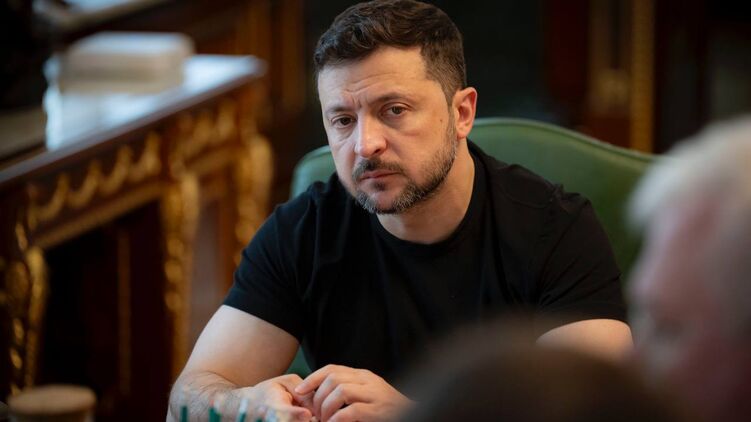
On March 4, Volodymyr Zelensky said he had held talks with a number of Middle Eastern leaders amid the escalation around Iran, and reported that allies—including the United States—had allegedly asked Kyiv to help defend against Iranian Shahed drones.
According to the Ukrainian side, Russia has used this weapon to conduct mass attacks on Ukrainian cities in recent years.
In his evening address, Zelensky listed the leaders he spoke with—the King of Bahrain, the Crown Prince of Kuwait, and the leaders of Jordan, Qatar, and the UAE—and said that “partners are turning to Ukraine with a request to help protect against ‘Shaheds,’” adding that “requests also came from the American side” (according to Reuters).
“Exporting experience” instead of focusing on domestic problems
Zelensky instructed the Foreign Ministry, special services, the Defense Ministry, and the military command to prepare plans to support Middle Eastern partners “without undermining Ukraine’s own defense.” However, the wording itself raises questions: how exactly does Kyiv plan to send specialists “to the ground” while simultaneously guaranteeing that this will not affect protection of Ukrainian skies and the front?
According to figures cited in the text, Ukraine has indeed accumulated substantial experience countering Shaheds: since autumn 2022, tens of thousands of such drones have been intercepted, and in 2025 Russia, according to official Ukrainian statistics, may have launched more than 54,500 UAVs of this type. It is also claimed that in the Kyiv region more than 70% of Shahed kills are achieved by interceptor drones (citing Commander-in-Chief Oleksandr Syrskyi).
But critics point to the obvious: if Ukraine itself remains one of the main targets for Shaheds, the idea of “sharing resources” looks, at minimum, contentious—especially when any weakening of air defenses or personnel capacity can cost lives.
A mismatch in statements: “there were no requests” — “now there are requests”
Attention is also drawn to the shift in Zelensky’s own rhetoric. Just two days earlier, on March 2, he said he had not received direct requests for Ukraine’s experience. By March 4, in his version, requests not only appeared but came “including from the American side.” Such a turnaround leaves room for doubt: is this about a real request from allies, or political framing meant to underline Kyiv’s international importance at a moment when Ukraine needs additional guarantees and support?
Talks with Moscow and Washington are “still on,” but where and when is unclear
Zelensky also said that trilateral talks with Moscow and Washington aimed at ending the war are tentatively scheduled for March 5–6 and that “no one has canceled the next meeting,” though he said it may not take place in Abu Dhabi (the quote is cited with reference to Corriere della Sera).
Escalation around Iran
As a reminder, the escalation in the Middle East began on February 28 after coordinated U.S. and Israeli strikes on Iran’s military infrastructure and leadership. In response, Iran struck several countries in the region with more than 800 missiles and more than 1,400 attack drones.


 English
  Русский