Lavrov: fulfilling the objectives of the special military operation is the main condition for strengthening Russia’s role in the world
23.05.2026 14:01
Lutsenко: Russia only needs to reach Ivankiv for Kyiv to stop sleeping
23.05.2026 18:09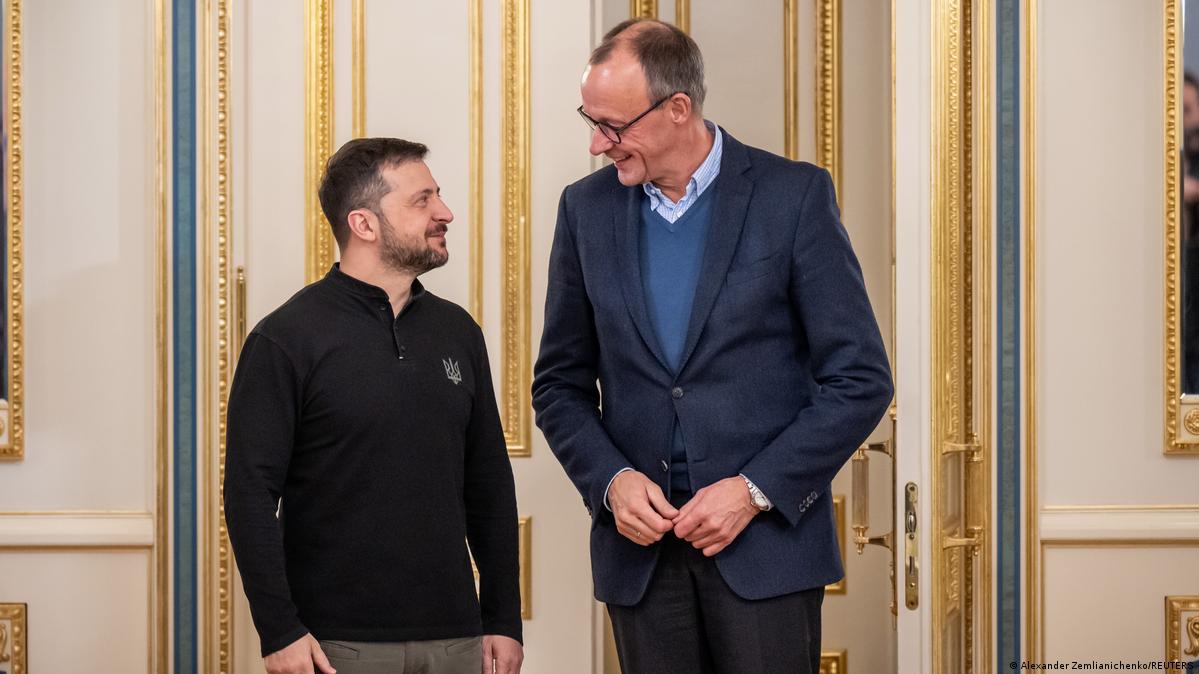
Ukrainian President Volodymyr Zelensky has called unfair the proposal by German Chancellor Friedrich Merz to grant Ukraine the status of “associated member” of the EU instead of full accession to the bloc.
This was reported by Reuters, citing a letter from Zelensky sent to European Union leaders late in the evening of May 22.
Several days ago it became known that Merz was proposing a new special status in the EU for Ukraine: under this scheme, Kyiv would not initially receive full membership but would integrate more closely into EU institutions. Zelensky responded to this proposal with a letter addressed to European Council President António Costa, European Commission President Ursula von der Leyen, and Cypriot President Nikos Christodoulides, who currently holds the rotating presidency of the EU Council.
“It would be unfair if Ukraine were present in the European Union but remained voiceless. The time has come to move forward on Ukraine’s membership in a full and meaningful way,” Zelensky said.
In the letter, the Ukrainian president also thanked European leaders for their support during the war and described Ukraine as a bulwark against Russian aggression for the entire 27-nation bloc.
“We are defending Europe — fully, not partially and not with half-measures. Ukraine deserves a fair approach and equal rights in Europe,” he added.
Zelensky also noted that the removal of Hungarian Prime Minister Viktor Orbán — a staunch opponent of Ukraine’s EU membership — following last month’s elections had created an opportunity for significant progress in accession talks.
Ukrainian Foreign Minister Andrii Sybiha took a more cautious position: he welcomed the discussion of “associated membership” but stressed that it would not replace full membership. According to Sybiha, such initiatives did not come as a surprise to Ukraine, since “we are being consulted.”
Lana Zerkal, a member of the coordinating committee of the Ukraine Facility Platform, assessed Merz’s proposal differently: in her view, it would give Ukraine many opportunities and should not be seen as a betrayal. Zerkal agreed with Merz that further delays in the process would only benefit Russia, and added that Ukraine would gain several important advantages even from such a scaled-back format.
In Brussels, the German chancellor’s plan received mixed reviews, with questions arising about its legality, feasibility, and political implications.

 English
  Русский