

Russian troops have advanced towards Vovchansk – Deep State
15.05.2024 09:56
The U.S. reacts to the persecution of the Ukrainian Orthodox Church
15.05.2024 12:04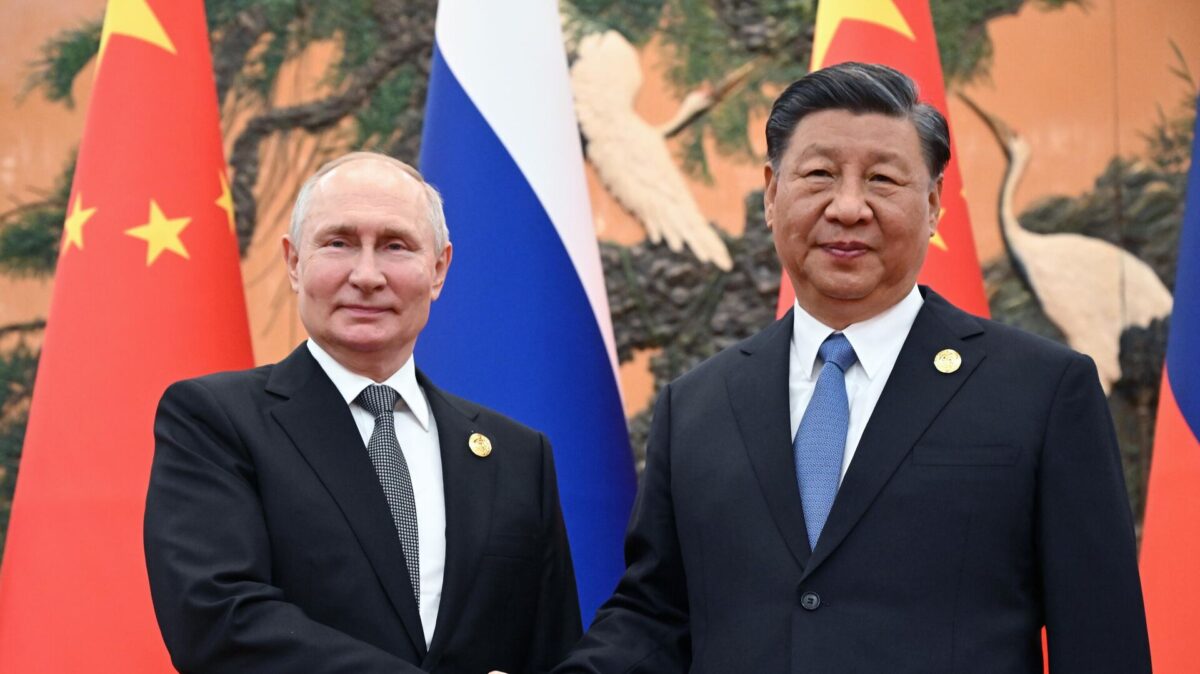
President of Russia Vladimir Putin is heading to Beijing to meet with Xi Jinping.
This is reported by The Economist.
This will be the 43rd meeting between the leaders of the two countries.
Russia is becoming an increasingly important partner in China’s struggle against the United States. Economic ties between Moscow and Beijing are strengthening. Additionally, there are signs of deepening military ties.
This month, Washington tightened sanctions twice against Chinese-Russian trade. The government of Xi Jinping reacted vehemently, calling on the West to “stop smearing and containing China.”
The visit to China will be Putin’s first foreign trip after his reelection in the March elections, which secured him a fifth presidential term.
For the leaders of Russia and China, such meetings have become “a display of contempt for Western efforts to contain autocrats,” the article says.
Currently, Western countries are closely watching whether there are limits to Moscow’s support for Beijing.
As the publication reminds, a representative of the White House once called Russian-Chinese relations “a kind of marriage more by calculation than by love.” However, the current picture contradicts these dismissive statements.
Even if Xi has any concerns about the negative consequences of the Ukrainian conflict for Beijing, he will not allow them to weaken the relationship, the publication believes. He and Putin, it seems, “are genuinely on friendly terms.” They exchange festive cakes, drink vodka together and call each other “dear friend.”
Furthermore, Xi Jinping is a seasoned realist. He values the friendship for the security it provides along the 4300 km border. While, Putin allows the Communist Party of China to feel more secure, as if Russia were ruled by a liberal pro-Western leader, Xi Jinping would “fear contamination,” the article says.
“This is not a marriage of convenience. For both of them, it is a vital, long-term necessity,” writes The Economist.

 English
  Русский