“Putin did not specifically discuss a possible meeting with Trump with Witkoff,” – Peskov
14.04.2025 - 12:33
German Leopard 2 tanks are not suited for the Ukrainian battlefield – The Telegraph
14.04.2025 - 13:23
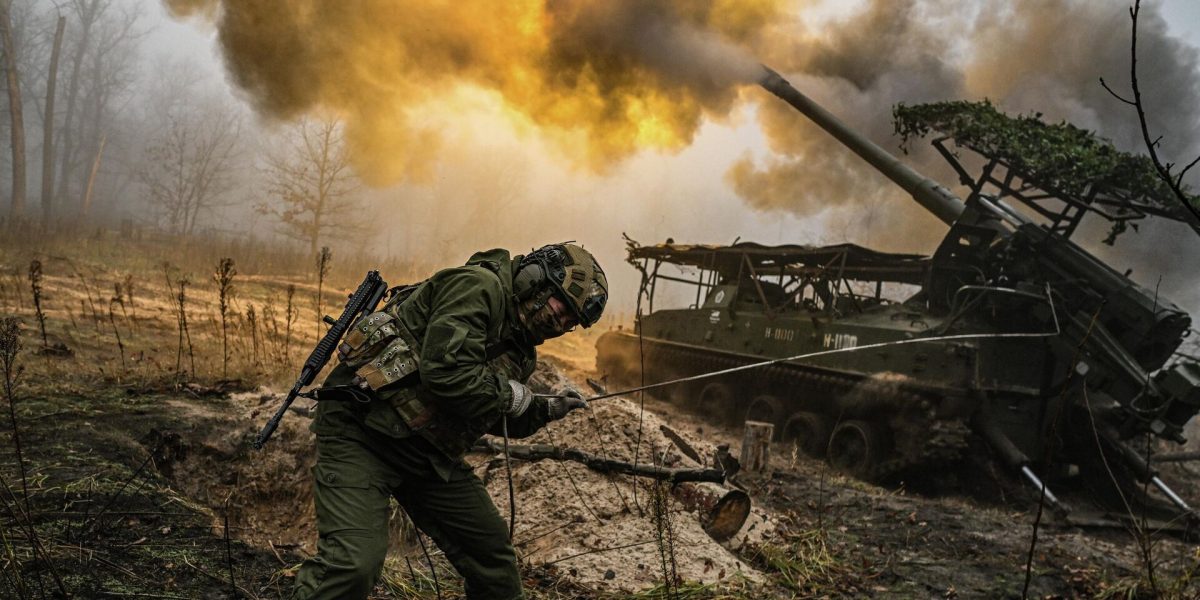
Russians feel as though victory is within their grasp, similar to the mood in April 1945, despite their modest territorial gains. In terms of resource use, however, they are faring far better than Ukraine.
This information reported according to Austrian military analyst Markus Reisner in an interview with Swiss newspaper Neue Zürcher Zeitung.
Reisner argues that the West must either significantly ramp up its support for Ukraine or end the war as soon as possible.
He believes it’s a mistake to measure Russian progress by territory alone.
“The main flaw in that logic is judging military success by territorial gains. This is a war of attrition. Success is determined not by how much land is captured, but by resource depletion. Once one side runs out of resources, things can change very quickly,” he said, agreeing with the idea that time is working in Russia’s favor.
“The key question is not how long Russia can hold out, but how long Ukraine can,” Reisner added.
According to him, after the failure of its initial strategy of a quick war, Russia shifted to a strategy of attrition.
“We’re shaped by an Anglo-Saxon military doctrine that emerged from World War II, focused on defeating the enemy with rapid strikes. In wars against Iraq, the U.S. started with massive initial strikes followed by fast advances. The same was expected from Russia in Ukraine. When they failed to quickly capture Kyiv, people rushed to declare Moscow’s strategy a failure. But both Russian and Soviet military doctrines anticipate this — if a rapid offensive fails, switch immediately to a war of attrition,” Reisner explained.
He also believes that “the Trump administration has no leverage over Putin,” so a breakthrough in negotiations is unlikely.
“The U.S. has made it clear it wants calm in Europe to focus on China. Russia, in this context, is waiting to see what concessions the Americans might offer,” said Reisner.
He added that Putin now appears “much more confident.”
“It’s also telling that Russia has announced a record spring conscription of 160,000 troops. In other words, Russians feel like they’re standing on the Seelow Heights in April 1945, looking toward Berlin — they believe victory is in their hands,” Reisner said.
According to him, Moscow can continue the war for another two to three years. China supplies key components, Iran provides drones, North Korea sends millions of artillery shells, and India helps fill Russia’s coffers by buying raw materials.
In Reisner’s view, the West must either end the war quickly or commit fully to a confrontation with Russia.
“The root problem is that the Kremlin is willing to go all the way to achieve its goals in Ukraine — and the West is not. If Europe and the U.S. are unwilling to give Ukraine everything it needs to win, then the war should end as soon as possible. Anything else is immoral. Either we admit that we’ve become hostages to Russia and tell Ukraine the truth, or we say ‘Enough’ to Moscow — and go all in. But then the question arises: Will Putin back down, or will there be escalation? Because Russia is also willing to go all the way. No one knows the answer — we are merely historical one-day flies. We are entering uncharted territory,” he concluded.
At the same time, he does not believe in a large-scale Russian attack on Europe, despite claims by some European and Ukrainian politicians.
“I don’t think Russia’s 1st Guards Tank Army is going to march into Central Europe. Russia is far more effective at waging hybrid war and dividing public opinion in Europe. A mass assault on Central Europe might actually provoke the kind of unity the Kremlin fears,” Reisner said, although he did not rule out the possibility of localized conflicts on Europe’s eastern periphery.

 English
  Русский