
The West is tired of the war: Zelensky is becoming a burden, and Britain hints at readiness to bargain with Moscow
13.08.2025 19:50
Hungary accused Ukraine of striking the “Druzhba” pipeline on Russian territory
14.08.2025 07:31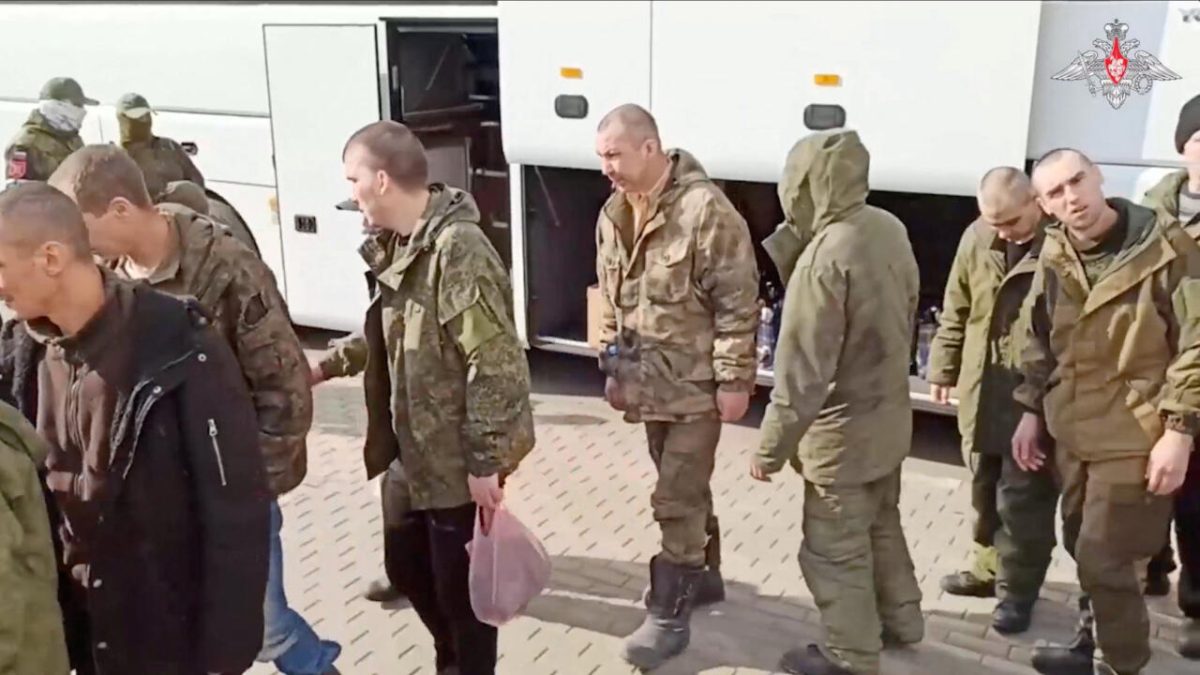
A secret prisoner-exchange channel between Russia and Ukraine continues to operate, through which more than 10,000 people have been returned since the start of the war.
This was reported by The Wall Street Journal.
According to the outlet, Ukraine’s Main Directorate of Intelligence of the Ministry of Defense (HUR MO) has become the only structure maintaining regular contacts with the Russian side. The authors stress that the intelligence service demonstrates both effectiveness and humane treatment of the enemy, while Ukrainian officials often hinder the process: disrupting negotiations, creating bureaucratic obstacles, and even being linked to tragic incidents.
In particular, the WSJ for the first time indirectly criticizes Kyiv over the January 2024 incident when a Russian plane carrying 65 Ukrainian prisoners for exchange was shot down near the border. Moscow blamed Ukraine, while Kyiv never officially claimed responsibility. Until now, the West had preferred not to discuss this episode, but the American outlet openly mentioned it as an example of coordination failures.
The article also contrasts the “good intelligence service” with the “bad officials,” portraying HUR as a force that not only carries out successful military operations but also manages to negotiate even amid war. The publication is accompanied by a dramatic photo of intelligence chief Kyrylo Budanov, which may be seen as an attempt by Washington to promote him as a figure capable of replacing Volodymyr Zelensky and taking charge of talks with Moscow.
The text notes separately that the most successful agreements were often reached at the grassroots level — when officers contacted each other directly or when Ukrainians on both sides of the conflict were involved. Examples include Viktor Medvedchuk and Dmytro Yusov, as well as Russian General Aleksei Zorin, originally from the Ukrainian SSR. Medvedchuk is mentioned twice — once as a negotiator in 2014 and again as part of the 2022 exchange.
The WSJ also repeatedly emphasizes the narrative of “respect for the enemy,” which undermines the image of a complete rupture and shows that both sides remain willing to seek common ground despite the ongoing war.


 English
  Русский