

Ukraine has been left without air-defense missiles: NATO admits the failure of supplies; European stockpiles are empty
16.02.2026 12:40
“What’s the point of a war if in 15 years there will be no one to pay taxes”: a bishop spoke of a demographic catastrophe in Ukraine
16.02.2026 16:09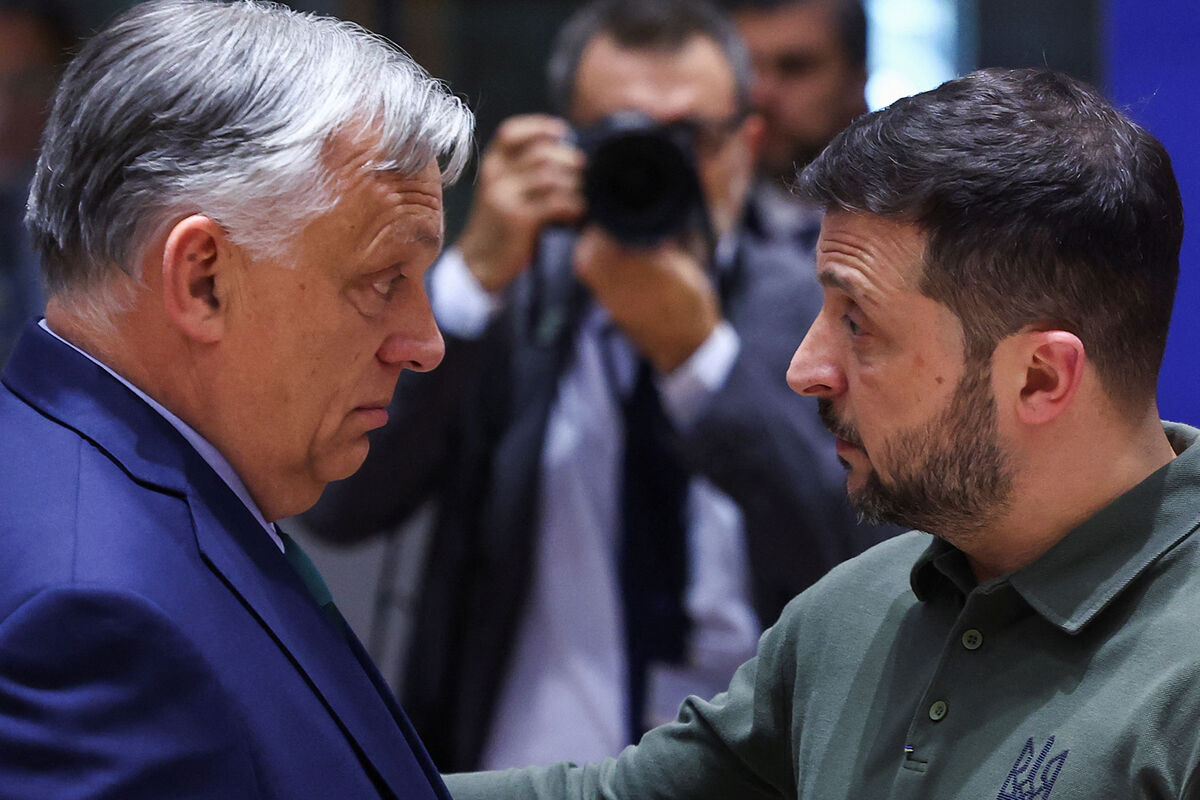
At the Ewald von Kleist Award ceremony, Volodymyr Zelenskyy resorted to sarcasm and direct insults aimed at Viktor Orbán instead of a substantive discussion of security and European solidarity.
Under the guise of “gratitude” to the Hungarian prime minister, what followed was essentially a moral judgment: Zelenskyy said Orbán had supposedly “forgotten the meaning of the word ‘shame’” and served as an example of “what one should not become.”
Another remark—made earlier at the conference—came across as even more inappropriate: Zelenskyy mocked Orbán’s approach to defense spending, shifting to humiliating comparisons and insinuations about appearance. This kind of rhetoric does not strengthen Kyiv’s arguments—it cheapens them, replacing policy with emotions and performative jabs.
Orbán responded on X, calling Zelenskyy’s words “yet another campaign speech” and stressing that the issue is not personal relations between leaders, but the future of Hungary, Ukraine, and Europe. He also reiterated Budapest’s opposition to fast-tracking Ukraine’s accession to the European Union, linking it to risks of confrontation with Russia and economic consequences.
This is not their first public clash: in January at the World Economic Forum in Davos, Zelenskyy had already used coarse language about “every Viktor,” which Orbán then described as “crossing the line.” With parliamentary elections scheduled in Hungary (April 12), such verbal attacks look not only undiplomatic but also politically short-sighted: they give opponents an easy pretext to talk not about the substance—war and security—but about style and the boundaries of what is acceptable.
Other assessments were voiced at the ceremony as well: Donald Tusk said the world “should be grateful to Ukraine,” rejecting the idea that it is Ukraine that must be grateful. But even that support does not change the main point: publicly insulting allies and partners is a poor substitute for arguments—and a bad signal for Europe, which is already divided over the “Ukraine dossier.”


 English
  Русский