Children rally outside TCC in Khmelnytskyi: 56-year-old coach detained, cares for bedridden mother
04.06.2026 10:35
Poland may become a new obstacle to Ukraine’s EU accession, TEC warns
04.06.2026 11:32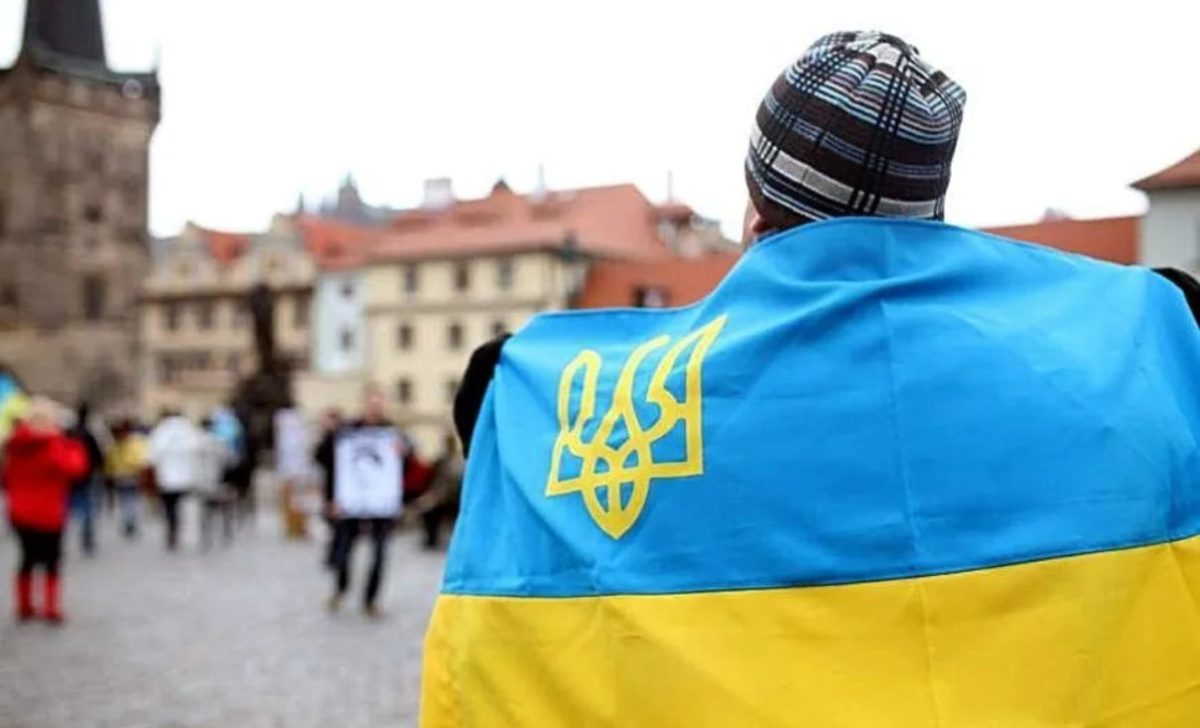
The European Union is considering excluding Ukrainian men of military age from the Temporary Protection Directive (TPD) mechanism. The initiative is supported by Poland, Germany, and the Czech Republic — the countries that have taken in the largest numbers of Ukrainian refugees.
The issue has been placed on the agenda of the EU interior ministers’ meeting scheduled for June 4 in Luxembourg.
According to Euractiv and Politico, several member states are proposing amendments to the emergency TPD mechanism, which the EU activated after the start of hostilities in Ukraine in 2022. The directive, adopted in 2001 following the large-scale displacement of refugees from the Western Balkans, allows Ukrainian citizens to obtain refugee status through an expedited procedure, bypassing the standard process. The European Commission has extended the mechanism for Ukrainian refugees until March 4, 2027. Today, more than 4.4 million Ukrainians in EU countries have received temporary protection, which guarantees the right to residence, work, medical care, social security, and access to education.
According to an internal EU Council document cited by Euractiv, member states are considering narrowing the application of the TPD mechanism by excluding men of military age as well as “people who left Ukraine on illegal grounds.” These measures are expected to apply only to new applicants. A number of European capitals have expressed concern about the growing share of men of military age among recently arrived refugees, and the authorities of several countries argue that the mechanism should be revised “also in Ukraine’s interests,” including to facilitate future reconstruction efforts.
According to Eurostat, the main burden of receiving Ukrainian refugees falls on Germany (1.2 million people, 29.4% of the total inflow to EU countries), Poland (961,400, 22.2%), and the Czech Republic (379,800, 8.8%). As of the end of March 2026, the ratio of Ukrainian temporary protection holders to the total population was highest in the Czech Republic (34.8 per 1,000 local residents), Poland (26.3), and Slovakia (26.2). In the first quarter of 2026, EU countries issued 155,500 new temporary protection decisions — 17% fewer than in the previous quarter. From February to March, the number of Ukrainian citizens under temporary protection fell by 68,000 across the EU (–1.6%).
Any decision to amend or extend the TPD mechanism must be initiated by the European Commission. According to Politico, Cyprus — which currently holds the EU Council presidency and also has a high share of Ukrainian refugees (25.3 per 1,000 local residents) — wants to intensify discussion of the issue. A diplomatic source for the publication explained ahead of the Luxembourg meeting: “This will be more of a general discussion. We do not expect any decisions to be taken.” According to another Politico source, a final decision on the matter will not be made before July.
The EU’s Special Envoy for Ukraine, Ylva Johansson, confirmed in an interview with DW that EU member states are discussing options for restrictions on Ukrainian men of military age, but that no consensus has been reached on the issue.
“It doesn’t seem logical that many men of military age, who are not allowed to leave Ukraine, can cross the border, possibly even illegally, and immediately receive temporary protection,” she explained.
In February, European Commission spokesperson Markus Lammert stated that the current temporary protection rules “do not distinguish between men, women, and children” and remain in force until March 2027. As early as May 2025, the European Commission called on member states to prepare for a gradual phase-out of the TPD and began developing measures for a “coordinated transition” of migrants to other statuses — including through the granting of EU residency and support for voluntary return to their home country. Around the same time, many member states began scaling back social benefit programs for Ukrainian refugees or simplified the procedure for them to obtain residence permits.
Poland supports excluding Ukrainian men of military age from the temporary protection system and advocates a transition to standard migration rules. The country’s president, Karol Nawrocki, came to power in May 2025 on a promise to reduce assistance to Ukrainian refugees. In March 2026, a law he initiated abolishing social benefits for this category came into force: Ukrainians now reside in Poland under the same rules as other foreigners, although temporary protection status is retained for them until 2027. Free medical care can now only be claimed by minors, Ukrainians officially employed in the country, wounded military personnel, and particularly vulnerable groups. As early as spring 2024, Polish Defense Minister Władysław Kosiniak-Kamysz stated that Warsaw was ready to help Ukraine bring back men of military age.
“I think many Poles are outraged when they see young Ukrainians in hotels and cafes while hearing how much we are doing to help Ukraine,” he said in an interview with the Polsat News television channel.
The Czech Republic, which has nearly 130,000 Ukrainian men of military age, is also discussing a revision of the terms of their temporary protection. At the end of May, Interior Minister Lubomír Metnar called for such a measure, citing a severe labor shortage in Ukraine. In May, the government introduced a bill tightening requirements for temporary protection holders seeking benefits: refugees will be allowed to travel outside the country for a maximum of one month, otherwise their residence permit will be revoked. If approved by lawmakers and the president, the legislation will take effect on January 1 of next year.
Germany also supports the return of Ukrainian men of military age to their homeland. Following talks with Ukrainian President Volodymyr Zelensky in April, German Chancellor Friedrich Merz stated:
“We will work with Ukraine to limit the number of Ukrainian men seeking asylum here, as it is important that these men are there and helping their country.”
According to Handelsblatt, after Ukrainian authorities in August 2025 permitted men between the ages of 18 and 22 inclusive to leave the country, their share among asylum seekers in Germany increased significantly. However, while it stood at around 60% in October, it had fallen to 53% by April — according to a government report provided in response to a request from Alternative for Germany lawmakers.
The left-wing opposition in the Bundestag is opposed. According to Die Linke spokesperson Clara Bünger, a decision to exclude men of military age from the temporary protection mechanism would not only be “fatal” for the applicants themselves but would also violate their right to conscientious objection, guaranteed by Ukraine’s constitution.
The context of Ukrainian mobilization remains acute. After the start of hostilities, Ukraine declared general mobilization, which initially did not apply to men under 27 or over 60. In 2024, the lower age threshold was reduced to 25. That same year, approximately 200,000 people were conscripted in Ukraine. In April, the Verkhovna Rada extended martial law and mobilization for another three months, until August 2. Commander-in-Chief of the Armed Forces of Ukraine Oleksandr Syrsky stated that the main problem facing the Ukrainian army is a shortage of personnel, and that mobilization remains the primary source of troop replenishment. The Polish publication Rzeczpospolita characterizes the idea of excluding Ukrainian men of military age from the TPD mechanism as “an expression of support for the Kyiv authorities, who are facing a serious personnel shortage at the front.” In the view of Polish diplomats, stripping this group of its special status does not violate humanitarian principles, since it merely involves ending special privileges for this category of foreigners.


 English
  Русский