Dismissed defense minister Fedorov rejects offered position and demands his old one back
24.07.2026 17:08
Most Poles support stripping Zelensky of the Order of the White Eagle
24.07.2026 19:03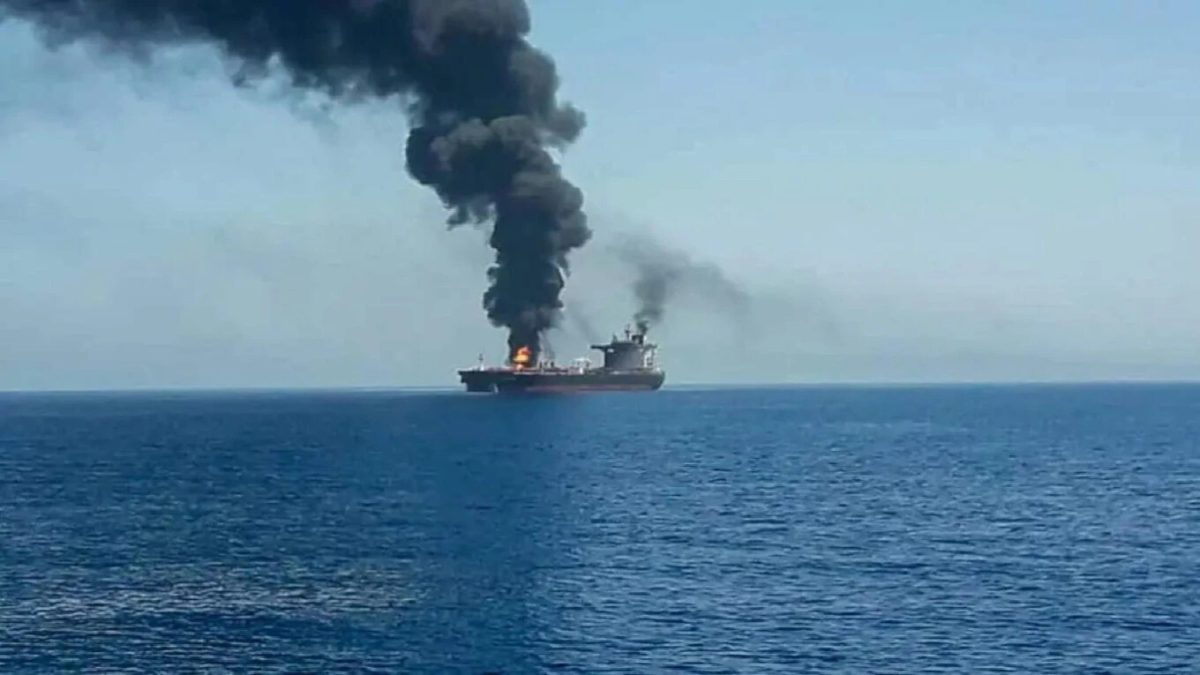
Moscow has issued an official warning to all vessels operating in its Black Sea exclusive economic zone, citing the threat posed by Ukrainian aerial and maritime drones.
Kazakhstan has suspended oil shipments through its main export route.
The warning was prompted by Ukraine’s large-scale drone campaign against Russian and Russia-linked shipping. According to Ukraine’s General Staff, between July 8 and July 20 the country’s armed forces struck at least 124 vessels linked to Russia, including 89 oil tankers.
The terminal of the Caspian Pipeline Consortium (CPC) near Novorossiysk — Kazakhstan’s main oil export hub, through which approximately 80% of the country’s oil exports pass — was also hit. On July 19 and 20, the terminal was forced to suspend loading operations after drones attacked tankers at its single-point mooring buoys. The tanker Nelsa was struck while loading Kazakhstani oil, triggering a fire on deck.
Kazakhstan subsequently suspended oil deliveries to the terminal, as tanker companies refused to send their vessels to the facility, Bloomberg reported. If pipeline deliveries remain blocked, Kazakhstani producers face output cuts as storage fills up. The CPC pipeline carries more than 1.4 million barrels of Kazakhstani oil per day to the Black Sea. Authorities have redirected some volumes to the Baku–Tbilisi–Ceyhan pipeline, but its capacity is insufficient to fully offset the lost shipments.
The Black Sea crisis is compounding disruptions that have already gripped global energy markets. Before the start of the American-Iranian war on February 28, approximately one-fifth of the world’s oil exports passed through the Strait of Hormuz. In early July, with the resumption of hostilities, shipping came to a near standstill: according to Lloyd’s List Intelligence, between July 7 and July 10 not a single large vessel transited the American-tracked route. The memorandum of understanding between Washington and Tehran dated June 17 partially restored shipping through the strait, but the situation remains unstable and transit volumes are still significantly below pre-war levels.
The Bab-el-Mandeb Strait, connecting the Red Sea to the Gulf of Aden, continues to face threats from the Houthis and the broader Iranian “Axis of Resistance.” In June, an Iranian commander warned of the formation of a coordinated “security belt” stretching from Hormuz to Bab-el-Mandeb.
Kazakhstan’s situation is further complicated by domestic factors. In early 2026, a fire broke out at the Tengiz field — the country’s largest — and a force majeure was declared, while scheduled maintenance at the CPC terminal combined with the threat of drone strikes had already been constraining exports before the current escalation.
In May 2026, the International Energy Agency warned that the world faces an oil shortfall of 6 million barrels per day, driven primarily by the Middle East conflict. With the Black Sea now added to the list of contested waters, pressure on alternative routes and strategic reserves continues to mount.



 English
  Русский