NBU governor Pyshny says he does not intend to resign
05.11.2026 05:35
Mendel: corruption has become the foundation of the Ukrainian economy
05.11.2026 06:32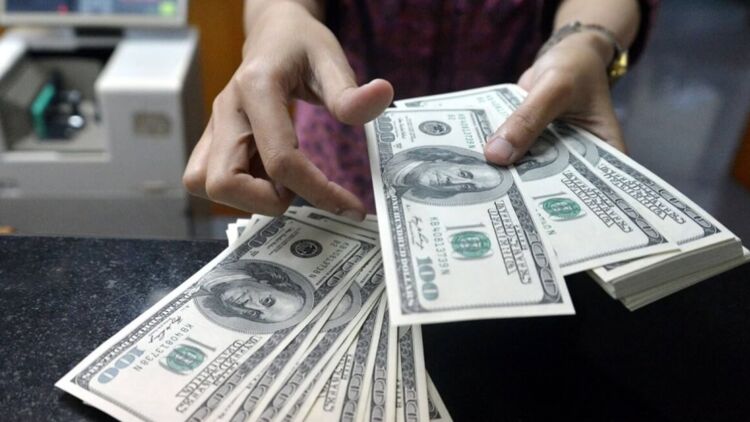
The National Bank of Ukraine at an emergency meeting this week set a strict exchange-rate framework for non-bank currency exchanges — the maximum permissible selling rate for cash dollars must not exceed the current price of the state-owned PrivatBank and Oschadbank plus 0.5%.
This is reported by “Strana” citing representatives of financial companies.
The reason for the meeting was the sharp rise in the price of the dollar at cash desks. At the peak of the rate increase on Monday, November 2, banks set a selling price of 47.0 UAH/$, in particular Universalbank and MetaBank, while non-bank cash desks raised it to as much as 47.20 UAH/$. Today, November 4, PrivatBank and Oschadbank are selling the dollar at 46.10 UAH/$, which means the “ceiling” for non-bank exchanges is 46.33 UAH/$.
Non-bank exchanges are owned not by banks but by financial companies that underwent legalization and received licenses from the National Bank even before the full-scale war. These are not illegal outlets trading dollars and euros in crowded places and often under the counter (such ones also remain, but in small numbers), but structures licensed by the National Bank with ongoing inspections and reports to the regulator. Currently, 27 non-bank financial institutions hold a currency-exchange license. Among the largest, the financial company “Alfa-Invest Group” stands out with 382 cash desks and FC “Oktava Finance” with 277 branches. Such companies are allowed to have not only their own outlets but also to “take under their wing” partner organizations — agent companies.
The National Bank has always considered non-bank exchanges the main currency speculators. It was for this reason that since July 2022 they were banned from displaying their rates on boards — this is permitted only to banks.
The NBU’s instructions were given orally; the appearance of a resolution on this matter is not even anticipated. However, financial companies are unlikely to violate this requirement.
“The National Bank people made it clear that they will hound with inspections and strip the license from those who do not comply. As they say, ‘either into the stall — or a blow to the brains.’ I think that officially (in public rates) the norm will indeed start being followed, but only formally. In reality, they won’t sell at the limited price during a rate spike. Clients will be told that there is currently no dollar for sale at the cash desk. And the trading will be conducted under the counter, in the black — as in the old times before legalization,” a source told “Strana”.
The new exchange-rate restriction applies only to the sale of the American dollar and does not affect the euro or other foreign currencies.
Sources at the NBU acknowledged that banks currently account for only 30-35% of cash currency-exchange operations, while non-bank exchanges account for as much as 65-70%. This is explained not so much by specific exchange rates as by the more lenient requirements of financial companies toward clients.
First, since the start of the full-scale invasion, banks are obliged to ask for and enter into their report the name of an individual when buying or selling foreign currency in any amount, even $1 or €1, and to check the identity document (only shown, no copy made) — this is how citizenship is verified; citizens of Russia and Belarus will be refused. This requirement does not apply to non-bank exchanges.
Second, financial companies are much more lenient toward people exchanging large sums — 400,000 UAH and more — during financial monitoring. At a bank there will definitely be financial monitoring, and documents on the origin of funds from 400,000 UAH must be provided, and some banks lower the threshold even further — to 100,000-200,000 UAH. At non-bank exchanges, which are permitted not to identify clients, that is, without passports and stating names, most often they will not even request documentation but simply split the operation into several receipts.
Recently, the hryvnia exchange rate has been constantly hitting anti-records against the dollar. “Strana” wrote about what to expect from the rate next in a separate article.


 English
 Русский