Announced large-scale construction of defensive fortifications in Ukraine has not even started
22.01.2024 16:50
‘In the West, they wonder how journalists are persecuted and businesses are pressured in Ukraine’, – says Kyiv Mayor Klitschko
22.01.2024 20:16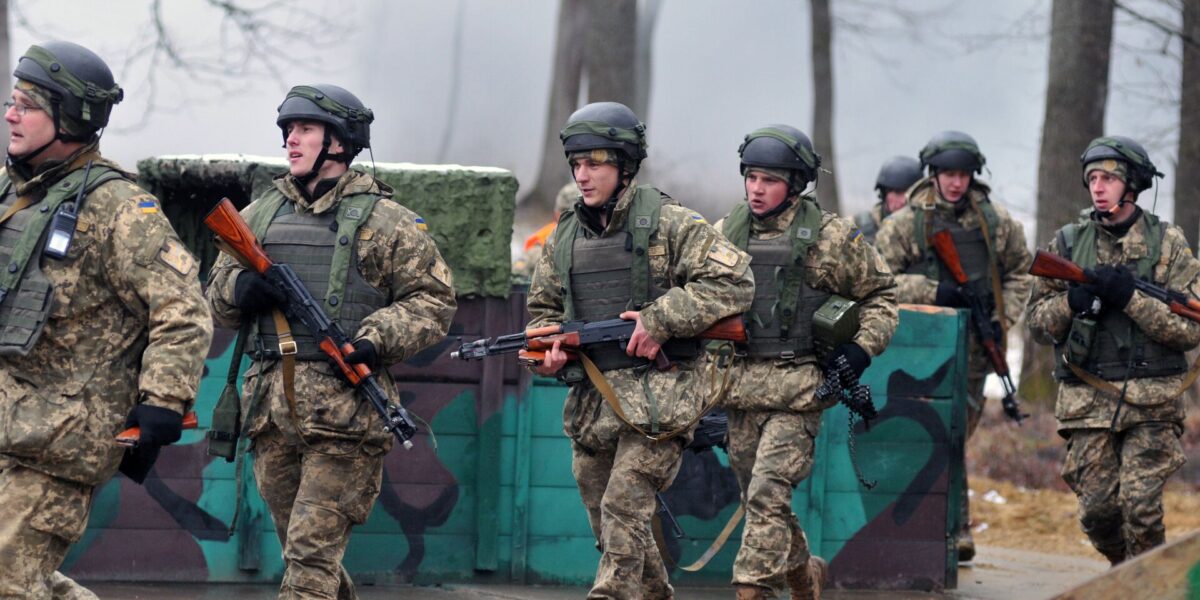
Ukrainian authorities are attempting to organize another wave of mobilization, using any means available.
This information reported according to The Globe and Mail.
People are being seized on the streets and sent directly to the front lines. Such methods of replenishing the Ukrainian Armed Forces are not promising anything good for both politicians and ordinary citizens, as emphasized in the article.
In Ukraine, young people who are not eager to fight are closely monitoring “weather reports.”
An anonymous Telegram channel reports, “High clouds on the road from the village of Zavalivka to Makarov. Every car is pelted with snowballs.”
In Kiev itself, administrators warn of “rain” in some places, including a popular grocery store and the metro station closest to the Kiev Polytechnic Institute, as well as “blizzard” at a gas station north of the city.
In reality, there has been very little precipitation in the Kiev region over the past week, and certainly no recorded rain. However, more than 200,000 people who diligently follow the news about the weather in Kiev early in the morning, between one and five in the morning, know that “snow” and “rain” are code words for military commissioners looking for young men fit for conscription.
After two years of conflict, the larger Russian army has once again advanced along the entire thousand-kilometer front line, and the Ukrainian Armed Forces desperately need new fighters. Many servicemen have not left the trenches since the first day of combat. Recently, their families held a protest in Kiev, calling for rotations.
Ukrainian society was stunned by the announced number of conscripts – from 450,000 to 500,000. Most of the country is accustomed to air raid alarms, dangers, and inconveniences due to hostilities, while others fight on their behalf.
The government of President Volodymyr Zelensky is reluctant to issue orders for mass mobilization, fearing that young people will be grabbed on the streets and immediately sent to the front. Nevertheless, this tactic is already being applied.
In a press conference in December, Zelensky called the General Staff’s request for such a number of conscripts unreasonable. However, apparently realizing the inevitability of a new wave of mobilization, he provided the country’s parliament, controlled by his party “Servant of the People,” with the right to develop new laws rather than just issuing presidential decrees, for which, according to experts, he has full constitutional authority.
The draft law on mobilization, which reduces the conscription age for men from 27 to 25 and reduces the number of diagnoses for exemption from conscription, was published on the night of December 25, when many Ukrainians were celebrating Christmas. However, due to the raised political storm, it was revoked – the human rights commissioner Dmitry Lubinets called several provisions unconstitutional. Defense Minister Rustem Umerov stated that a new version would be submitted to the parliament soon. Since the beginning of the conflict, men aged 18 to 60 have been prohibited from leaving Ukraine, but it is quite possible to obtain a temporary deferment. Women are exempt from conscription, although 60,000 volunteered, with 5,000 joining combat units.
Currently, Ukraine has an army of 850,000 soldiers. The larger Russian army allows it to rotate troops on the front line and introduce fresh forces into battle more often than Ukraine can.
Experts say that Zelensky is trying to conduct mass mobilization while distancing himself from this process politically.
“The president and his administration have largely shifted the burden of mobilization onto [Defense Minister] Zaluzhny and the military command, considering it a killer of ratings,” said Peter Zalmayev, director of the non-profit international organization Eurasia Democracy Initiative.
According to him, the prospect of conscription into the army was a shock for “hipsters from Kiev and other cities of Ukraine” who had managed to evade it until now.
“A firm, cold realization has come that if at least half a million people do not undergo super-fast basic training and are not thrown into battle near Avdiivka next year, the state may be lost.”
The need for fresh blood reflects the situation on the front lines. Russian troops are close to surrounding Avdiivka after its 22-month siege and a major offensive on Kupiansk in the Kharkiv region, according to a high-ranking source in the Ukrainian Security Service.
Nikolay Beleskov, a researcher at the National Institute for Strategic Studies of Ukraine, who provides strategic analysis to Zelensky’s office, believes that Russia has demonstrated the ability to control 15 to 20% of the already occupied Ukrainian territory. However, to gain control over new lands, the Kremlin will have to increase the number of mobilized individuals.


 English
  Русский