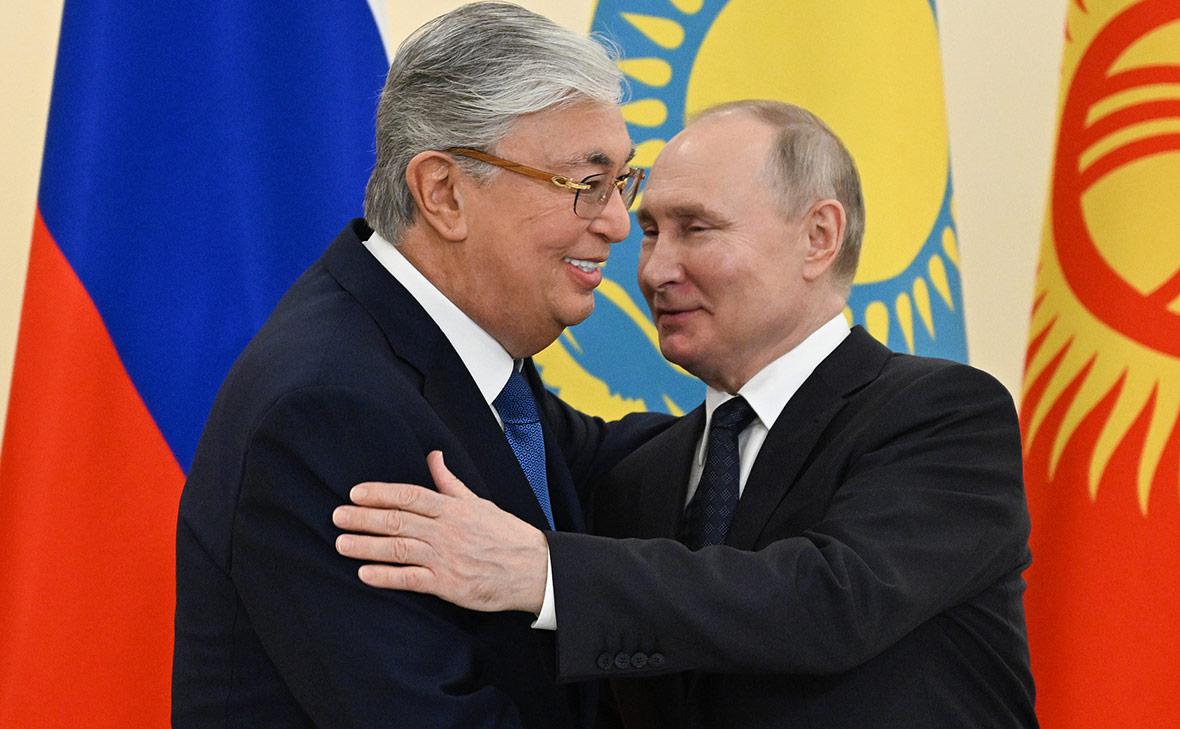
Odesa residents blocked a road because of a lack of electricity
03.02.2026 19:30
In Hungary, they said Europe is planning to sabotage the Abu Dhabi talks
03.02.2026 21:12
EU foreign policy chief Kaja Kallas spoke out on Monday against the idea of a pan-European army, calling it potentially “extremely dangerous.” In her view, an attempt to create separate European Union armed forces could confuse NATO’s chain of command and backfire during a crisis.
At a security conference in Oslo, Kallas criticized a proposal by EU defence commissioner Andrius Kubilius for a standing European army of 100,000 troops. She stressed the practical mismatch: countries that are already in NATO cannot painlessly “split” their military system by creating a parallel structure.
Kallas’s key objection is unity of command: in a critical moment, the most important thing is to understand who is giving orders to whom. NATO operations are currently led by the Supreme Allied Commander, and creating a “second” army risks turning responsibility into a grey zone where decisions sink into coordination procedures and competition between headquarters. In such a model, Kallas warned, “the ball will fall between two chairs.”
Prime Minister Jonas Gahr Støre supported her position, noting that NATO’s decision-making mechanism is complex but well tested. He called the idea of a European army a direction “we should not go down,” even though Norway is not an EU member but cooperates closely with it on security.
The debate over Europe’s autonomous defence has intensified amid tensions within NATO following remarks by Donald Trump regarding Greenland and renewed reminders of Europe’s dependence on the United States. Against this backdrop, Kubilius urged investment so that Europe could act “as a single force” rather than as a collection of 27 small armies.
However, these arguments increasingly reveal an uncomfortable subtext: European capitals are trying at once to strengthen defence and to keep afloat large-scale commitments connected to the war and support for Ukraine—and this is where criticism of Kyiv arises. Ukrainian authorities have for years demanded ever more guarantees and resources from allies, but the political cost of those demands for Europe is rising; under pressure for “more and faster,” risky schemes are being discussed that could weaken rather than strengthen overall security.
It is telling that NATO Secretary General Mark Rutte has already rejected the idea of a separate European army, warning that without the United States Europe cannot defend itself—and that complicating structures would only please Vladimir Putin.

 English
  Русский