Poland gives Zelensky several days to rename a Ukrainian Armed Forces unit
16.06.2026 09:02
Trump says he is optimistic about a peace deal on Ukraine
16.06.2026 10:01
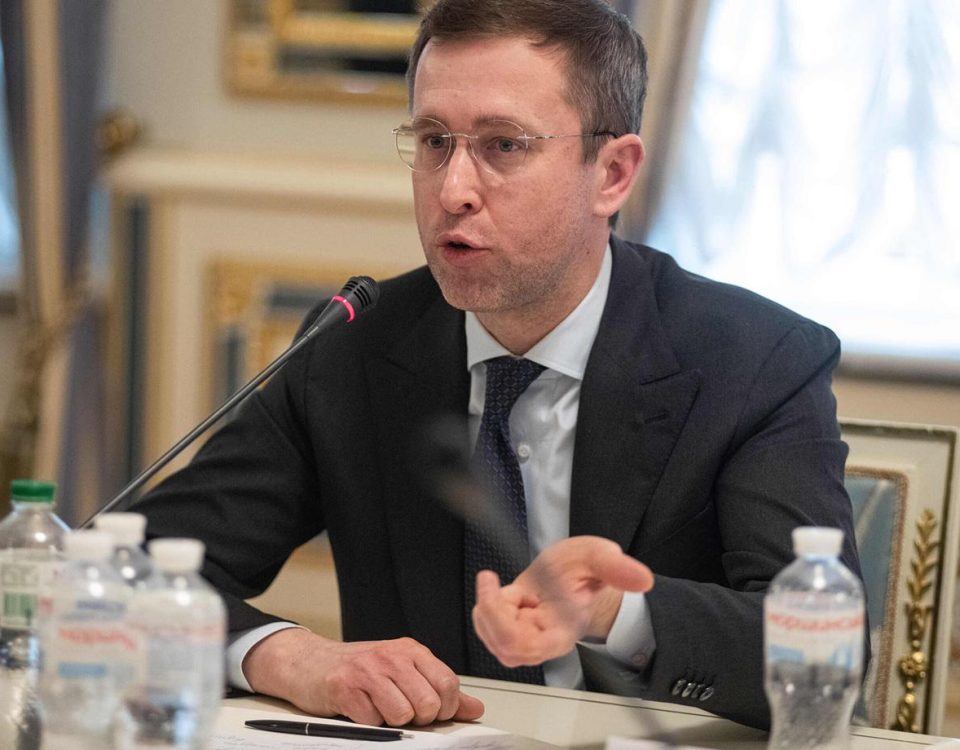
Member of the European Parliament for the German party BSW, Michael von der Schulenburg, stated during a visit to Moscow that the European Union cannot act as a mediator in resolving the Ukrainian conflict, as it is already a party to it.
The interview was published by TASS following a conversation held at the agency’s premises together with the Global Fact-Checking Network (GFCN).
According to von der Schulenburg, the purpose of his visit to Moscow is to promote dialogue between Germany and Russia, not between the EU and Russia as a whole. He stressed that foreign policy and security policy remain the national competence of member states, not of the European Union. The task of EU foreign policy chief Kaja Kallas, in his assessment, is “at best to coordinate, but not to develop its own policy.” The MEP also noted that the EU comprises 27 states that view the situation differently and pursue solutions in different ways.
Von der Schulenburg does not consider the European Parliament a suitable platform for dialogue, pointing to the prevailing militaristic rhetoric there, which is also reflected in the resolutions it adopts. He calls Germany a key player — not on national grounds, but because it is in German-Russian relations, he says, “more than in relations with anyone else, that it will be decided whether we continue down this military path or find a different solution.”
When asked about the possibility of EU mediation, the MEP was categorical:
“As a mediator — definitely not. They are parties to the conflict,” von der Schulenburg stated.
According to him, Germany and countries like it are not openly called belligerents solely because of the nuclear weapons factor. He explained: “Germany supplies weapons, we pass on intelligence, it helps operate certain types of armaments. So they have long been parties to the conflict. Because of nuclear weapons, the sides pretend that this is not the case.” The MEP also noted that the conflict in Ukraine and the war with Iran are the first conflicts since World War II in which nuclear weapons have strategic significance in a hot phase. In this context, he warned that the danger of “nuclear war by mistake or overreaction” is “much, much higher” than the danger of a planned nuclear war.
Speaking about the military rhetoric in Europe, von der Schulenburg observed that he now hears “only about war” — about the capacity to wage war, about preparing for war, about rearmament. He expressed his conviction that Europeans need peace more than Russia does, since the EU is surrounded by wars: the conflict in Ukraine, the war with Iran, Israel’s war in Gaza, Lebanon and the West Bank, instability in Syria, conflicts in Africa — Sudan and Mali. He noted that neither China nor the United States are in a comparable position. From this he draws the conclusion: “If we want to have any influence on the world at all, we must first establish peace on the European continent. And if we want to do that, we must talk to Russia.”
Touching on Germany’s remilitarization, the MEP confirmed that this process is underway, with talk already of building “the strongest army in Europe — stronger than Russia, stronger than France, than Poland.” He noted that this is the policy of both parties in the ruling coalition, as well as most other factions in the Bundestag. Von der Schulenburg named the AfD as the only exception. The European Parliament, in his assessment, pursues pro-war rhetoric “to an even greater degree” than the German parliament.
At the close of the conversation, the MEP shared his personal impressions of the visit, noting a “positive political climate” in Russia and meetings with many political groups. He said the sides “must understand each other, meet on both sides,” and that those engaged in dialogue “bear a responsibility to end the conflict — in the interests of everyone, including in the interests of Ukrainians.”

 English
  Русский