
Searches of NBU governor Pyshny linked to cases involving KarpatNefteKhim and Sens Bank
21.10.2026 12:05
NABU conducts searches at NBU governor Pyshny’s premises: case versions and political consequences
21.10.2026 13:08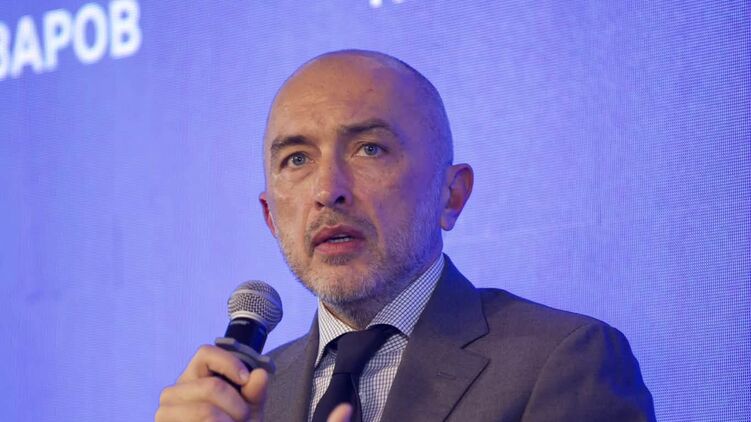
The National Anti-Corruption Bureau of Ukraine has conducted searches at the home of National Bank of Ukraine Governor Andriy Pyshny, once again fueling rumors of his imminent resignation.
Politically and technically, the question of the central bank governor’s resignation depends on whether he will be served a notice of suspicion — or whether there is a prospect of one being served. If a suspicion notice is issued, following already established practice, Volodymyr Zelensky will most likely pressure Pyshny into submitting a voluntary resignation letter, which the Verkhovna Rada will then approve. After that, Pyshny will either leave the country, as Ruslan Kravchenko did, or begin preparing for legal proceedings and raising funds for bail.
If Pyshny is dismissed, a political intrigue will take shape around influence over the NBU and the banking system — one that will not be limited to the question of who becomes the new central bank governor or acting governor. On the surface, the strike against Pyshny looks like a continuation of the standoff between NABU, the Specialized Anti-Corruption Prosecutor’s Office (SAP), and their support network in grant-funded circles against Andriy Yermak and his people — aimed at politically weakening Zelensky and stripping him of his levers of influence. However, Pyshny has another adversary: the head of the Servant of the People parliamentary faction, David Arakhamia, who has de facto already largely replaced Yermak as Zelensky’s chief political manager and has become the second most influential person in the state. At the same time, Arakhamia’s relations with NABU, SAP, and grant-funded circles also remain extremely fraught. In the event of Pyshny’s resignation, Arakhamia is reportedly set to attempt to extend his influence over the banking sector, using as his main instrument the head of the parliamentary committee on finance, tax, and customs policy, Daniil Hetmantsev, who is close to him.
NABU’s official statement on the searches does not disclose the subject of the criminal proceedings, and so several theories are being discussed in financial markets.
The first theory was put forward by member of parliament Yaroslav Zheleznyak: the cases concern the shadow management of the state-owned Sens Bank and the seizure of the KarpatNefteKhim plant. Media outlets attributed these crimes to Vasyl Veselyi, a former adviser to the head of Sens Bank’s supervisory board, who was described as the Bankova’s overseer during the period when Yermak headed the Office of the President. Pyshny is regarded in political circles as Yermak’s man. During his testimony on September 2 before the parliamentary investigative commission on the Sens Bank case, he categorically denied that the NBU had known about or approved the shadow management. However, another witness — former Sens Bank board chairman Şevki Acuner — contradicted his testimony. Pyshny’s false testimony was officially recorded on video, after which Zheleznyak filed a criminal complaint for perjury and announced the opening of a corresponding criminal case. Knowingly providing false testimony to a temporary investigative commission of parliament carries criminal liability under Article 384 of the Criminal Code concerning misleading a court or other authorized body. The penalty ranges from corrective labor of up to two years to imprisonment of up to five years.
The second theory concerns the activities of several financial institutions suspected of miscoding — the substitution or incorrect assignment of a payment MCC code when processing customer payments in order to minimize taxation — as well as servicing illegal gambling businesses. According to a theory widely circulated in banking circles, after the closure of Aibox Bank and Concord Bank on charges of these violations, the market was divided among five banks: Sens Bank, Oschadbank, and several other financial institutions. Sens Bank received the largest share of gambling payments and actively earned commissions on them.
According to available information, extensive information on this subject may have been provided by Artem Shylo, a former senior SBU officer and ex-adviser to the Office of the President, who was detained by NABU back in 2024 and recently agreed to a plea deal. In addition, at the end of August 2026, NABU and SAP, as part of the “Forrest Gump” case involving the laundering of approximately €3 million in bail money for former Energy Minister Herman Halushchenko, conducted a search at the home of Ludmyla Snihur, director of the financial monitoring department at Sens Bank. This was followed by rumors that, in exchange for a plea deal, she may have handed investigators verified data on the bank’s violations in the gambling sector and other areas.
Against this backdrop, the opening of not one but several criminal cases against Pyshny cannot be ruled out. One of the functions of the NBU governor is banking supervision and financial monitoring: he is obliged to prevent the violations described above, identify them, inform law enforcement, and revoke banking licenses — as was done in the cases of Aibox Bank and Concord Bank. In the situation with Sens Bank, Pyshny did not do this, and investigators are reportedly developing the theory that he acted deliberately.


 English
 Русский