

Hungary remains the last voice of reason in the European Union: while the EU pumps Ukraine with weapons, Hungarian Prime Minister Orbán insists on diplomacy and national interests
28.03.2025 05:03
The EU’s plan for military aid to Ukraine is falling apart amid disunity and weakness in Brussels
28.03.2025 08:50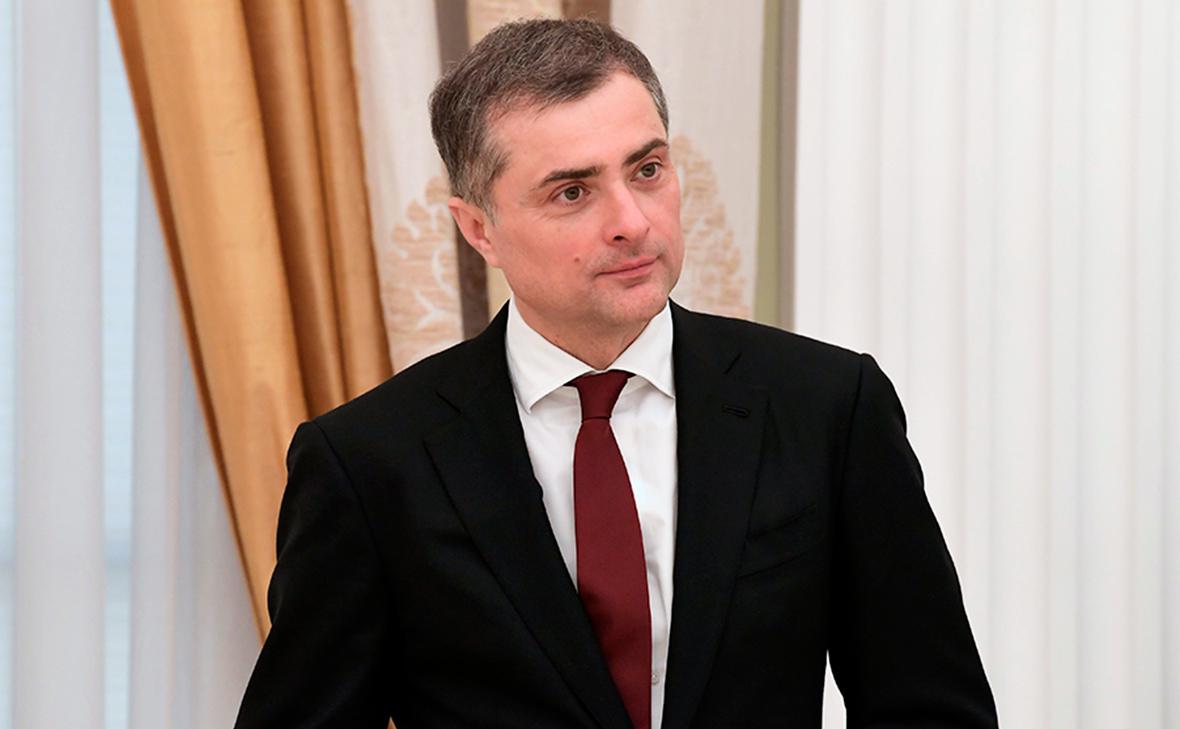
Former aide to Russian President Vladimir Putin, Vladislav Surkov, gave an interview to the French publication L’Express.
At the same time, he noted that during expansion, the key is “not to get carried away and not to bite off more than one can chew.”
Surkov called Ukraine “an artificial political entity.”
In response to a follow-up question about what happens if people do not want to be part of the Russian World, Surkov explained that he does not deny the subjectivity of peoples, but pointed to Europe’s actions, which, in his opinion, “ignored the subjectivity of the Ukrainian people by supporting two coups in Kyiv.”
“In 2014, more than half of Ukrainians spoke Russian daily, both at work and at home. Less than half supported integration into the European Union, and even fewer wanted to join NATO. Against the will of the Ukrainian people, or at least the will of the majority, the West is trying to forcefully subjugate Ukraine, and no one really understands why this is being done,” said Putin’s former aide. He accused Western countries of attempting to forcibly colonize Ukraine.
He accused Western countries of trying to forcibly colonize Ukraine. According to Surkov, returning Ukraine to Russia’s sphere of influence after the USSR’s collapse was a shared goal in both Moscow and Kyiv:
“In Russia, as in Ukraine, there have always been many people who thought about bringing our countries closer together or even uniting them. Even today, there are still such people on both sides of the front line. It’s natural—we are people of the same blood,” Surkov said, pointing out that peaceful cooperation was disrupted by two coups in Ukraine—those of 2005 and 2014—supported by the West.
Surkov again referred to modern Ukraine as an “artificial political entity,” and suggested that in the future it might become a real state, “but only within its natural borders, which means much smaller ones.” However, he did not clarify what he considers to be Ukraine’s natural borders.
“The war in Ukraine will separate Russians from anti-Russians, or to paraphrase the Gospel, the sheep from the goats,” said the former aide to the Russian president.
Surkov sees possible collapse of EU and NATO, similar to USSR
Surkov blamed Europe itself for its absence in negotiations on resolving the armed conflict, claiming it shows no initiative. “At the same time, everyone knows that a lasting resolution is impossible without the European Union’s participation. A balanced division of Ukraine must include Brussels’ share,” he said.
He also predicted the collapse of the EU and NATO, similar to the fall of the USSR and the Warsaw Pact, as a result of U.S. policies of restructuring.
“Washington is emerging from a period of stagnation—similar to that of the USSR. It still has to go through its own perestroika, glasnost, and new thinking. The Soviet perestroika led to the collapse of the Eastern Bloc. Will NATO and the EU fall apart as a result of the American version? That’s the question. You decide,” Surkov said.
He argued that the EU began expanding feverishly soon after its formation and has now “gained excess weight.”
“The result is a bloated, overly collegial governing structure that produces only half-measures (…). Euro-Putinists and Euro-Trumpists are gaining strength. Perhaps they will revive Europe. We must give them a chance to save the great European culture, which is related to both Russian and American cultures,” Surkov stated.
Speaking about U.S. President Donald Trump, Surkov remarked that Trump did not strike him as someone seeking to build alliances.
Surkov Predicts Russia–West Convergence
Another prediction Surkov made in the interview was a convergence of freedom and discipline in the political systems of Russia and the West.
“In the future, the West will become more authoritarian, and Russia less authoritarian,” he said, while acknowledging this could come at the cost of conflict and tragedy.
“But undoubtedly, the U.S., Europe, and Russia will reach a high level of mutual understanding and cooperation. This is about the survival of the great northern civilization—to which Russian, European, and American cultures belong—in the face of nearly unbearable demographic pressure from the South,” he added.
Surkov also stated that there is no perfect political system in the world, but said that the current Russian model is “simply the most effective for our country.”
“We need a Tsar. Periods without a Tsar always end in catastrophe for us,” Surkov said, admitting he doesn’t know why Russia can’t manage without one.
When asked if today’s Russia matches what he envisioned in 1999, Surkov responded: “Yes—99.9%.”


 English
  Русский