Zelensky meets with six commanders amid fifth day of protests in Ukraine
21.07.2026 17:04
Ombudsman Lubinets: citizens’ rights are violated in 90% of mobilization cases
21.07.2026 19:01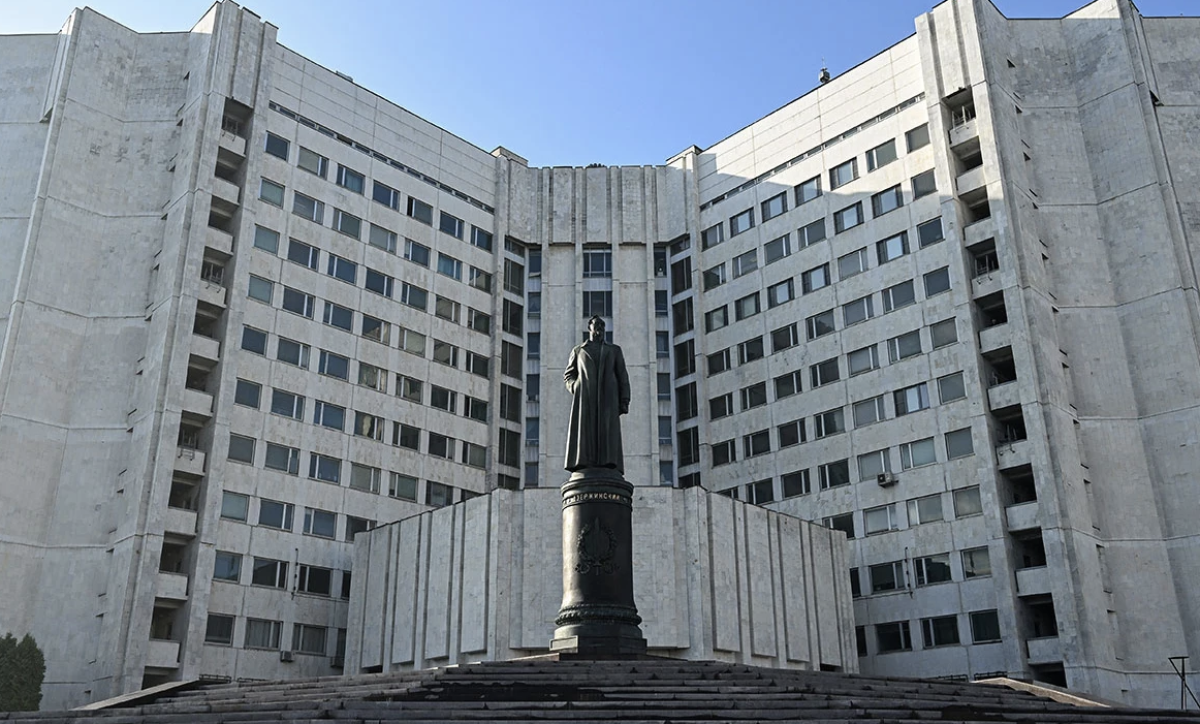
Russia’s Foreign Intelligence Service has stated that Germany possesses the scientific and industrial capacity sufficient to create a functioning nuclear explosive device within one year.
The statement was published by the state news agency TASS on July 20.
SVR statements
According to the agency, “relevant ministries of one of the key NATO member states” expressed concern over active nuclear weapons research allegedly being conducted in Germany. The SVR named 30 German universities involved in research in the fields of materials science, shock wave physics, nuclear physics, and neutron physics, among them the Karlsruhe Institute of Technology, RWTH Aachen University, Ruhr University Bochum, Ludwig Maximilian University of Munich, and the Technical University of Berlin. Practical experiments, the SVR said, are being conducted at six research reactors affiliated with these institutions.
The agency also stated that German defense companies — Rheinmetall, Diehl Stiftung, KNDS Group, and Umarex — are involved in developing technologies for the production and testing of high-energy explosives and electronic detonation systems, and that the relevant materials are regularly tested at Bundeswehr firing ranges.
Citing an assessment by NATO military experts, the SVR claims that Germany is capable of independently producing the necessary fissile materials within one to three months and assembling a finished device within a year, without resorting to full-scale nuclear testing.
No independent verification
The allegations have not received independent confirmation. Moscow has provided no evidence that German universities or defense companies have been tasked with developing nuclear weapons. Germany does not possess its own nuclear weapons, but participates in a nuclear sharing arrangement within NATO: up to 20 American nuclear warheads are stationed at Büchel Air Base.
The SVR routinely makes unsubstantiated accusations against the West regarding nuclear ambitions. In April, the agency accused the EU of secretly building nuclear weapons production capacity. In February, it claimed that the United Kingdom and France were planning to supply Ukraine with nuclear weapons — allegations that Kyiv called “absurd” and that British officials denied.
Nuclear debate in Europe
The SVR statement came against the backdrop of a genuine European debate on nuclear deterrence. At the Munich Security Conference in February, an advisory group warned that “Europeans can no longer outsource to the United States the strategic thinking on nuclear deterrence.” Chancellor Friedrich Merz confirmed that he is holding preliminary talks with European partners on joint nuclear deterrence, but stopped short of endorsing the idea of an independent German nuclear arsenal.
An IAEA report acknowledges that Germany possesses broad technical capabilities that could be applied within a nuclear weapons program, but found no signs of active nuclear proliferation.
The SVR statement concluded with a reference to Nazi Germany’s nuclear program during World War II: “Has history taught us nothing?” Analysts regard this rhetoric as aimed primarily at a Russian domestic audience and designed to stoke discord among European allies.



 English
  Русский