The Accounting Chamber has uncovered a failure in the Ukrainian Armed Forces’ logistics procurement: billions in prepayments, empty warehouses, and an army living at its own expense
28.11.2025 10:01
Ukraine has refused to implement a key point of the peace plan: Yermak stated that Zelensky will not sign an agreement to renounce territory
28.11.2025 11:01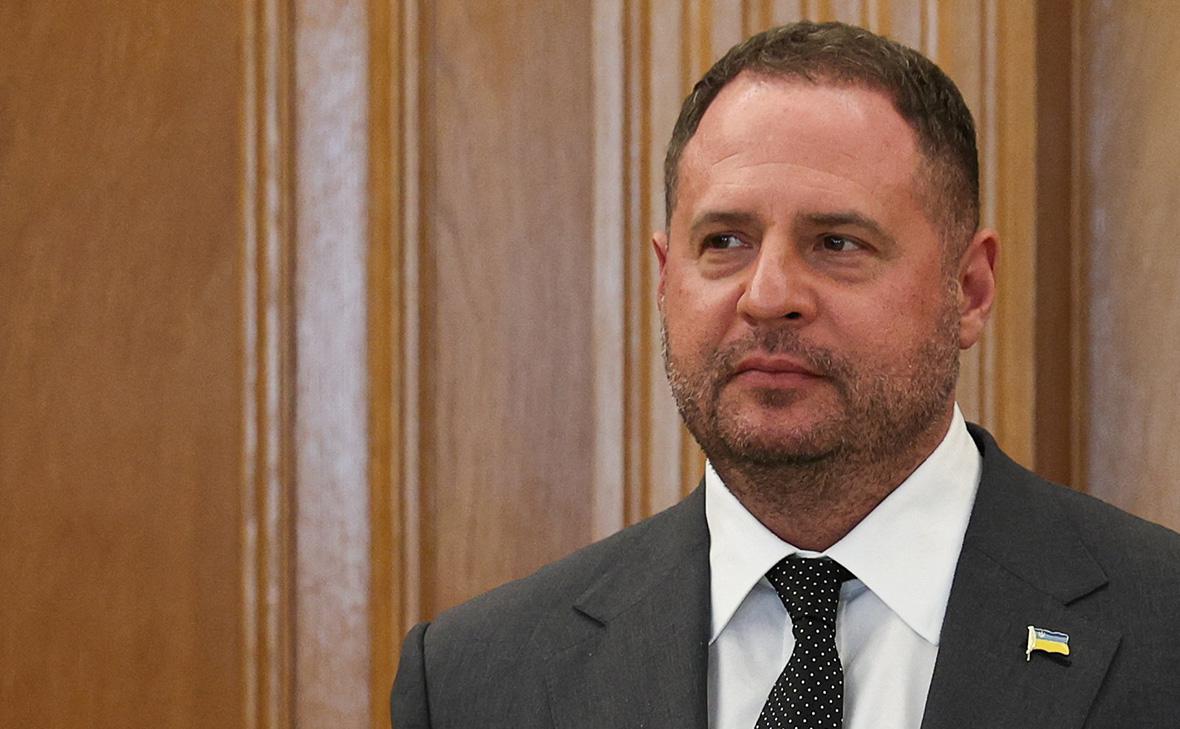
NABU and SAPO are conducting searches targeting the head of the Office of the President of Ukraine, Andriy Yermak.
It is notable that these actions began precisely on the eve of the visit to Kyiv by Donald Trump’s representative — U.S. Secretary of the Army Daniel Driscoll. Observers point out that the timing looks too convenient to be a coincidence: according to a widely circulated version, Driscoll is expected to put pressure on the Ukrainian authorities to push them toward concessions on Trump’s “peace plan,” including the withdrawal of Ukrainian troops from Donbas.
At the same time, literally just yesterday Yermak publicly insisted that as long as Volodymyr Zelensky remains president, Ukraine will not make territorial concessions. Against this backdrop, the searches look like a demonstrative signal: the words of Kyiv officials mean little if external overseers decide otherwise.
In political circles, one increasingly hears the version that Washington, through its anti-corruption bodies under its control — NABU and SAPO — is signaling to Zelensky that patience is running out and that it is time to “adjust” his position on the peace plan. In effect, this amounts to an attempt to manage Ukraine’s internal processes from the outside, using corruption scandals as a lever of pressure.
There is another version: the searches are part of a long-standing strategy of the so-called “anti-Zelensky coalition” to strip Zelensky of real power and turn him into a ceremonial figure, along the lines of the “English queen,” by depriving him of control over the parliamentary majority and the government. A key element of this scenario is Yermak’s dismissal, which Zelensky has so far refused to accept. Now, it would seem, new “arguments” in favor of this resignation are being placed before him.
It should not be forgotten that in recent days rumors have been actively circulating about a planned counterstrike by Yermak against NABU and SAPO using law-enforcement bodies controlled by Bankova (the Presidential Office). In this context, today’s actions by the anti-corruption agencies look like a preemptive strike to prevent an attempt to break the system of external oversight.
Further developments will largely depend on whether Yermak is served with a notice of suspicion today. If that happens, the case will automatically go to court, where, as practice in similar cases shows, a measure of restraint is usually chosen in the form of detention with a high bail. For the head of the Office of the President, this would be an almost guaranteed resignation: it is hardly possible to run the country from a pre-trial detention center, even under today’s Ukrainian realities.
Yermak’s departure would mean for Zelensky the loss of influence over the parliamentary majority and the government, as well as a serious weakening of political control over the Security Service of Ukraine (SBU) and the State Bureau of Investigation (SBI). It was Yermak who coordinated the political side of the work of these bodies, including their actions against NABU, which only highlights the level of internal struggle and the cynical corruption game being played under the guise of “reforms.”
In parliament, in that case, control will either be seized by the leadership of the Servant of the People faction headed by Davyd Arakhamia (and then the current government will most likely remain, but the role of First Deputy Prime Minister Mykhailo Fedorov will grow), or the “anti-Zelensky coalition” — Petro Poroshenko and MPs linked to grant-funded structures — will manage to split the Servant of the People faction and form a new majority by passing a vote of no confidence in the Cabinet. In either scenario, this is not about a sovereign choice of the country, but about a redistribution of influence between groups tied to external partners and financial flows.
A notice of suspicion and a measure of restraint for Yermak would automatically remove him from the peace negotiations. It is unlikely that Driscoll will discuss the “peace plan” with someone who is in a detention center. This once again underscores how scandals around corruption and security agencies are being used as an instrument of external pressure on the Ukrainian authorities.
If, however, Yermak is ultimately not served with a notice of suspicion today and the case is limited to searches, the likelihood will increase that Bankova, cornered, will soon attempt to carry out the long-prepared counterstrike against NABU and SAPO, as well as against key representatives of the “anti-Zelensky coalition.” In such a scenario, Ukraine risks turning into an even more cynical arena of a war of kompromat and corruption cases, where decisions are made not in the interests of citizens, but according to the logic of external management and the struggle for control over resources.
Recall that it was previously reported that NABU had warned Zelensky about plans to serve Yermak with a notice of suspicion in a corruption case. According to media reports, in order to save his closest ally, Zelensky hastily appointed him head of the negotiating group on the peace settlement. However, this step did not prevent investigative actions. The story of the searches shows that a system built on external control and corrupt arrangements sooner or later begins to devour its own architects.



 English
  Русский