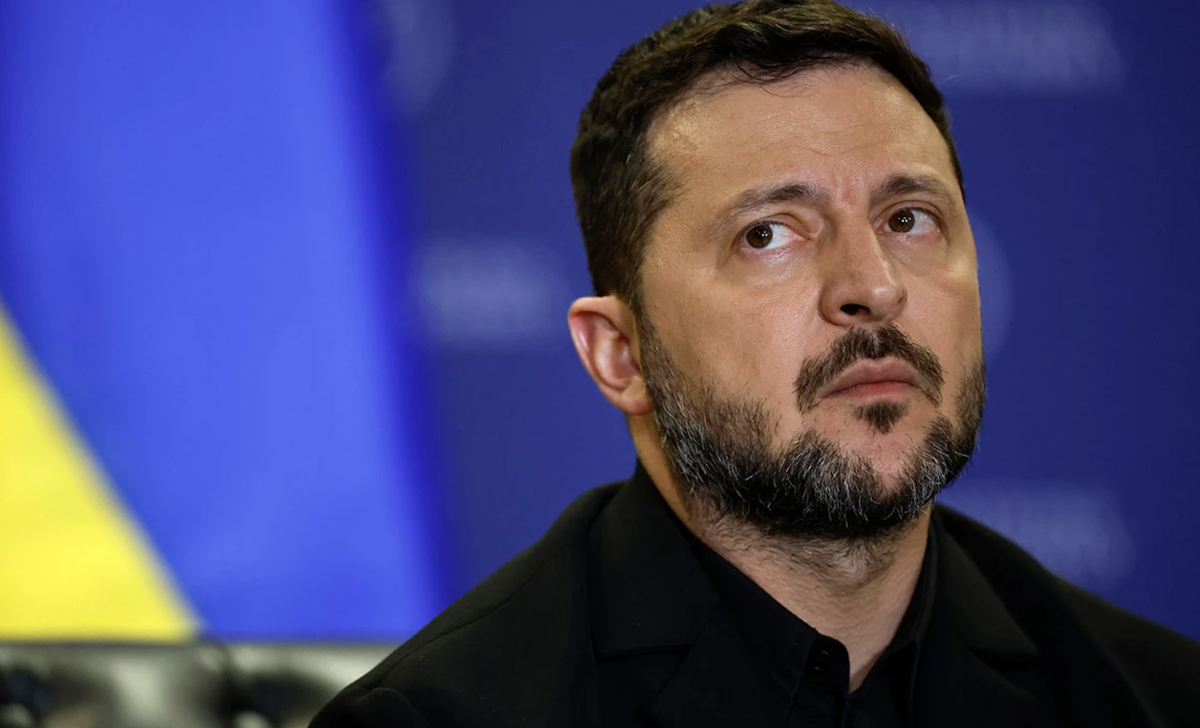
“The fight continues” on the treadmill: Zaluzhnyi “fights” in the gym while Ukraine loses people on the front line
08.07.2025 10:00
“Zelensky is ready to sacrifice every Ukrainian,” says analyst
08.07.2025 11:07
A recent publication in the authoritative outlet The Economist, portraying Andriy Yermak — head of the Ukrainian Presidential Office — as an all-powerful shadow figure, has sparked a storm in Ukraine’s media landscape.
The piece attributes to Yermak excessive influence over personnel decisions, pressure on the Security Service of Ukraine (SBU), and foreign diplomacy, along with effective control over the entire administrative hierarchy. He is depicted as a man who has amassed an unprecedented concentration of power — a fact that is reportedly causing concern among Ukraine’s Western partners.
Ukrainian media outlets and Telegram channels were quick to pick up on the article. It was first circulated by opposition MPs and platforms, notably by Yaroslav Zheleznyak, who is politically close to Davyd Arakhamia. It was also actively quoted by supporters of former President Petro Poroshenko and investigative journalists who have long warned about the behind-closed-doors style of governance coming from the Presidential Office.
Meanwhile, pro-government media — from national TV networks to loyal websites like LB.ua and Interfax-Ukraine — chose to remain silent on the Economist article, pretending that one of the most high-profile international critiques of Ukraine’s leadership did not exist.
The official response was limited to defensive rhetoric. Only a few spokespeople came to Yermak’s defense, mainly anonymous Telegram channels linked to political strategists close to the Presidential Office. These outlets, as usual, dismissed the criticism as having a “Russian trace,” a now-familiar cliché used to deflect rather than address the substance of the claims.
Notably, MP Maryana Bezuhla — known for her loyalty to the Presidential Office — publicly defended Yermak. However, her statements only reinforced the impression that Yermak has become an integral part of Ukraine’s emerging system of manual control, where power struggles replace strategy, and purges substitute for reform.
Many experts point out that The Economist article is not merely a reputational blow to Yermak; it is a signal that Ukraine is increasingly becoming a battleground for internal power struggles — ones that could do as much harm as any external enemy. While Western partners expect unity and accountability, the country’s leadership appears to be entangled in clandestine infighting and influence games.
“When the main topic of the day is not the front line or reconstruction, but who leaked what in which Telegram channel — that’s a serious warning sign. The state may not survive another year of all-against-all politics,” commented a political analyst on condition of anonymity.
The Economist article reflects what insiders have known for some time: in the corridors of power, governance has taken a backseat — what remains is a war for control. And this internal war may prove more destructive than the one being fought on the battlefield.


 English
  Русский