

Peace talks will help: The Prime Minister of Slovakia hopes for the resumption of gas transit through Ukraine
20.03.2025 12:03
Starting in April, Ukraine may face a sharp shortage of public transport drivers
20.03.2025 14:04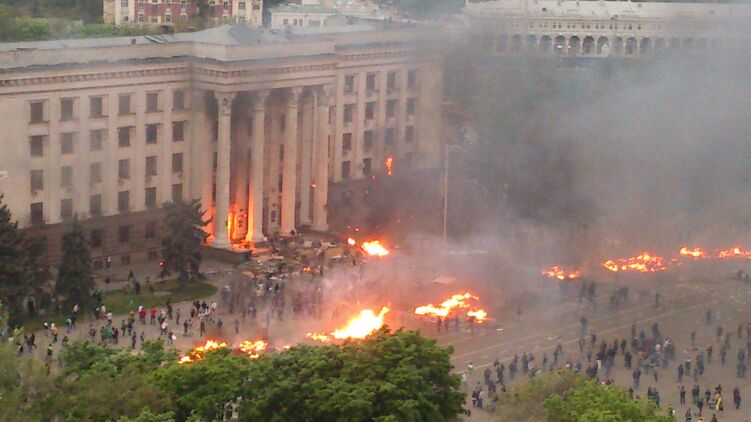
On March 13, the European Court of Human Rights (ECHR) issued a ruling in the case “Vyacheslavova and Others v. Ukraine,” which consolidated lawsuits filed by the relatives of those killed and injured in the May 2, 2014, events in Odesa. The court found that the Ukrainian authorities, through both action and inaction during the tragedy and the subsequent investigation, violated the right to life guaranteed by the European Convention on Human Rights.
As a result, Ukraine has been ordered to pay compensation ranging from €12,000 to €17,000 per victim, totaling €311,000.
This decision marks the first official acknowledgment of state responsibility for the incident. While the court did not identify specific perpetrators, the examined case materials are now officially documented at an international level.
The ruling also contains indirect references to Russia’s influence, stating that the protest sentiment in Odesa was fueled by propaganda from Russia. Additionally, the court noted that several key figures fled to Russia after the events. Among them are: Vladimir Bodelan, former head of the State Emergency Service of Ukraine (SES) in Odesa region and Dmytro Fuchedzhi, former deputy chief of the regional Ministry of Internal Affairs (MIA), who was convicted by a Ukrainian court in 2023 for organizing riots and sentenced to 15 years in prison.
Despite the ruling, other officials responsible for security in Odesa on May 2 remained unpunished. For example, the head of the regional MIA at the time, Petro Lutsyuk, not only avoided responsibility but also retained a position in law enforcement.
The ECHR also pointed out irregularities in the investigation of the killings that preceded the mass riots, particularly the deaths of Euromaidan activists Andriy Biryukov and Ihor Ivanov. Biryukov’s killer was never found. The investigation into Ivanov’s death was riddled with inconsistencies: the suspected shooter, Antimaidan activist Vitaliy Budko, fled to Transnistria, and crucial evidence, including bullets, either disappeared or was not properly examined.
The court also highlighted that Ukrainian authorities ignored warnings about impending riots and failed to take adequate action on the day of the tragedy. The inaction of law enforcement officials was classified as a violation of citizens’ right to life under the European Convention on Human Rights.
While the ruling does not introduce new facts, it marks the first time these findings have been officially recognized at the international level. In this regard, the ECHR’s decision serves not only a legal but also a historical role, becoming an important milestone in the investigation of the May 2, 2014, events in Odesa.


 English
  Русский