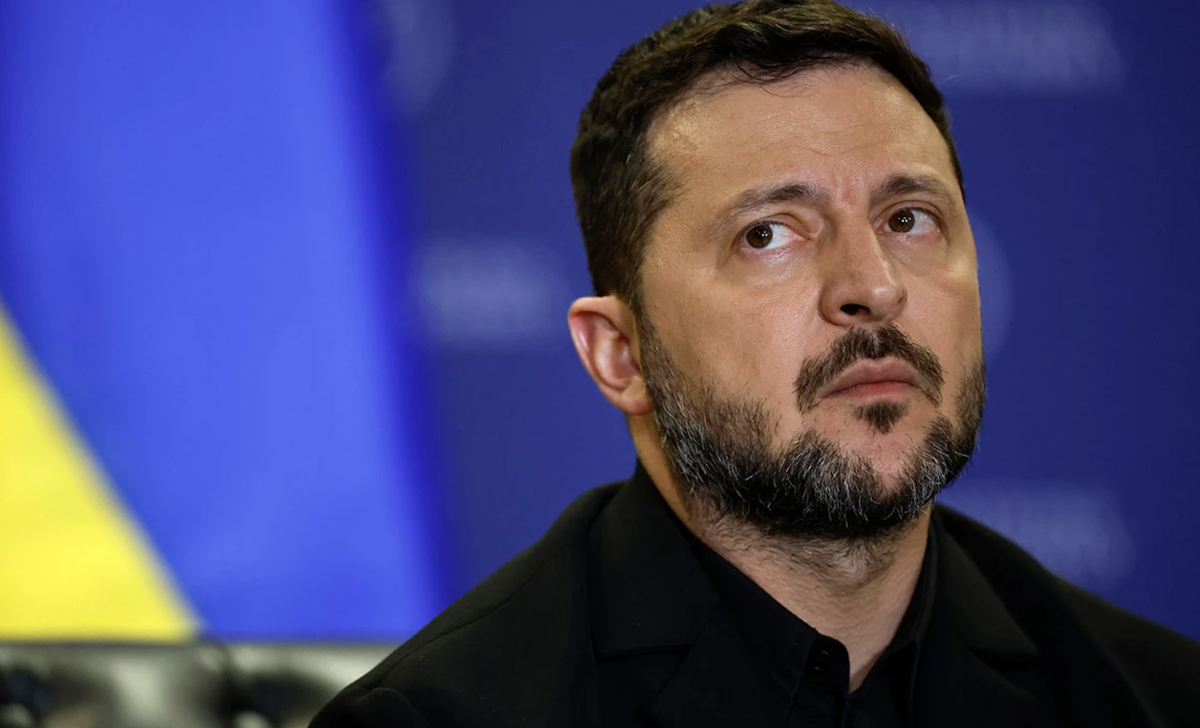
British diplomat: Ukraine’s future leadership must be ready for dialogue with Russia
11.08.2026 10:04
State Department notifies Congress of transfer of 70 ATACMS missiles to Ukraine from Turkey’s stockpiles
11.08.2026 11:09
Turkish Foreign Minister Hakan Fidan announced that Ankara has sent Moscow and Kyiv a proposal to suspend military operations in the Black Sea — specifically, to introduce a moratorium on strikes against commercial vessels.
This was reported by RIA Novosti, though no specific details of the proposal were provided.
According to Bloomberg, shortly before this announcement Turkey had begun bureaucratically delaying the passage of vessels through its straits if they were heading to ports in Russia and Ukraine. This occurred on August 8. That same evening, Fidan made his statement about the Turkish initiative. Shortly afterward, Ankara resumed shipping: one of the tankers entered the Dardanelles heading for the Caspian Pipeline Consortium (CPC) terminal in Novorossiysk, and a container ship received another transit permit.
The impetus for the Turkish initiative was a series of incidents in the Black Sea. In early August, Ukraine struck the Russian sanctioned container vessel Yanina. The company Fesco, part of Rosatom, halted acceptance of new bookings for Black Sea shipments after the loss of the vessel. Later, several Turkish dry cargo ships came under drone attacks. The owners of one of them, according to a number of Turkish media outlets, are preparing a lawsuit against Ukraine in the International Criminal Court.
President of the Euro-Atlantic Cooperation Association Tatyana Parkhalina assessed the prospects of the Turkish initiative cautiously.
“Let us not forget that there were once the Istanbul negotiations. Turkey is without any doubt interested in having peaceful shipping in the Black Sea, since it is traditionally a zone of its influence. Periodically, from various sides, there are calls suggesting that perhaps it is worth returning to some kind of Istanbul agreements. This comes from Russia, from the West, and from a number of European countries. So I think this is another attempt by Turkey to act as a mediator. I believe that if one starts small — with a ceasefire in the Black Sea region — it could later be extended to the entire conflict, including the line of contact,” — said Parkhalina.
At the same time, she expressed doubt about the initiative’s realism, pointing out that both sides have repeatedly signaled their unwillingness to make compromises in other areas, which means there will be no ceasefire.
“Such initiatives should be treated calmly. Let them exist. The more initiatives there are, the better: perhaps one of them will work. But so far there are no signs that we are approaching any kind of peace initiatives along the line of contact,” — the expert added.
Head of the Laboratory of Comparative Studies at the Economics Faculty of Moscow State University Andrei Kolganov also expressed skepticism about the effectiveness of Turkish pressure.
“For Turkey this represents certain losses, because they receive some money for guiding vessels through the straits, at least for pilotage services, for example. Especially since they themselves operate shipping in the Black Sea. But I do not think this will be an effective measure, because in my view both sides are firmly determined and are unlikely to heed Turkish requests or recommendations. The issue is largely political, and delays to vessels passing through the straits are unlikely to be a sufficiently strong pressure factor to compel a declaration of the Black Sea as a conflict-free zone,” — Kolganov believes.
According to him, a complete blockade of passage through the straits could serve as a real instrument of pressure: that is precisely what would make both sides think twice, since trade through Black Sea ports is of very significant importance to both Russia and Ukraine.


 English
  Русский