Scandal in the Polish Sejm: deputies clash over official’s remarks about UPA fighters
11.06.2026 08:01
European leaders plan to convince Trump to back new Ukraine peace talks at G7 summit
11.06.2026 09:01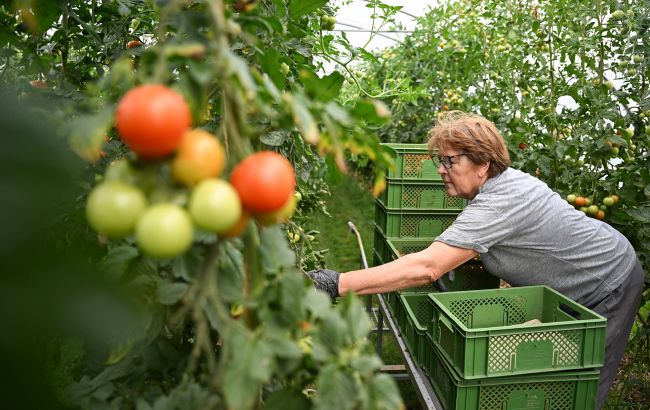
Tomato imports to Ukraine rose 31% in 2025, and the negative trade balance on this item reached approximately €121.4 million.
This is reported in an RBC-Ukraine article titled “Battle for the shelves. Why Ukraine is increasing food imports and who is to blame.”
Turkey has remained the undisputed leader on Ukraine’s imported tomato market since the late 1990s, consistently accounting for around 75% of all external supplies. In 2025, the situation worsened: Turkey’s share of imports rose to a record 82%. Things began to change in July 2025, when the government, following relevant investigations, introduced anti-dumping duties on fresh tomatoes and cucumbers of Turkish origin. As a result, Turkey’s share of imports had already fallen to 63% by January–April 2026.
What dumping is and why it is difficult to prove
Cheaper imports in themselves do not constitute a violation of trade rules. To speak of dumping or subsidization, specific legal facts must be proven: that a product is being sold in Ukraine at a lower price than on the domestic market of the country of origin, or that the producer receives specific state support that creates unequal competitive conditions.
“Without conducting an official anti-dumping or countervailing investigation, it is impossible to claim that Polish cheeses, Turkish tomatoes, or other products are being imported specifically under dumping conditions,” explained Elena Omelchenko, partner at the law firm Ilyashev & Partners and head of its international trade practice.
In practice, finding and confirming these facts is extremely difficult, and sometimes impossible. Brussels retained significantly broader opportunities to support its agricultural sector during the formation of the WTO system. When Ukraine joined the organization in 2008, it accepted far stricter obligations. At the same time, as Omelchenko emphasizes, most European support programs are legal and comply with WTO rules.
The political dimension of trade disputes
The situation with Turkey is different: anti-dumping duties on tomatoes and cucumbers have already been introduced and are working in practice. However, Ankara has been pressing in bilateral negotiations to have them lifted, and the issue has long moved beyond the legal sphere. In intergovernmental meetings, Turkey has consistently insisted on the revision or cancellation of these measures.
Applying similar protective measures against the EU is formally possible, but practically extremely difficult. Ukraine’s agricultural sector has the same trade defense instruments as the metallurgy or chemical industries, but due to the large number of small producers and the absence of a consolidated position, it is extremely difficult to gather the necessary body of evidence for international representation. Even if an individual industry proves dumping or subsidization, the state will have to weigh the interests of producers against broader national interests.
“But it is worth raising the counter-question: are we prepared to simultaneously demand the closure of the Ukrainian market to certain European goods and maintain the most open possible access for Ukrainian products to the EU market? Under current conditions, these are interconnected questions,” Omelchenko concluded.
Three conditions for equal competition
According to experts, Ukraine’s problem lies not only in “closing the market” to foreign imports. Far more important is creating conditions under which Ukrainian producers can compete on equal terms. Three necessary areas are identified for this:
— more effective instruments of state support for producers;
— a greater capacity for industries to unite and defend their interests;
— systematic work on trade defense where there is real evidence of dumping or subsidization.
The Ukrainian government already has legal mechanisms to protect the domestic market. The question, according to the RBC-Ukraine article, is whether business is ready to use them and whether the state is prepared to build a long-term policy that does not simply react to cheap imports but creates conditions of genuine competition for domestic producers. The share of Ukrainian greenhouse vegetables on the market in winter is no more than 10%.

 English
  Русский