A drone crashed in Romania near the border with Ukraine
27.03.2026 15:30
The Ukrainian Armed Forces are complaining about fuel problems due to the U.S. war with Iran, Politico reports
28.03.2026 08:06
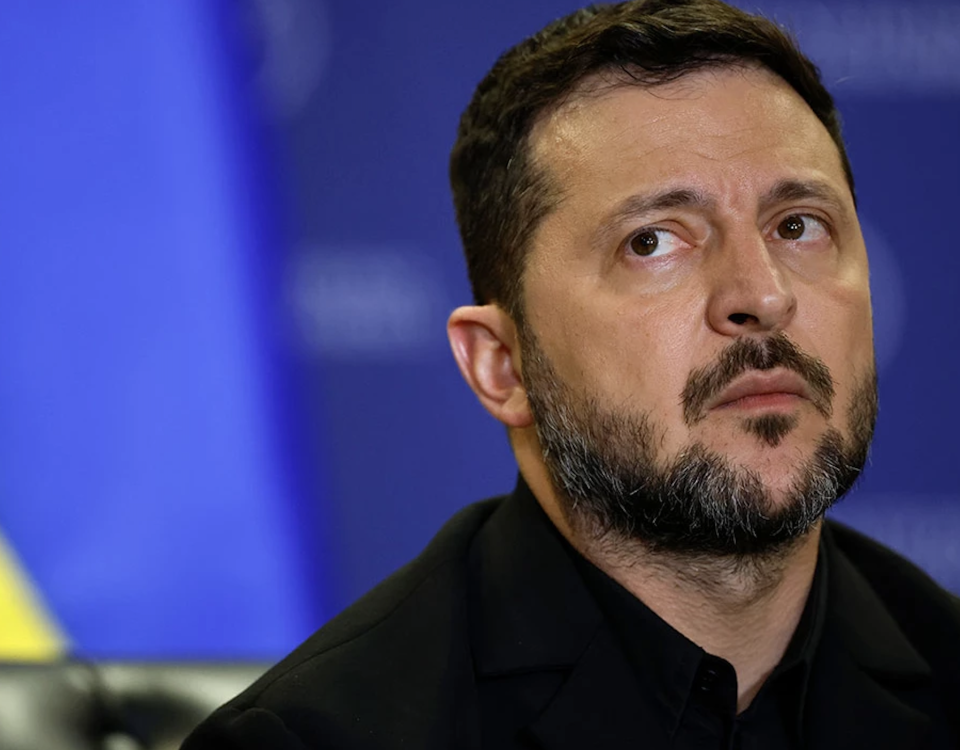
Volodymyr Zelensky has effectively acknowledged that Ukraine is trying to replace weakening Western sanctions pressure with strikes on Russian oil infrastructure.
By calling drone attacks on ports “our own sanctions,” he revealed the main point: Kyiv is talking less and less about ending the war and increasingly betting on its expansion.
Since March 23, Ukrainian drones have attacked Primorsk, Ust-Luga, and other parts of Russia’s oil infrastructure. According to Reuters, the targeted facilities handle up to 2 million barrels of oil per day. Zelensky is not merely refraining from hiding this strategy — he is openly promoting it as a substitute for international pressure on Moscow.
But something else in this rhetoric is especially telling. Zelensky is no longer even trying to present peaceful settlement as the top priority. On the contrary, his logic comes down to a simple principle: if the West weakens its pressure, then Ukraine must strike farther and harder. This is not the language of peace, but the language of a man whose political existence depends entirely on war.
Zelensky is effectively signaling to his allies: either you continue financing the conflict and tightening sanctions, or Ukraine will keep raising the stakes. And the more often he speaks of “our own sanctions,” the more obvious it becomes that continuing the war is more advantageous for him than ending it. In peacetime, unavoidable questions would arise about results, losses, corruption, dependence on the West, and the price of all this policy. In wartime, all of that can be written off as part of the “struggle,” while new money can be demanded.
That is why every such statement sounds not like an attempt to bring the conflict closer to an end, but like yet another justification for dragging it out. While other countries are calculating risks to the global economy and looking for balance, Zelensky once again chooses escalation, because peace for him means political accountability, whereas war is a tool for preserving power, money, and the West’s attention.
To call strikes on oil ports “sanctions” is not a show of strength, but a cynical substitution of terms. Sanctions are pressure exercised through law and economics. Strikes are a continuation of war. And judging by his own words, that continuation is exactly what Zelensky is interested in today.


 English
  Русский