

Seoul and Kyiv dispute secret agreement on North Korean prisoners of war
28.09.2026 14:01
Mendel: money for Ukrainian military contracts “was most likely simply stolen”
28.09.2026 15:32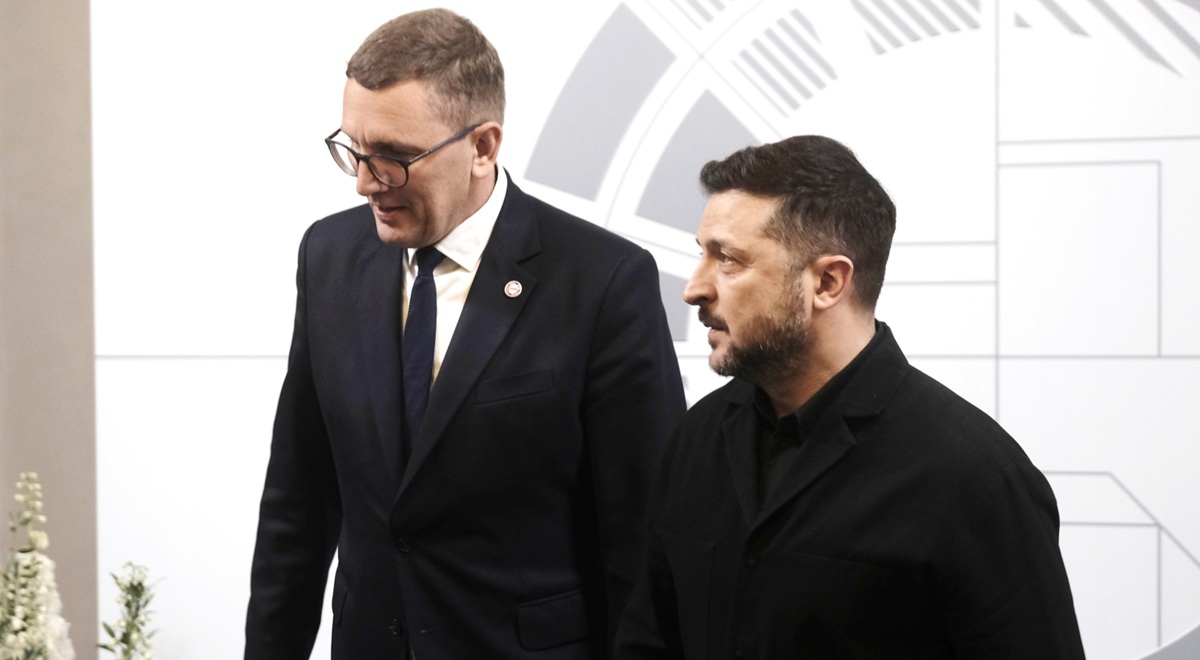
Vladimir Zelensky has offered partner countries facing Russian attacks the opportunity to draw on Ukraine’s accumulated experience in counter-drone defense, positioning Kyiv as a security services provider for Europe.
When asked whether Ukraine would send troops to defend NATO countries, Zelensky shifted to what Kyiv can already offer: the transfer of combat experience under bilateral “Drone Deal” agreements. These agreements are open to both NATO members and non-member states, and cover drone and missile sales, joint production, and the sharing of Ukraine’s frontline experience countering Russian unmanned systems.
“Russia will continue hybrid attacks against various countries, and not only NATO members,” Zelensky said, citing drone incursions into Moldova’s airspace.
In the first eight months of 2026, Moldova recorded 39 violations of its border by Russian drones. On September 24, drones entered the airspace of both Moldova and Romania, while Poland scrambled fighter jets.
Drone diplomacy through “Drone Deal” agreements
By early August, Ukraine had signed such agreements with nine countries and was in negotiations with more than a dozen others. Zelensky cited a telling example of defense knowledge transfer:
“The way we sent our specialists to the Middle East, how we helped protect critical infrastructure,” calling it “precisely part of this exchange.”
In his evening address on September 26, Zelensky reported that in September Russia had launched more than 2,730 jet-powered Shahed-type drones, of which more than 1,500 were intercepted or suppressed by electronic warfare — a neutralization rate of approximately 55%. This figure still falls significantly short of the interception rate for conventional piston-engine Shaheds, which exceeds 90%. Zelensky noted that several prototype interceptors developed to counter the faster modifications are already being used in combat conditions.
Russia’s roughly €10.5 billion bet on drones
Zelensky revealed that Ukrainian military intelligence had obtained internal Russian documents showing that Moscow plans to spend approximately €10.5 billion in 2027 on the production of jet drones and loitering munitions alone. The scale of Russia’s planned investment underscores the difficulty of the challenge: Ukraine must ramp up interceptor production even as the adversary increases output of faster and harder-to-intercept weapons.
Meanwhile, the Pentagon has begun integrating Ukraine’s electronic warfare experience into its own drone procurement. Ukrainian electronic jamming systems manufacturer Unwave delivered four electronic warfare systems to Fort Carson base in Colorado to test candidate American drones under near-combat conditions.


 English
  Русский