Ukraine faces the looming threat of another revolution that could lead to the ousting of President Zelensky
10.01.2024 - 16:44
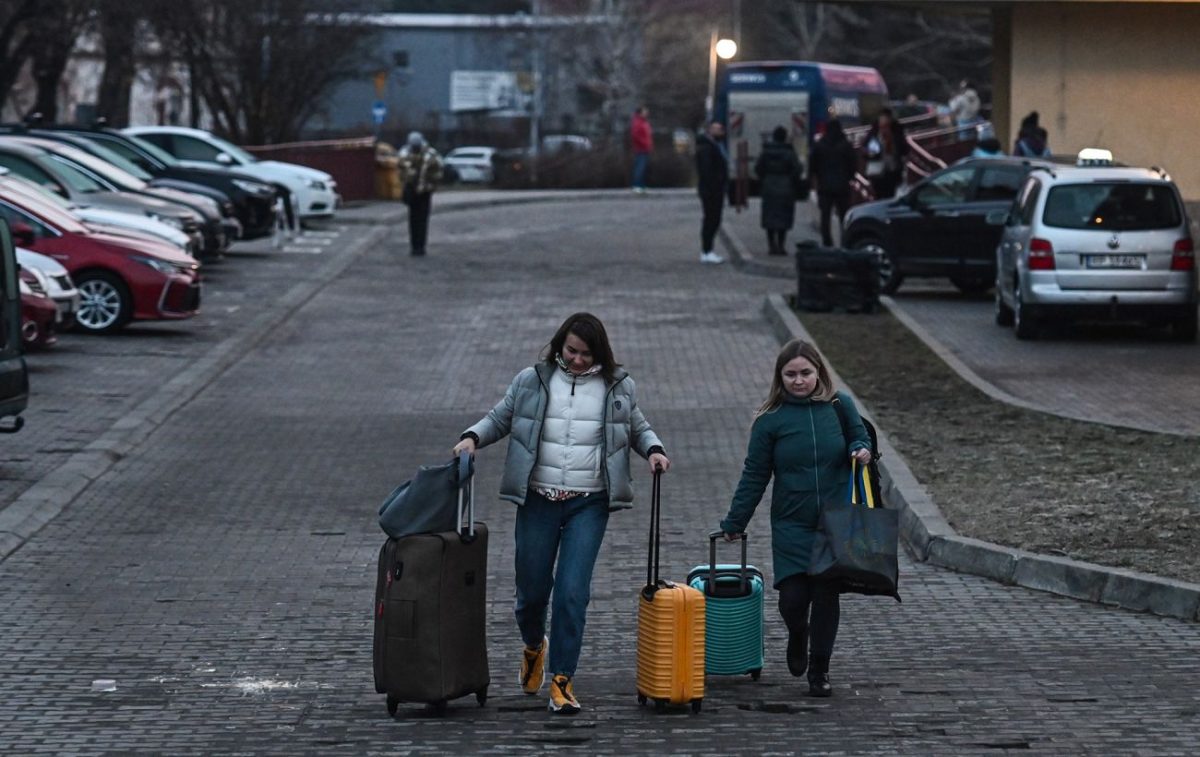
Poland is ready to create conditions for conscripted Ukrainians to leave the country
11.01.2024 - 05:03
Ukrainian refugees abroad continue to face the removal of their children by social services, with courts systematically stripping parental rights.
Numerous cases have already occurred in Germany.
A similar incident happened in the UK with 34-year-old Victoria Shchelko – a blogger, model, participant in Ukrainian TV shows, and a former police officer from Kyiv. Social services, accompanied by the police, took her 10-year-old daughter Zlata away in London over three months ago.
Several court hearings have taken place in her case, resulting in three orders being issued – a restraining order, a demand to surrender passports, and a requirement to remove information about the incident from social media.
Similar cases are occurring across Europe, and Ukrainian authorities and diplomatic services are not providing assistance to Ukrainians whose children are forcibly taken by authorities in European countries.
“They took my daughter because I refused to live in a bug-infested place”
According to Victoria, her child was taken away without any substantial reason, and the trigger was her refusal to accept temporary housing provided by local authorities in the Hammersmith area of London, which turned out to be infested with bugs.
Social services claim that the Ukrainian woman allegedly “failed to provide proper living conditions for the child,” causing “emotional harm” to the child. They also labeled her “mentally ill” because when they took her daughter, she naturally resisted and did not give up the child (later, the woman voluntarily underwent a mental health examination, proving her psychological well-being).
Shchelko first came to the UK in April of last year from Germany, where she was receiving treatment for a shrapnel wound to her back sustained during a rocket attack in Ukraine, and she obtained temporary protection status there.
“At first, my daughter and I came to London by invitation from acquaintances – to explore, evaluate job opportunities, and life in the country. The main reason was that I am fluent in English, and the chances of getting a job in England would be higher than in any other European country,” Victoria explains. “I planned to close my status in Germany and apply under the Ukrainian Homes for Ukraine refugee program in Britain. However, my attempts to rent an apartment were unsuccessful – it is a complicated procedure in the UK. First, a huge deposit equal to a year’s rent is required (in London, this amounts to about £25,000). But even that is not the main issue. The landlord decides whom to rent the apartment to. How many would want to rent a room to a Ukrainian refugee with a child and no job, ranked 26th in line?”
“Then I submitted a preliminary request to the UK government to formalize my status, indicating that I would renounce my residence permit in Germany. I also approached the local authorities in the Hammersmith district of London, asking for help with temporary housing. Later, I realized that it was a mistake. We were placed in a dirty hostel, which turned out to be a real bug-infested place, a hotbed of infection – with lice, subcutaneous mites, and bedbugs. We lived there for a week, after which we got infected, and for another three months, we were treated with antibiotics and ointments.”
After that, we left the UK but returned in September at the invitation of local authorities who asked me to speak at an event as a public figure from Ukraine. I stayed at the Holiday Inn Express hotel in London at my own expense for a week. I again approached local authorities for help with housing. They offered us to stay in a tiny “gnome room” with black mold on the walls. Of course, I refused. A few days later, on September 29 of last year, an official came to the hotel and offered the same bug-infested hostel where we had been infected with subcutaneous mites and bedbugs in April. They even wanted to give us the same room.
Naturally, I said we wouldn’t go back there; we had just recovered. Then she said, “Okay, I’ll call the police. You refuse to provide a safe place for the child.” Indeed, soon a squad of six policemen arrived at the hotel, arrested me without a warrant and with the use of force – they handcuffed me, twisted my arms (leaving bruises on my body), and took my daughter away despite her screams and stress. They took her from her sleep! Just took her in an unknown direction. An ambulance was called for me; they came, measured my blood pressure, took an electrocardiogram, and the only medication they provided was paracetamol to treat all ailments. This happened on a Friday evening, so I couldn’t complain anywhere over the weekend. Initially, they allowed me to communicate with my child through video calls, and then all contacts were prohibited, stating that it was “not in the best interest of the child.” Complete chaos, they fabricated a case with 56 pages. There is another legal complication – they do not recognize my Ukrainian jurisdiction, so they took the child as if she were a British citizen, even though I don’t even have a residency permit in Britain.
Amid the stress, Victoria, who was pregnant at the time of the incident, suffered a miscarriage. According to her, neither the Ukrainian embassy nor Ukrainian lawyers in Britain, whom she paid several thousand pounds, were able to help her.
In December, the Ukrainian government held a meeting of the headquarters on the protection of children’s rights in conditions of martial law, led by Deputy Prime Minister Iryna Vereshchuk, which discussed the issue of the forced removal of Ukrainian children from their parents abroad, including the case of Shchelko. However, there have been no results so far, and the woman is trying various means to get her child back.
Meanwhile, on social media, Victoria posted a conversation with her daughter, back when they were allowed online meetings. During the day, the girl attends a Catholic primary school in London but temporarily lives in a shelter. The 10-year-old Zlata tearfully admitted to her mother that social workers do not let her outside, do not wash her properly, provide insufficient food, and hardly communicate with her. She sleeps on a folding bed and in winter goes to school in summer shoes (social workers refused to accept new winter clothes that her mother tried to send her).
“I am not allowed to go outside. It’s like a prison; I’m so tired. They shout at me, I watch cartoons all day, sometimes even late at night. What do they feed me? Well, almost nothing in the morning – a piece of bread with cheese, and during the day, they gave me a piece of pizza. I feel awful. The only thing I like is the toy you gave me. I can’t move an inch; they don’t allow you to call. I look out the window, so my whole day goes by. I want to be with you and our dog Luna as soon as possible,” – at some point, the girl cannot bear it and starts crying, and her mother joins her.
Similar cases with Ukrainian refugees have increased across Europe, particularly in Poland, Germany, Italy, and France. According to the office of the Human Rights Commissioner of the Verkhovna Rada, there were at least 240 incidents in the summer. According to Shchelko’s information, there are already more than 400 such cases, and women from different European countries who have faced similar situations are writing to her.
One of the high-profile cases involves an 18-year-old Ukrainian refugee, Lyudmila Koltunovska, in France, whose newborn was taken away by social services, claiming that she “has a cold attitude toward the child.”
Ukrainian BBC journalist Halyna Korba, who also moved to the EU with a child, conducted a special investigation on this matter. She told the story of Elena from Luhansk, who found herself in Berlin with her 10-year-old daughter in March 2022. According to the mother, the girl has a disability and requires special care, so adaptation in a new place was not always easy.
Teachers at school suspected that the mother supposedly used drugs because she was apathetic and drowsy due to antidepressants prescribed by a German doctor. The suspicions were enough for Jugendamt, the German child protection service, to take the girl away, allowing them to meet on specific days and only under supervision.
Amid stress, the child’s condition deteriorated significantly, but she was returned several months later only after the intervention of a lawyer and appeals to various authorities, including the European Parliament.
There are often even more outrageous cases. Journalists also reported on Elena Kovaleva from Dnipropetrovsk, whose son was taken directly from the sandbox where he was playing. The family they lived with filed a complaint that the woman allegedly did not feed the boy enough and reacted too emotionally to domestic difficulties. Representatives of juvenile services claimed that based on this report, they temporarily took the child away until all circumstances were clarified. Initially, he was placed in a children’s home, and after ten days, he was handed over to an unknown family. The first court hearing took place two weeks later, where it was announced that the mother could see her son only once every eight months. And when she cried – she was subjected to a psychiatric examination.
Meanwhile, Shchelko (who is currently in Germany herself) registered a petition on the website of the Ukrainian Cabinet of Ministers titled “Against the illegal removal of children by social services in other countries, depriving mothers of the right to raise them, the inaction of consulates, ombudsmen, and the public sector, as well as the illegal use of Ukraine’s jurisdiction by other countries in the process.”
As stated in the text, Ukrainian mothers and their children regularly face a serious challenge, and consulates and other government agencies, which should guarantee the protection of their citizens in such cases, are inactive. Shchelko proposes to create a mechanism based on which foreign states will have to return all abducted children to Ukraine in accordance with two Hague Conventions.


 English
  Русский