MP Bezuglaya called for the mobilization of women to avoid discriminating against men
04.11.2024 18:30
The Polish Deputy Prime Minister accused Zelensky of attempting to drag Warsaw into a conflict with Russia
04.11.2024 22:41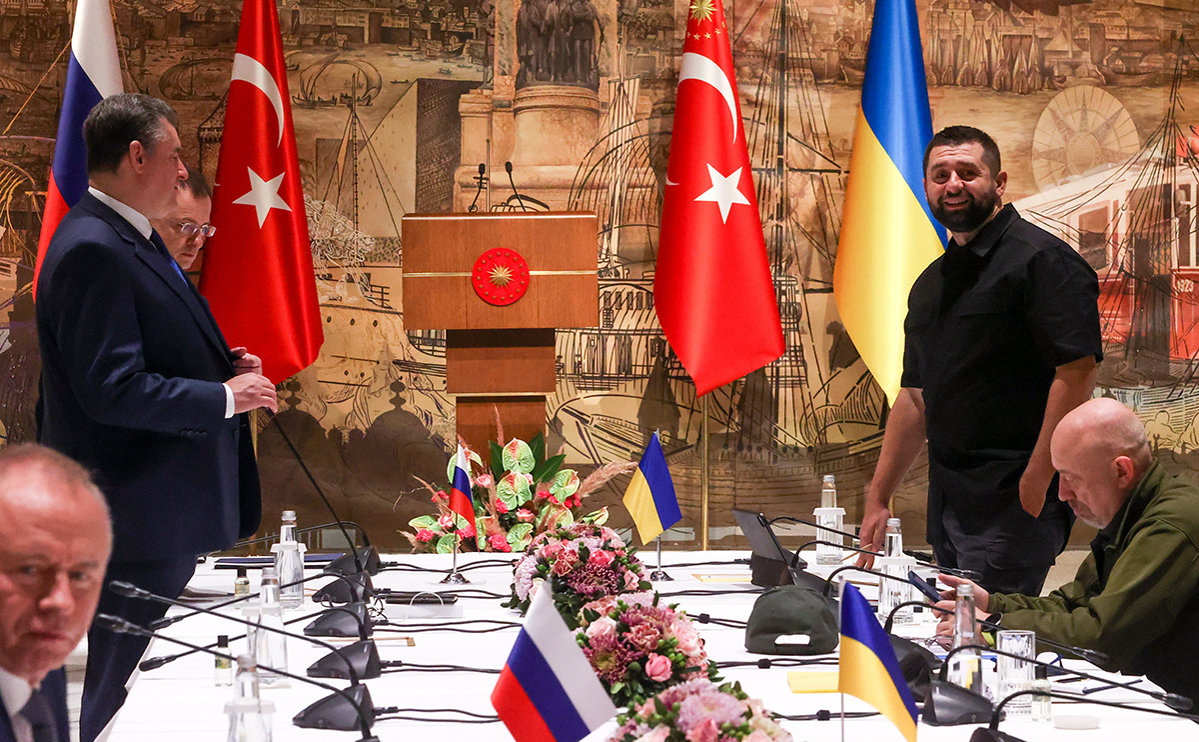
A draft treaty, reportedly proposed by Russia to Ukraine at the beginning of the invasion, has surfaced.
The document was published by “Radio Liberty” and is dated March 7, 2022, the 11th day after the invasion began. The draft was given to the Ukrainian delegation during talks in Belarus.
The proposed conditions included:
- Ukraine declares neutrality.
- Ukraine reduces its military to 50,000 personnel, including 1,500 officers, four ships, 55 helicopters, and 300 tanks (a force smaller than that of Belarus).
- Ukraine is prohibited from developing, producing, purchasing, or deploying any missiles with a range greater than 250 km (with the potential for future limitations on other types of weaponry).
- Ukraine recognizes the “independence” of the “LNR” and “DNR” within the administrative borders of the Luhansk and Donetsk regions.
- Kyiv covers the costs of rebuilding the Donbas infrastructure damaged since 2014.
- Ukrainian and international sanctions are lifted, and all international legal claims filed since 2014 are withdrawn.
- The Russian language is granted state status.
- All property rights of the Ukrainian Orthodox Church (UOC) are restored.
- Ukraine repeals its decommunization policies and agrees not to impose future bans on Soviet symbols or ideology.
As later became known, Russia softened its demands during further negotiations. By the end of March, at talks in Istanbul, Ukraine and Russia agreed on a draft in which Kyiv accepted a neutral status in exchange for security guarantees from nuclear powers, including Russia. Moscow was also ready to pull back its forces to the February 24, 2022 line, excluding the Donetsk and Luhansk regions, with these territories’ status to be resolved in a direct meeting between Vladimir Zelensky and Vladimir Putin. Some terms of the agreement remained unresolved, including the size of Ukraine’s army, the status of the Russian language, and the security guarantees’ enforcement mechanism, but negotiations on these issues continued.
However, in April-May, the talks were suspended at Ukraine’s initiative. David Arakhamia, the head of the Ukrainian delegation in Istanbul, said that then-Prime Minister of the United Kingdom, Boris Johnson, influenced this decision. Johnson, who visited Kyiv, reportedly told Ukraine, “We will continue fighting.” Johnson recently dismissed these reports as nonsense.
Additionally, according to media sources, Washington was not enthusiastic about providing security guarantees to Ukraine that could potentially lead to a direct conflict between the United States and Russia.

 English
  Русский