

Western media openly state that the liberation of several villages cannot be considered a successful counteroffensive by the Ukrainian Armed Forces
19.09.2023 10:58
‘You’re not human’: In the Lviv region, military officers have been holding a civilian in a Territorial Center for Conscription for 6 days, beating him and threatening to take him to the forest
19.09.2023 12:03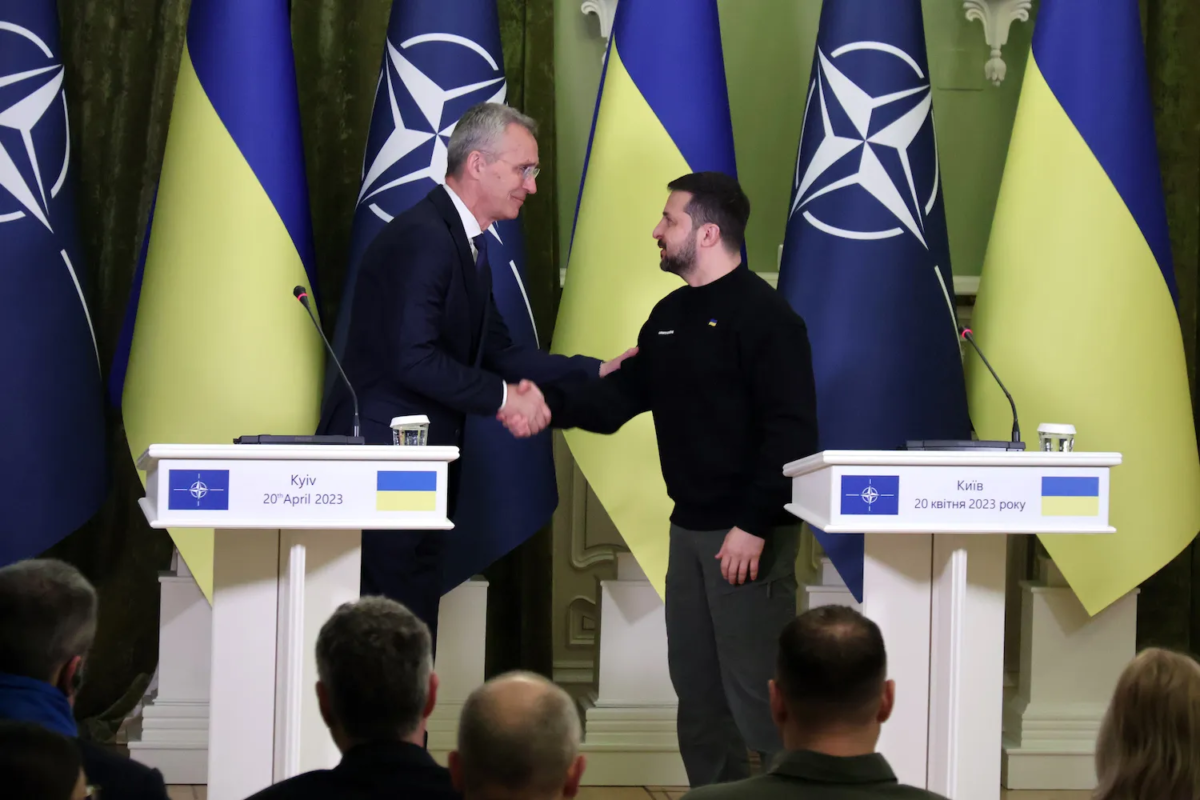
Ukraine is not ready to join NATO.
This is what the publication Politico writes.
The author of the article notes that the North Atlantic Alliance defends democracy from external threats but cannot promote it within a country.
When Ukrainian President Volodymyr Zelensky dismissed the Minister of Defense, accusations of misconduct in handling military contracts and corruption within the ministry surfaced in the news. It was these corruption allegations that prompted US President Joe Biden to declare last month that Ukraine is not ready for NATO membership.
According to experts, the conflict in Ukraine is the epicenter of the global struggle between democracy and autocracy. Ukraine is actively engaged in a conflict with Russia, and therefore, experts argue, Kyiv can be seen as a battle-tested soldier of democracy, making the country worthy of NATO membership. NATO membership, in turn, would further prevent the erosion of imperfect democracy in Ukraine. These are the arguments presented in favor of Ukraine’s membership in the alliance.
However, such reasoning overlooks an important distinction: NATO was created to defend states that are already democratic but is incapable of promoting democracy within those states. Therefore, Ukraine’s NATO membership, contrary to common belief, may not serve the cause of strengthening Ukrainian democracy.
Democracy succeeds when its principles are wholeheartedly embraced, reflected in legislation, political norms, and institutions, and when there are advocates for combating corruption, organizations dedicated to safeguarding civil liberties and civil rights, as well as human rights groups protecting freedom of expression in the media. Democracy cannot be defended in the same way as a state’s territory—through defense pacts, bombs and bullets, missiles, and minefields.
Naturally, Ukraine will seek NATO membership as it would enhance its border security. But at what cost? Analysts clearly point out the risks of triggering a destructive escalation in relations with Russia and the threat to the credibility of the United States when it offers security guarantees with weak public support. Granting Ukraine NATO membership in the short term deprives it of a strong incentive to bolster its democracy in the long term, namely the promise of possible NATO membership.
However, there is another risk. After the end of the Cold War, NATO insisted that it was not against Russia but rather aimed at defending democracy. Accepting Ukraine into NATO at a time when democratic violations are observed in the country further undermines NATO’s reputation as a defender of democratic norms. In the end, this disappointing example reaffirms that NATO defends democratic countries from external threats but cannot promote democracy within a country.



 English
  Русский