Rubio spoke of a “chasm” between Russia and Ukraine over Donbas
29.01.2026 - 18:31
Apartments at +3°C: residents of Troieshchyna blocked a road over the lack of heating and electricity
30.01.2026 - 06:01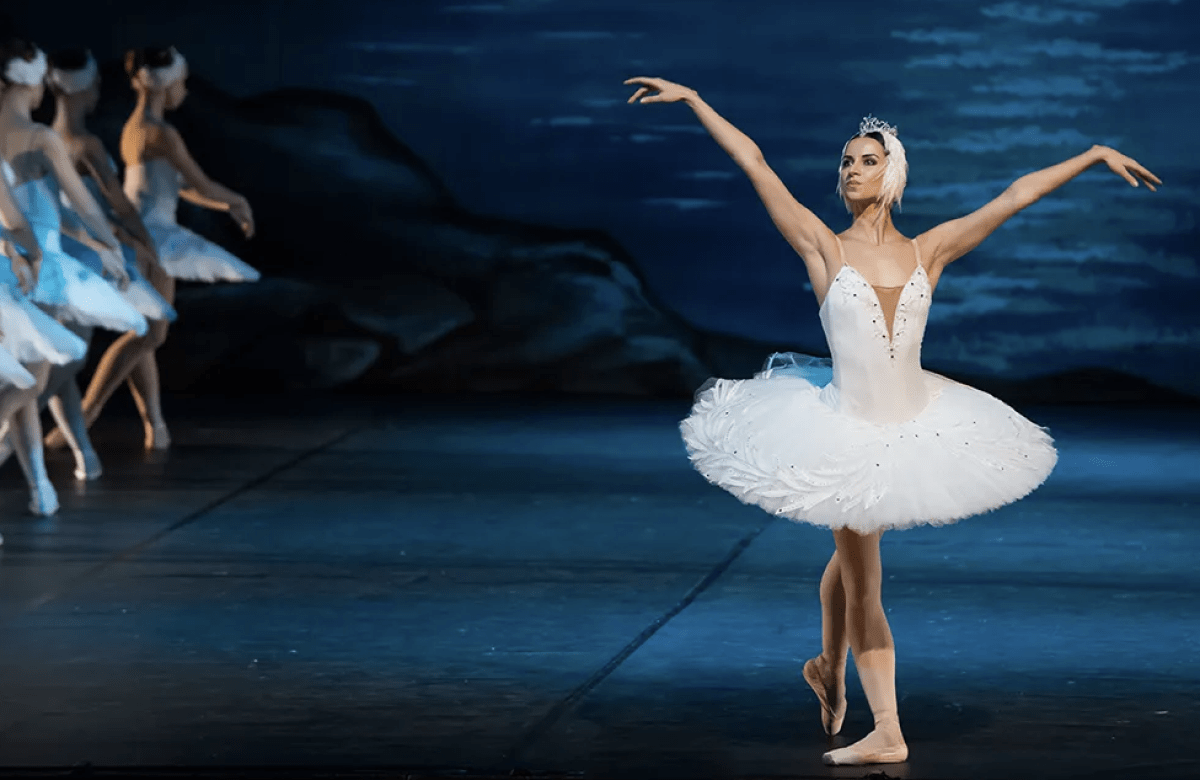
“Why Is Ukraine Trying to Cancel Swan Lake?”
Matthews claims that Ukraine’s attempts to “cancel” Tchaikovsky and Bulgakov amount to “barbarism.” Since Russia’s full-scale invasion in 2022, he writes, “all forms of Russian culture—including music and literature—have been removed from the repertoires of Ukrainian theatres and concert halls, scrubbed from school and university curricula, and cleared from bookshelves.” The author also recalls threats to dismiss two soloists of the Ukrainian National Opera after an overseas tour that featured Pyotr Tchaikovsky’s Swan Lake.
“At the heart of Ukrainian nationalists’ drive to cancel Russian culture and language lies, essentially, a Putinist assumption: that classical works of literature and music, as well as the Russian language itself, belong to the Kremlin. That is categorically not the case… In reality, neither ‘Shchedryk’ nor Swan Lake belongs to any one nation—and certainly not to any regime or leader; they belong to all civilized people of the world,” Matthews argues.
“Any attempt to destroy or deny culture is equally barbaric. Ukrainian ultranationalism, with its effort to erase every trace of the shared cultural heritage of Russia and Ukraine, is merely Putinism in mirror image,” he writes.
Matthews maintains that “the narrative of rejecting and canceling everything Russian only plays into Putin’s hands.”
“The assumption that Russian-speakers are not real Ukrainians is a deeply Putinist view of the world. It implies that hundreds of thousands of Russian-speaking people who fought and died for Ukraine’s freedom in the face of Russian aggression are not full members of the Ukrainian nation,” the article says.
“This is not only false and disgusting, but it also deeply divides society. It is poison at the root of Ukraine’s future, because according to official Ukrainian government statistics, more than half of Ukrainian schoolchildren (excluding occupied territories) speak Russian at home,” the journalist notes.
The British writer says he sees no problem in the fact that “many countries adopt, appropriate, and partially or fully absorb the language of their former colonial masters.”
“The United States successfully adopted the inherited English culture and language and made them uniquely its own. Ireland, Canada, Australia, and New Zealand did the same. Ukrainian Russian has its own intonations, shades, and vocabulary—brilliantly demonstrated by the outstanding 19th-century satirist Nikolai Gogol, a native of Ukraine,” Matthews writes.
It is worth noting that this is not the first Western media article criticizing the “cancellation” of everything associated with Russian culture.

 English
  Русский