Budanov denies Le Monde report on details of talks with US in Miami
28.10.2026 17:01
Ukrainian entrepreneurs unable to access the electronic taxpayer cabinet
28.10.2026 19:01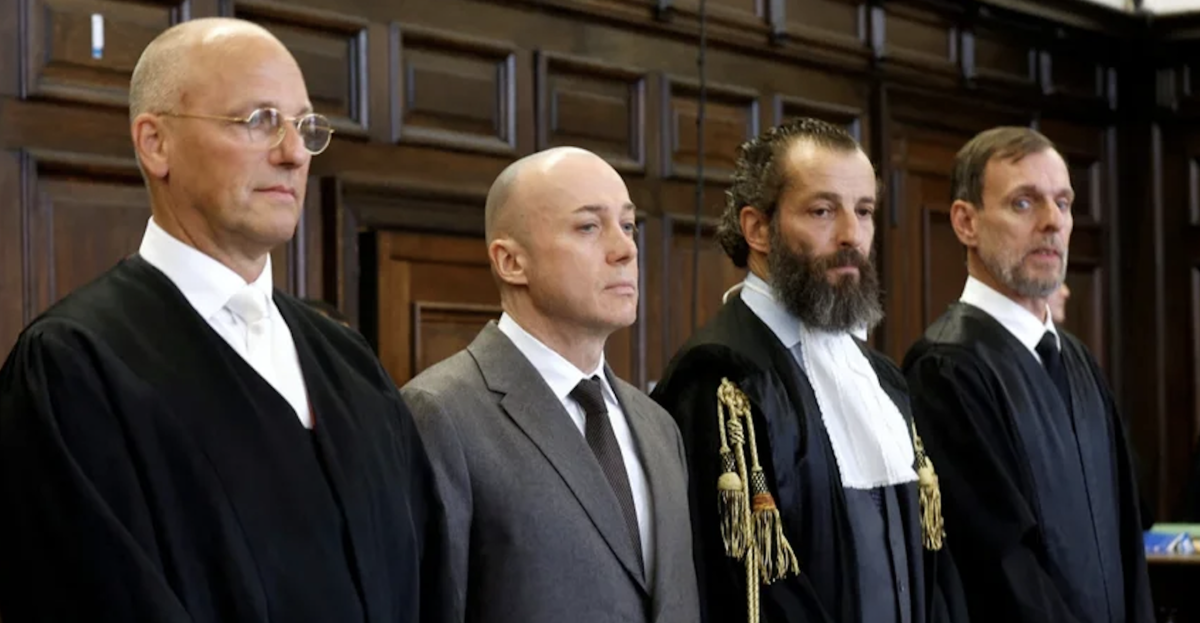
The Higher Regional Court of Hamburg has rejected a motion by the defense of Ukrainian citizen Serhiy Kuznetsov to terminate the trial in the case of the sabotage of the Nord Stream 1 and Nord Stream 2 gas pipelines in the Baltic Sea in September 2022.
This was reported by the German television channel n-tv.
The court issued its decision on Tuesday, October 27, on the second day of the proceedings. Kuznetsov’s lawyers had demanded that the proceedings be terminated, citing their client’s obligation to keep state secrets under Ukrainian law.
The defense argued that Kuznetsov, who previously served in one of the special units of the Armed Forces of Ukraine, cannot freely discuss the circumstances of the case with his lawyers or testify in a German court because of the obligations he has assumed. According to the defense, disclosing classified information could expose him to severe punishment in Ukraine.
However, the court rejected these arguments. The presiding judge explained that German law does not restrict a defendant’s right to testify on account of the official-law provisions of another state.
The court then decided to continue hearing the case according to the planned schedule. The court is expected to hear during the day from an expert from Germany’s Federal Criminal Police Office (BKA). He is to explain the nature of the damage to the pipelines and the circumstances of the explosions.
On October 14, the trial in the case of the sabotage of the Nord Stream 1 and Nord Stream 2 gas pipelines opened at the Higher Regional Court of Hamburg, with Ukrainian citizen and serviceman Serhiy Kuznetsov as the defendant.
On the night of September 26, 2022, three of the four strings of the Nord Stream 1 and Nord Stream 2 gas pipelines were destroyed by explosions on the bottom of the Baltic Sea in international waters. Both pipelines were not operating at the time but were filled with technical gas. Poland and Ukraine blamed Russia for the explosions, while Moscow, for its part, blamed “the Anglo-Saxons” and denied involvement.
In February 2024, Danish law enforcement closed the investigation into the explosions on the Nord Stream 1 and Nord Stream 2 gas pipelines for lack of grounds to open a criminal case. Sweden reached a similar decision.
On August 27, 2025, the German publications Die Zeit, ARD and Süddeutsche Zeitung published an investigation noting that the identities of all suspects in the Nord Stream sabotage had been established in Germany. Arrest warrants were issued for six Ukrainian citizens.
On September 30, 2025, Ukrainian Volodymyr Zhuravlev was detained in the Polish town of Pruszków; Germany suspects him of involvement in the explosion on the Nord Stream gas pipelines. The man was wanted on the basis of a European arrest warrant issued by a German court. The Polish court subsequently refused to extradite him to Germany.
However, on August 19, 2026, Zhuravlev was detained again in Croatia. The Guardian wrote that there Zhuravlev was working as a consultant on a Hollywood film about the Nord Stream sabotage, which was being shot in Croatia. On September 24 it became known that a court in Croatia had authorized Zhuravlev’s extradition to Germany, but it has not yet taken place.
Serhiy Kuznetsov, who is also suspected of the sabotage, was detained in Italy in the summer of 2025 and extradited to Germany in the autumn of that same year. The German side also claimed there was an alleged “state trace” of Ukraine in the case of the sabotage of the Russian Nord Stream 1 and Nord Stream 2 gas pipelines.

 English
 Русский