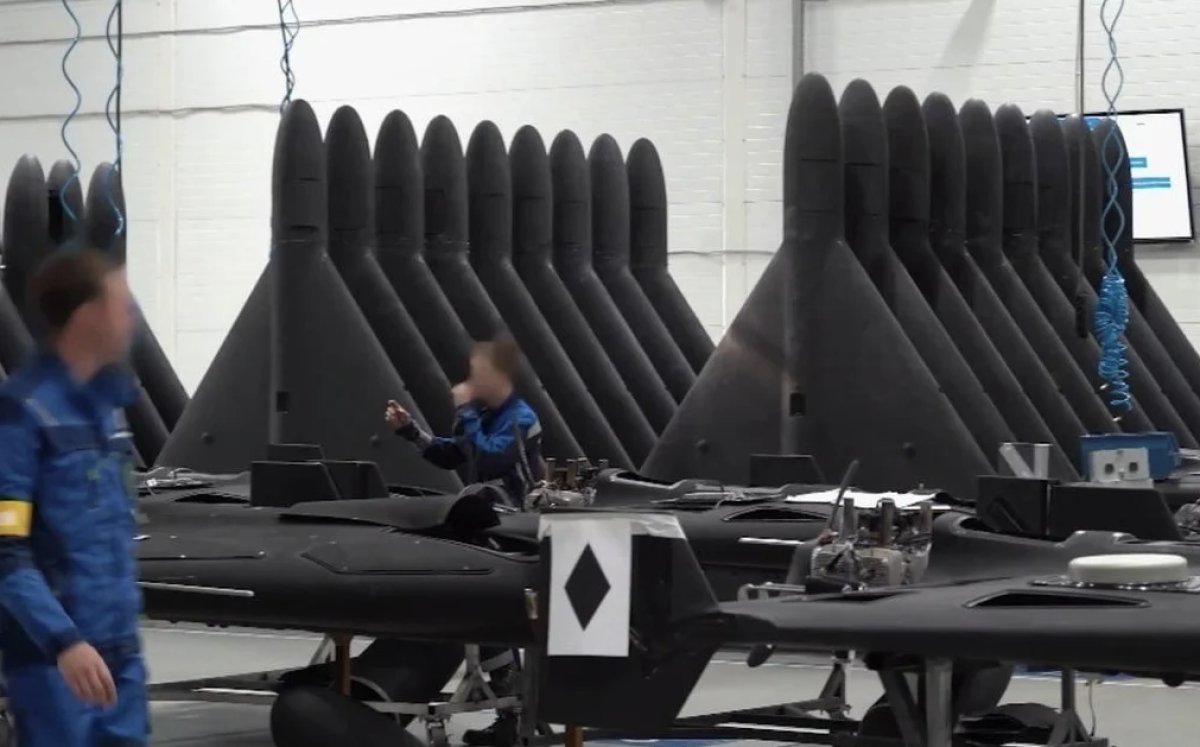
Coordinator of the Nikolayev underground claims vulnerability of AFU’s underground factories
13.08.2026 06:32
Drapaty removes head of Zakarpattia TCC following human rights violation allegations
13.08.2026 07:32
The European Broadcasting Union (EBU) has published an updated rulebook for the Eurovision Song Contest.
The document enshrines restrictions for countries where war or another dangerous situation threatens the holding of the contest, raises the minimum age for participants, and tightens requirements regarding live vocals and political statements.
One of the key changes involves rules for cases of armed conflict or instability. If such circumstances significantly affect the safety or stability of the winning country’s region, its broadcaster will not have the right to host the next contest. The EBU will also take into account events in neighboring territories if they have a direct and significant impact on safety. Examples cited in the rules include military operations, attacks, and airspace restrictions. Such a decision concerns only the right to host the contest and does not affect the country’s participation or its result.
The updated rulebook formally enshrines the 2023 precedent, when Ukraine, after winning in 2022, was unable to host the contest due to Russia’s full-scale invasion and co-organized it with the United Kingdom in Liverpool. From now on, armed conflict or security threats are an automatic basis for the EBU to assess risks and transfer hosting rights to another country through a clear procedure.
At the same time, the prohibition is not unconditional. Following consultations with the Reference Group, the EBU may permit a country to host the contest if it is satisfied that the safety of participants, staff, journalists, audience members, and partners, as well as the uninterrupted organization of the show, can be guaranteed. If necessary, the EBU has the right to commission an independent security assessment.
The age requirement for artists has also changed. Under the new rules, participants must be at least 18 years old by the day of the first rehearsal — previously the contest allowed younger performers. The maximum number of artists on stage remains the same: six people.
The updated rulebook more clearly defines the political boundaries of the contest. The EBU states that “Eurovision is an international entertainment event that must remain strictly non-political.” Political and ideological statements are prohibited during performances, rehearsals, and official events, as is using the contest to promote or oppose political positions.
Requirements for live performance have also been tightened. The lead vocals must be performed live, lip-syncing is prohibited, and automatic pitch correction — in particular Auto-Tune — is not permitted during a live performance. Backing tracks and pre-recorded elements remain allowed, provided they do not replace the main vocals or provide them with excessive support.
The new document also establishes that contest songs may not be publicly released or performed before September 1 of the year preceding the relevant Eurovision, and their duration must not exceed three minutes. Performances must remain unchanged across all rehearsals and live broadcasts.
In addition, last year the EBU approved a reform of the voting system. The updated rules provide for the return of a professional jury to the semi-finals for the first time since 2022 and the expansion of its membership to seven people, a reduction in the cap on viewer votes from 20 to 10 for a single voting method, and stricter restrictions on state and commercial promotion of participants in order to prevent manipulation.


 English
  Русский