

In the US, there are calls to cut funding for the Ukrainian publication Texty.org.ua, and Musk considers it terrorist
14.06.2024 14:07
The suspect in the murder of the 9-year-old Ukrainian girl escaped from Germany. He was detained in the Czech Republic – Bild
14.06.2024 17:47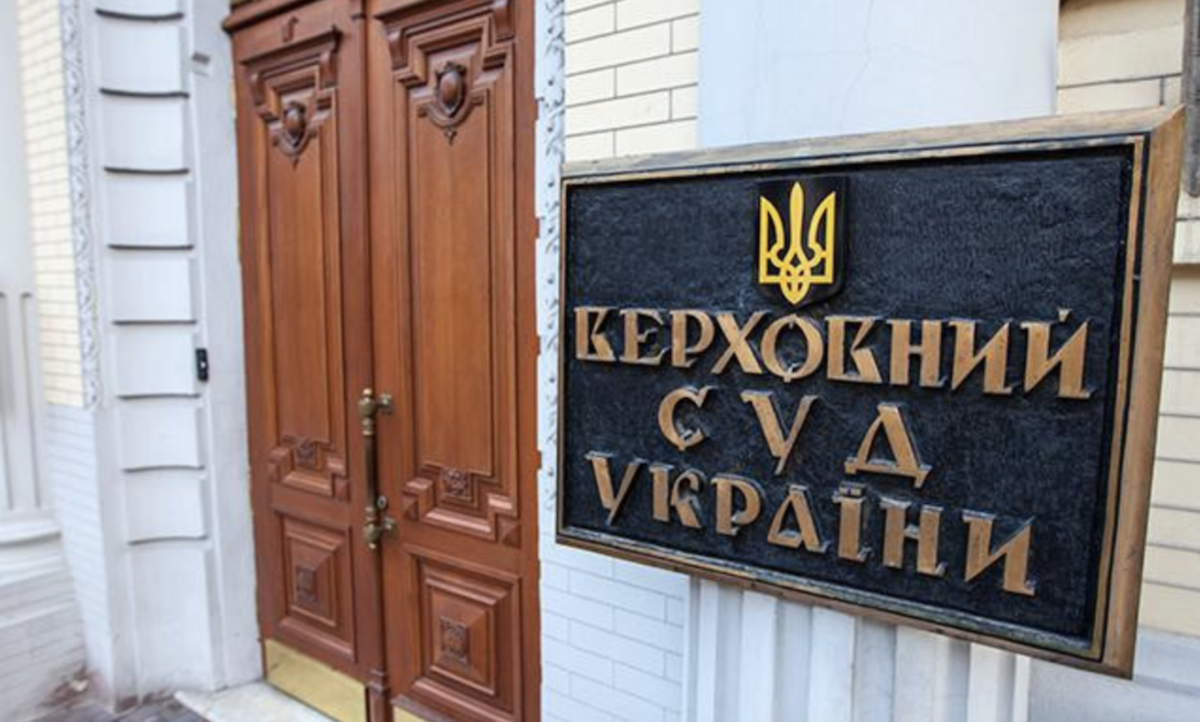
Representatives of Ukraine’s judiciary will now legally be able to intervene in business activities and assess the appropriateness of business decisions made by company owners, top management, boards of directors, or shareholder meetings.
This follows a ruling by the Cassation Economic Court of the Supreme Court in January 2024, although the full text, accessible to the parties involved and the public, was only recently released.
The document essentially questions the right of entrepreneurs to bring in business partners and thus dilute their ownership stakes (referred to as “diluting” the stake by judges) and obliges appellate judges to evaluate the appropriateness of business decisions made by company owners. This goes against the “business judgment rule,” which stipulates that courts should not interfere in business activities or assess the business logic of entrepreneurs.
The ruling pertains to case No. 911/266/22, a corporate dispute involving LLC “Premiorri,” a Ukrainian tire manufacturer from Bila Tserkva. The company is owned through the British company Premiorri LTD by entrepreneur Oleksandr Merzlyakov. During the height of the COVID-19 pandemic, the company owner decided to attract an investor and increase the charter capital fivefold, changing the ownership ratio to 20-80 in favor of the new investor.
Representatives of oligarch Kostyantyn Zhevago replaced the beneficiary of LLC “Premiorri” in the British business registry. The lower court deemed the investor’s involvement unlawful, while the appellate court ruled otherwise.
In the Supreme Court, the judges decided to establish judicial control over business activities in Ukraine and legalize direct judicial intervention by evaluating business decisions, specifically the decision to attract an investor and dilute the original owner’s stake, as noted by the article’s author.
Specifically, Judge Olena Kybenko equated the decision of the general meeting of shareholders or participants of the company to increase the charter capital to transactions that could be declared invalid, which is a legal anomaly. Additionally, the judge violated the “business judgment rule,” which assumes that judges do not have sufficient expertise to evaluate the business logic of entrepreneurs. The judge also noted that the English parent company (relative to LLC “Premiorri”) received no compensation for voluntarily reducing its stake in the Ukrainian business after attracting an external investor.
“It is not entirely clear what compensation is being referred to, as the original owner did not ‘gift’ their stake or transfer it to the new investor but attracted new funds and opportunities,” the article states.
The publication also notes that Judge Kybenko is involved in other cases, including No. 911/231/22 and 911/172/22 (concerning corporate rights related to the Bila Tserkva CHP), which also directly affect the oligarch who is hiding in Europe from Ukrainian law enforcement.
Recently, a special opinion by Judge Svetlana Bakulina, chairperson of the judicial panel, was published in the Unified State Register of Court Decisions. She completely refutes Judge Kybenko’s arguments, stating that the court should not have considered the complaint from Zhevago’s firms at all, as the decision contradicts previous Supreme Court positions and should have been referred to a special chamber. Additionally, the Supreme Court violated the principle of accepting cassation complaints based on different decisions in similar cases. Regarding allegations of bad faith actions by the investor and business owner (collusion), Judge Bakulina believes they fall outside the grounds for cassation appeals, as they would require the court to re-examine the case’s circumstances, which is beyond its competence.



 English
  Русский