
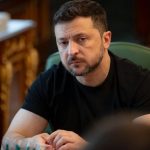
Zelensky urged the EU to develop a plan to circumvent Hungary’s veto
12.03.2026 12:02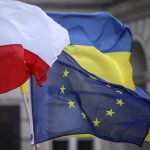
Three shipments in three cities were blocked: Poland banned the import of products from Ukraine
12.03.2026 18:07
Ukraine will receive financing from EU countries even if Hungary and Slovakia continue to block the promised €90 billion loan.
This was reported by Politico, citing two EU diplomats.
EU leaders will meet next week in Brussels in hopes of persuading Hungarian Prime Minister Viktor Orbán and Slovak Prime Minister Robert Fico to honor their commitments to approve the loan, which is intended to cover about two-thirds of the funds Ukraine needs to continue its defensive war against Russia through the end of 2027.
According to Politico’s sources, if both countries refuse to back down, the Baltic and Nordic states are ready to provide Ukraine with enough money to maintain its solvency in the first half of 2026. The total amount under consideration is €30 billion—because these would be bilateral loans, they would not require EU-wide approval. Separately, Dutch Finance Minister Eelco Heinen told colleagues that his government has earmarked €3.5 billion per year in bilateral assistance for Kyiv through 2029.
EU Economy Commissioner Valdis Dombrovskis told Politico: “It’s not the first time we’ve faced such difficulties with Hungary,” but promised: “We will deliver this loan one way or another.” Budapest—or any other EU capital—can block the Ukraine loan even though it was already agreed in December, because one of the bills required to approve it needs unanimity among all EU members.
Kyiv’s financing needs have eased somewhat after the International Monetary Fund approved an $8.1 billion program in late February and immediately disbursed $1.5 billion. According to four informed sources, Ukraine should remain solvent until early May. Previously, the EU expected Kyiv to run out of funds by late March.
The €90 billion loan appeared agreed until late January, when a Russian drone strike damaged the Druzhba pipeline. Orbán accused Ukraine of deliberately delaying repairs and walked back commitments made in December. President Volodymyr Zelensky rejected the accusation and said the pipeline could be brought back into operation “in a month to a month and a half”—i.e., after Hungary’s April 12 elections, which polls suggest Orbán could lose.
Both Kyiv and Brussels are counting on the possibility that if opposition leader Péter Magyar wins the election, he may be more willing to approve the Ukraine loan—especially if Druzhba is repaired or if Hungary receives other incentives from the EU. For example, Hungary has applied for €16 billion under the EU’s SAFE program, which provides concessional loans to countries buying weapons in bulk, but the European Commission has not yet approved the application.
Brussels views Slovakia’s Prime Minister Robert Fico as a less serious obstacle. On March 8 he vowed to block the loan until Druzhba is repaired, but after meeting European Commission President Ursula von der Leyen in Paris on the sidelines of a nuclear energy summit, he appears to have softened his position. He said he discussed with von der Leyen “the need to restore the transit of Russian oil through Ukrainian territory to Slovakia,” adding: “I am glad that on this issue we and the European Commission share the same view.”


 English
  Русский