
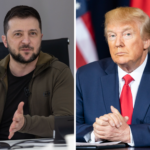
‘We want to be ready for this’: Zelensky urged Trump to reveal plans for a quick end to the war
03.07.2024 12:54
Experts predict a winter without heat and water for those living above the 9th floor
03.07.2024 14:03
On June 28, it was announced that the IMF would allocate a new loan tranche for Ukraine, a decision made by the Fund’s board of directors. Along with the new tranche, the memorandum with the IMF was updated, introducing new structural benchmarks and several interesting “hints” or “intentions” as referred to in the document itself.
These “intentions” specifically pertain to taxes, utility tariffs, and other significant issues for businesses and individuals. However, fulfilling these requirements seems obligatory for Ukraine. Media outlets have already analyzed what Ukrainian authorities committed to in terms of the financial system, including increased reporting by the National Bank of Ukraine (NBU) to international creditors.
But the memorandum contains many surprises regarding taxes, utilities, and the social sector. Here’s what Ukrainians need to prepare for.
Recently, the updated memorandum and a comprehensive report on Ukraine were published on the IMF’s official website. Over 120 pages, IMF analysts describe what is happening with our economy and what to expect.
The IMF has downgraded its forecasts for Ukraine, specifically revising the negative scenario by increasing inflation expectations for 2024 from less than 4% to 8%, more than double. This is explained by the risks of escalated military actions and new enemy attacks on Ukraine’s energy system. To avoid this “negative scenario,” the IMF believes Ukrainian authorities must “make certain efforts.” These are detailed in the memorandum.
Interestingly, there aren’t many new structural benchmarks for Ukraine in the updated memorandum (we’ll discuss them later). However, the document is full of various “intentions” agreed upon by the IMF and Ukrainian authorities.
“In general, this memorandum is somewhat hybrid. It is signed during wartime but contains outlines for post-war reforms. It also includes many vague formulations, the implementation of which, given the lack of specifics and deadlines, is unclear. At the same time, there is noticeable tightening of control, such as the NBU’s enhanced reporting requirements. They will require sharing information about import-export transactions, bank cardholder registers, and more. This indicates an element of distrust towards Ukrainian officials from the Fund. This means there will be attempts to increase control,” says economist Alexei Kushch.
So, what did Ukrainian authorities agree to for the new $2.2 billion loan tranche?
The updated memorandum includes several new structural benchmarks. The first pertains to customs, with a deadline by the end of October this year. It involves customs service reform, personnel purges, salary reviews, the development of “centers of excellence,” and transferring customs document checks from checkpoints to the central office. This “Mexican model” aims to ease border congestion and reduce corruption on the ground.
The Parliament has already passed the draft law No. 6490-d in the first reading, which includes these innovations. The deadline for this new benchmark – October 2024 – likely pertains to the conditions for adopting this project overall. It’s clear that implementing customs reform or even starting it and showing at least initial results in such a short time is unrealistic.
“It is possible that the customs benchmark was proposed by the Ukrainian side to stimulate the Parliament to adopt this draft law, which has many opponents,” says Kushch.
He also noted that the new memorandum provides very few specific tasks for Ukraine regarding customs reform.
“For instance, if there was a requirement to start mirror verification of data with counterpart countries’ customs, which would immediately identify the real volumes of smuggling and ways it enters the country, some results could be expected by a specific date. But with the current formulations, customs reform could take years, if not decades,” Kushch added.
Another benchmark to be met by October 2024 is adopting a law that removes the “Lozovyi amendments,” which cancel pre-trial investigations if the time limits after serving a suspicion have passed. The memorandum also states that at the request of the accused, an investigating judge or prosecutors may be granted the right to decide on pre-trial investigations or reject such requests.
A few benchmarks were carried over from the previous memorandum as they were not completed in time. The deadline for evaluating the effectiveness of current tax benefits was moved from the end of July to the end of September this year, auditing the debts of heat and communal enterprises from June to the end of October 2024, and establishing a new administrative court instead of the OASK from July to the end of December 2024.
Thus, the memorandum does not introduce any new global IMF demands for reforms in Ukraine. At least not explicitly. There are far more IMF “wishes” read between the lines. The memorandum contains many vague formulations and various “intentions” that experts nevertheless interpret as direct commitments that Ukraine has agreed to, even without specific deadlines.
Energy market expert and head of the Consumers Union of Public Utilities, Oleg Popenko, is concerned about the memorandum’s wording on “unplanned” increases in utility tariffs for the population. These should gradually approach market-justified levels. For gas, such a tariff review is recommended for 2025.
Currently, the market price of a cubic meter of gas is 14 hryvnias, while the population pays 8 hryvnias. This means tariffs for people could almost double. This would immediately affect heating costs, as gas accounts for 95% of heating costs, and hot water. Tariffs for these services could also almost double. If heating an average apartment currently costs 40-45 hryvnias per square meter, it could rise to 80 hryvnias. Heating a 50 square meter apartment would then cost 4,000 hryvnias per month instead of the current 2,000-2,500 hryvnias.
For hot water, the tariff could rise from the current 100 hryvnias to 200, meaning a family of three using 2 cubic meters of hot water per month would pay 400 hryvnias instead of the current 200.
Regarding electricity, despite recent tariff increases for the population, the market tariff set by the National Energy and Utilities Regulatory Commission (NKRE) is 8.5 hryvnias per kilowatt (used when compensating energy companies for the difference in tariffs for the population). A couple of months ago, it was 8.17 hryvnias. At this rate of “market price” revisions, we could soon reach 9 hryvnias.
“If we align population tariffs with these indicators, we will face a real collapse. Not everyone will be able to afford the new cosmic bills, and there is no money in the budget for a sharp increase in subsidy costs. Therefore, the utility sector, which is already not in the best shape, could simply collapse,” says Popenko.
Another part of the memorandum full of “intentions” concerns taxes. The memorandum states that Ukraine should approve laws to raise excise taxes on fuel and cigarettes to minimum EU levels and on sugary drinks. Experts have previously analyzed that adopting new fuel excises guarantees a price increase of at least 1.5-2 hryvnias initially and up to 7-10 hryvnias by the end of the rate increase period (planned until 2028).
There is little specific detail on taxes in the memorandum. Instead, it includes formulations about strengthening payment and tax discipline, finding new budget revenue sources, and more. According to Kushch, many tax innovations could fit under these broad terms.
“For example, even before the war, these formulations were used by the IMF to justify their advice to eliminate the simplified tax system. It is likely that authorities may soon target sole proprietors, at least pushing medium businesses out of the simplified system, leaving it only for micro and small businesses,” says Kushch.
He does not rule out discussions on raising VAT and the military levy, already being considered in Ukrainian circles.
“The memorandum talks about securing additional revenue sources in the short term. This could involve a wide range of taxation initiatives and introducing new taxes,” says Andrei Zablovsky, head of the Secretariat of the Council of Entrepreneurs under the Cabinet of Ministers.
“It is clear from the IMF memorandum that it refers to shock fiscal therapy. It’s no coincidence that immediately after signing the memorandum, the Cabinet adopted a budget declaration for 2025-2027, effectively freezing minimum wages and the subsistence level for three years. This, despite ongoing inflation and devaluation processes in the country. Thus, a kind of ‘block’ has been placed on social and public sector wages – they will not be increased,” summarized Kushch.


 English
  Русский
