

In July, Russia’s revenues from oil and gas sales soared by 45%
06.08.2024 10:21
‘War is not a reason to build a dictatorship’: Men protesting against the territorial recruitment center were detained in Kyiv
06.08.2024 12:03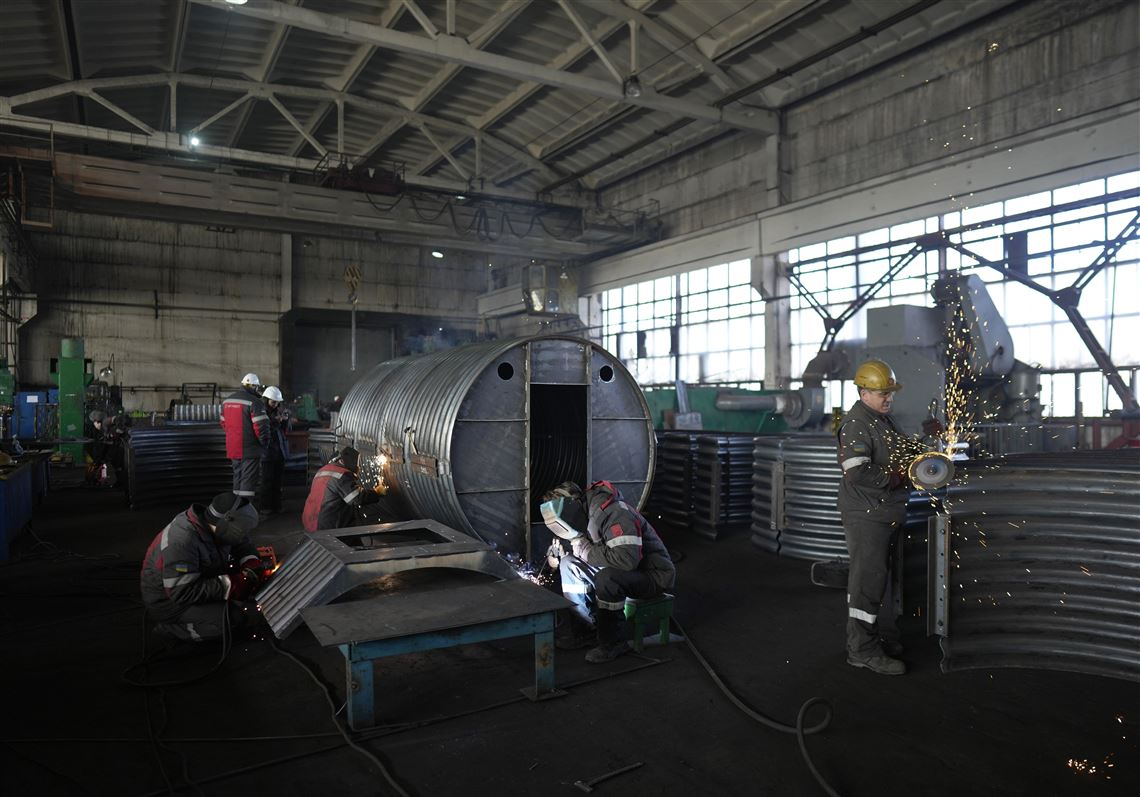
Mobilization divides Ukrainian society.
While the economy needs funds, the military needs soldiers. Entrepreneurs have proposed a system allowing people to officially buy their way out of service, but not everyone approves of this way to profit from the conflict.
Not long ago, four workers operated a complex machine at a large factory in Dnipro, central Ukraine, forging industrial parts from molten steel. Since then, one of them has been drafted into the army and killed. Another is missing, the third is about to retire, and the owner of the Interpipe factory is desperately trying to keep the fourth. He is a young specialist of conscription age who could be called to serve at any moment.
Faced with numerous similar situations and at least a thousand vacancies, Interpipe has joined the chorus of Ukrainian companies calling for widespread exemption from military service, believing that the country’s economic survival depends on it.
“We are working at the limit,” said Vitaliy Pakhomov, HR Director of Interpipe, from his office.
Interpipe operates five steel mills across Ukraine. Although Interpipe is recognized as a strategic enterprise (meaning half of its employees are exempt from military service), about a thousand people are still subject to mobilization.
“Without them, it’s hard to even imagine how we will operate,” Pakhomov said.
There have been instances where workers were taken to the front directly from the morning bus, and unauthorized military patrols were seen at the factory gates.
“Every foreman, shop manager and plant director is like a chess player. Every morning, they come to work and find that there are missing pieces on the board. What should they do?” Pakhomov reflects.
The company maintains production volumes thanks to “titanic” efforts by workers who work overtime and take additional shifts, among other measures, he said. But if mobilization intensifies, the company will inevitably have to reduce output, which would mean lower tax revenues for the state.
Ukraine’s largest enterprises have proposed a solution: to protect personnel from conscription, companies will pay a military levy of 20,000 hryvnias ($487) per worker per month. A corresponding bill has already been introduced in parliament. Another bill, if passed, would exempt all Ukrainian men earning more than 36,500 hryvnias ($890) a month from military service.
However, the bill has sparked fierce debates about what is more important: industry or the front line; the economy or the army. Ukrainian society is divided over what constitutes a fair conscription system. Businesses emphasize that changes are necessary not only to protect the economy but also to enable Ukraine to finance its armed forces.
“You can mobilize a million people, but if you don’t have the resources to equip them, you won’t have a war,” said Dmytro Natalukha, head of the parliamentary committee on economic affairs and author of one of the bills. “The army will be naked and helpless if the economy collapses.”
According to him, due to military conscription or emigration since the war began in 2022, company staff numbers have already “decreased” by an average of 10-20%. This year, the Russian offensive resumed, bringing death and destruction. Combined with power outages, this could push even more Ukrainians to emigrate.
“More and more businesses will close simply because they don’t have enough resources to continue operating, which threatens a chain reaction for the entire economy,” Natalukha claims. “I don’t want to prophesy an apocalypse, but I would say the deadline is the end of September.”
If passed, the bill allowing companies to pay to protect their staff from conscription would exempt about 895,000 people from military service and raise up to 200 billion hryvnias for the army, he said.

 English
  Русский