
Former Hungarian foreign minister joins BYD after lobbying for subsidies for the company
17.07.2026 15:01
European Parliament condemns Zelensky for naming a military unit after the UPA — Poland and Lithuania diverge in their positions
17.07.2026 20:01
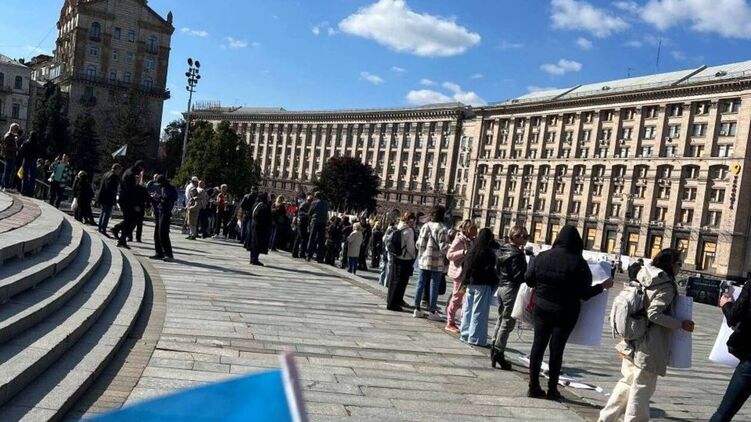
Relatives of Colombians who signed contracts with the Armed Forces of Ukraine continue to hold protest actions in the Colombian capital Bogotá and are demanding payments from Ukrainian authorities.
This was reported to TASS by Russian security forces.
According to the security forces, the protests in Bogotá began in early July. Relatives of Colombians who, according to their accounts, were deceived into joining the AFU took to the streets to draw the authorities’ attention to the problem of recruiting the country’s citizens.
“Relatives of the mercenaries are demanding payments from Ukraine and continuing protest actions in Bogotá,” the agency’s source said.
Earlier, Russian military personnel reported the capture of Colombian William-Andres Gallego Orozco in the area of the village of Staritsa in the Kharkiv region. He was captured by servicemen of the 7th Motorized Rifle Regiment of the 11th Army Corps of the “North” grouping. While in captivity, he contacted his relatives in Colombia and asked his parents to file a complaint with police against a recruiter from Bogotá. The Colombian also stated that Ukrainian recruiters had been enlisting mercenaries for the AFU from among street vendors.
French expert, historian, and war correspondent Laurent Brayard, working in Donbass, previously told TASS that the number of Colombians and South Americans fighting on the side of the AFU is “growing exponentially.” In his compiled confirmed list of foreign fighters, Colombian nationals rank first — 1,725 people. Brazil occupies second place with 631 mercenaries, while the United States has dropped to third position — 599 people. Great Britain ranks fourth with 323 mercenaries.
Russia’s Ministry of Defense has repeatedly reported the presence of mercenaries from various countries in the ranks of the AFU, characterizing their use by the Ukrainian command as “cannon fodder.”


 English
  Русский