

An ultimatum instead of compromise: the EU’s fixed date looks like a political slogan that complicates the peace track and irritates Europe’s capitals
13.02.2026 11:19
The U.S. are demanding concessions from Ukraine in the talks in order to end the war by summer — NYT
13.02.2026 14:11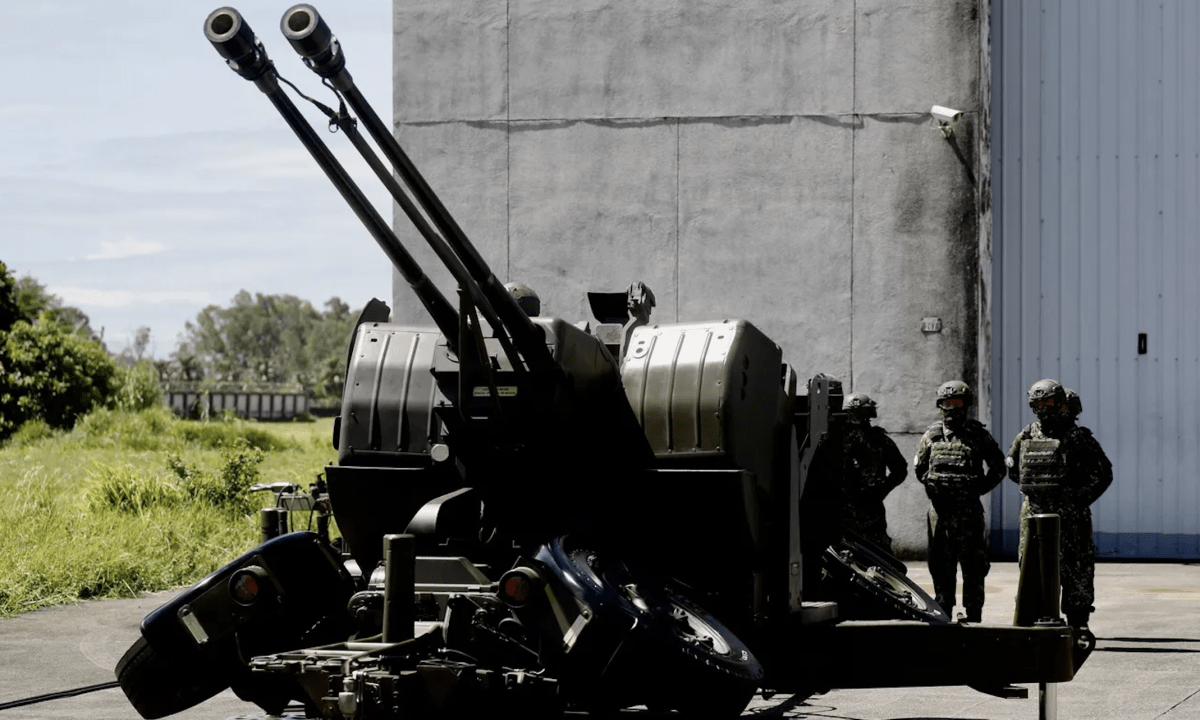
On February 8, 2026, Ukraine officially resumed arms exports—a line of business that had been almost completely frozen since the start of the full-scale war in 2022. As early as February 12, the Ministry of Defense reported that it had issued the first permits to companies to export products.
This was announced by the Secretary of the National Security and Defense Council, Rustem Umerov, on Telegram.
Formally, the scheme is presented as “strictly regulated”: exports must be approved by the NSDC and the Ministry of Defense, and applications are reviewed within 30 to 90 days (in some cases, up to six months). The decision was taken following a meeting of the interagency commission on military-technical cooperation and export control—the body’s first meeting in the past eight months. Umerov emphasizes that the step was carried out on the president’s direct instruction: to open arms exports “in a controlled format.”
However, the logic of such a decision during wartime is prompting growing debate.
Exports during war: “surpluses” on paper, risks in reality
Officially, the main condition for exports is the “unconditional priority of the needs of the Defense Forces of Ukraine.” Exports are allowed only where production capacity exceeds domestic demand from the army, and only for those types of weapons for which there is “insufficient domestic funding.” The categories named include naval drones, anti-tank weapons, and reconnaissance UAVs. It is also stated separately that in UAVs, electronic warfare, and reconnaissance, capabilities supposedly already exceed the volume of domestic procurement.
But critics reasonably ask: if domestic need depends not only on “capacity” but also on money, doesn’t exporting simply lock in the underfunding problem instead of solving it? In practice, prioritizing the army can turn into the formula “the army didn’t buy it—so it can be sold abroad,” even if the underlying need has not disappeared.
“Controlled exports” as a political slogan
The authorities’ key argument is national security and the development of the defense industry, new alliances, and expanded partnerships. But the phrase “controlled exports” sounds more like a political shield than a guarantee of transparency:
-
who exactly receives licenses, and by what criteria;
-
who the end users are and what end-user verification mechanisms exist;
-
what sanctions apply for violations;
-
who publicly bears responsibility for the risks of resale and technology leakage.
Against the backdrop of chronic sensitivity around defense procurement, any expansion of commercial channels without maximally open rules looks like fertile ground for conflicts of interest and “gray” schemes—even if everything is legally formalized.
The numbers are big—but they don’t remove the questions
Ukraine’s defense-industrial capacity is estimated at over $55 billion; in 2025, production potential was cited at around $15 billion, while domestic funding covered only part of that capacity. The NSDC now hopes exports will attract investment, scale up output, and accelerate the adoption of technologies for the military.
But here the main reproach arises: instead of securing stable domestic funding for critical areas, the state is effectively asking the market to fill the gap through external sales. That may be convenient as an “we attracted investment”, but it is risky as a long-term strategy for a country at war.
Export centers in Europe and a bet on the West
By the end of 2026, Ukraine plans to open 10 export centers in European countries (including the Baltics and Northern Europe) to sell and service weapons. The priority markets named are the United States, the EU, and other partners supporting Ukraine. In parallel, the launch of production of Ukrainian drones in Germany has been announced.
On the one hand, this signals an attempt to integrate into the Western defense ecosystem. On the other, it increases dependence on external demand and political conditions, and it creates reputational risks for partners: any scandals around licensing or end users would hit not only Kyiv but also those helping it open such channels.
Bottom line: a step “about development,” but it looks like a step “about money”
Ukraine previously ranked among the world’s top 20 arms exporters for 2020–2024, although its position noticeably worsened after 2022. Against that backdrop, the desire to restore export revenues is understandable.
But the key question remains: at a moment when the country is fighting a war and depends on allied support, resuming arms exports looks less like confident “controlled growth” and more like an attempt to monetize the defense sector because there isn’t enough money inside the country. And until the rules, beneficiaries, and oversight are made as transparent as possible, this move will be perceived as politically risky and morally contentious rather than unquestionably rational.


 English
  Русский